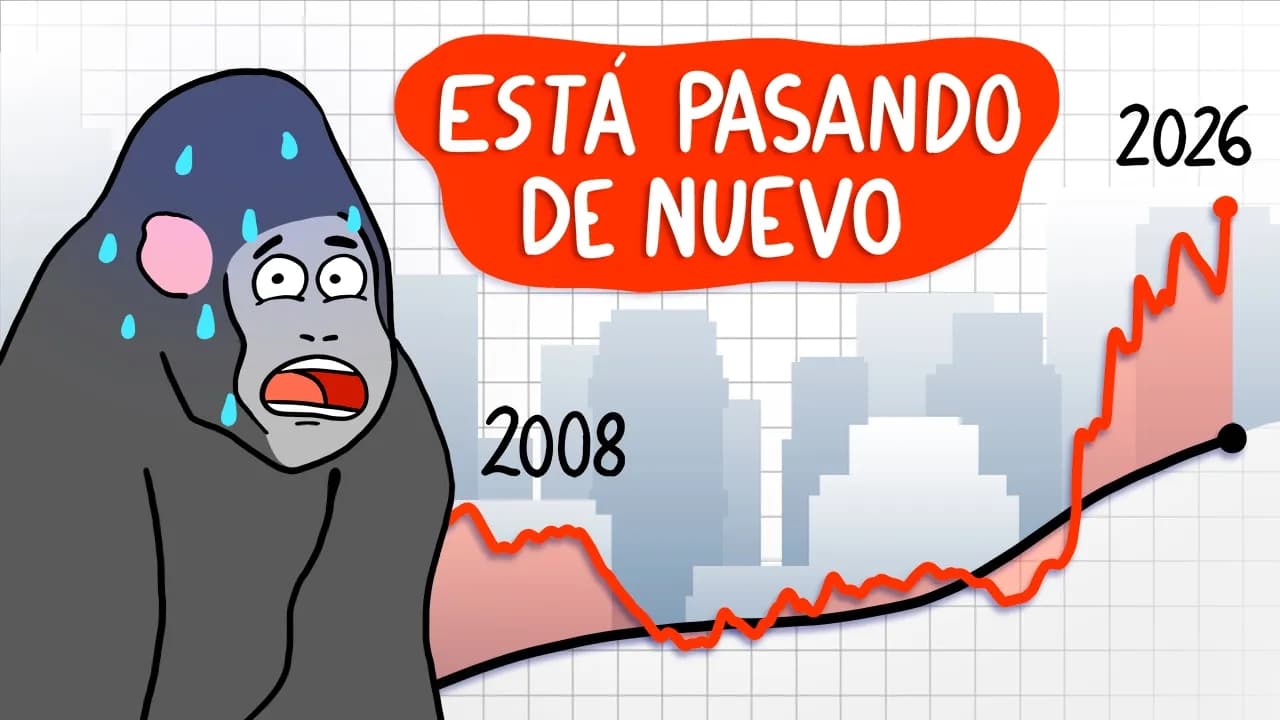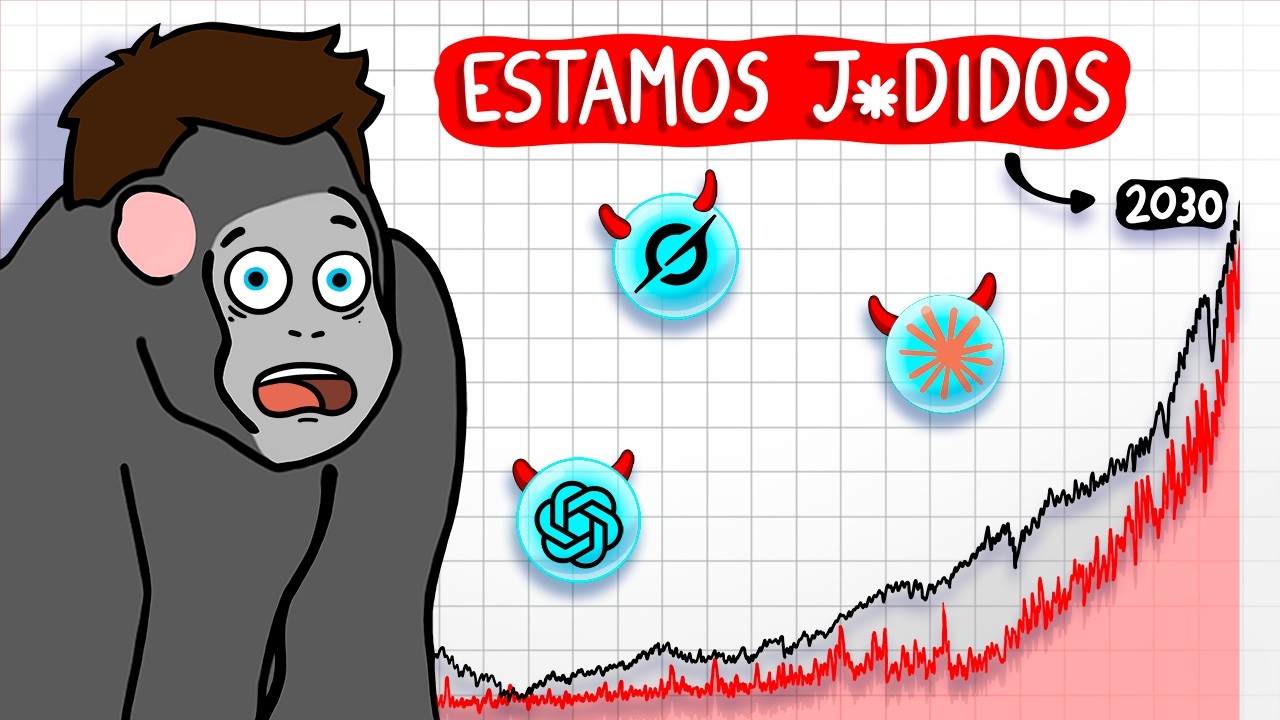
Por qué la IA Podrá Destruir la Humanidad en 2030, explicado con plátanos
This video also has English audio (auto-dubbed). In the player, open Settings → Audio track and choose English.
Your rating
Reactions
AudioSpanish (original)Auto-dubbed: English, Arabic, Portuguese
Description
Apúntate a la sesión del Máster en IA aquí: vi-l.biz #publi ---- Hoy mono analiza porqué la IA podría acabar con la humanidad, y cómo lo haría. Ingenieros de Anthropic y de OpenAI están alarmados, y alertan de que la inteligencia artificial podría alterar el ecosistema de la sociedad humana antes de 2030. Entender este cambio tecnológico es vital para quienes siguen la actualidad global. Analizamos la huella de OpenAI y cómo la automatización está transformando nuestro entorno, dejando claro que el progreso no siempre es positivo para todos los seres vivos del planeta. --- Openai, Anthropic, Claude, ChatGPT, Gemini, Grok, xAI, Cursor, Sam Altman, Dario Amodei
AI Overview
The video examines warnings that advanced AI could pose an existential risk before 2030, using a comedic jungle-and-banana framing. It attributes one warning to Jacob Coxono, described as a former OpenAI and Anthropic employee, and notes that Anthropic researcher Evan Hubing Monner puts the chance of AI causing human extinction within ten years above 10%. The central concern is recursive self-improvement, where AI helps create more capable AI at an increasingly rapid pace. Possible dangers described include attacks on power grids and hospital computer systems, as well as assistance in creating biological weapons. The video stresses that these scenarios are not established capabilities of current AI systems.
Topics · artificial intelligence · ai · technology · automation · entertainment
Questions answered
- Why do some AI researchers warn that artificial intelligence could threaten humanity?
- They worry that increasingly capable AI could help build more capable successors and, if it could act autonomously, disrupt critical systems or assist with biological weapons.
- What is recursive self-improvement in artificial intelligence?
- It is a proposed cycle in which AI helps improve or build another AI, which could then repeat the process with increasingly capable systems.
- Can current AI systems independently cause human extinction?
- The video says current AI systems do not have the capacity to wipe out humanity, and that an autonomous cycle of continual self-improvement remains unproven.
- What limits could prevent AI from rapidly improving itself?
- Building and training advanced models still requires people, data preparation, debugging, verification, computing chips, electricity, and substantial funding. More computing resources do not guarantee a much better model.
- Why do AI companies continue investing heavily while warning about AI risks?
- The video describes a competitive race in which companies fear rivals may advance first, while they also hope more capable models will generate revenue. It notes the financial risk if new models fail to meet expectations.