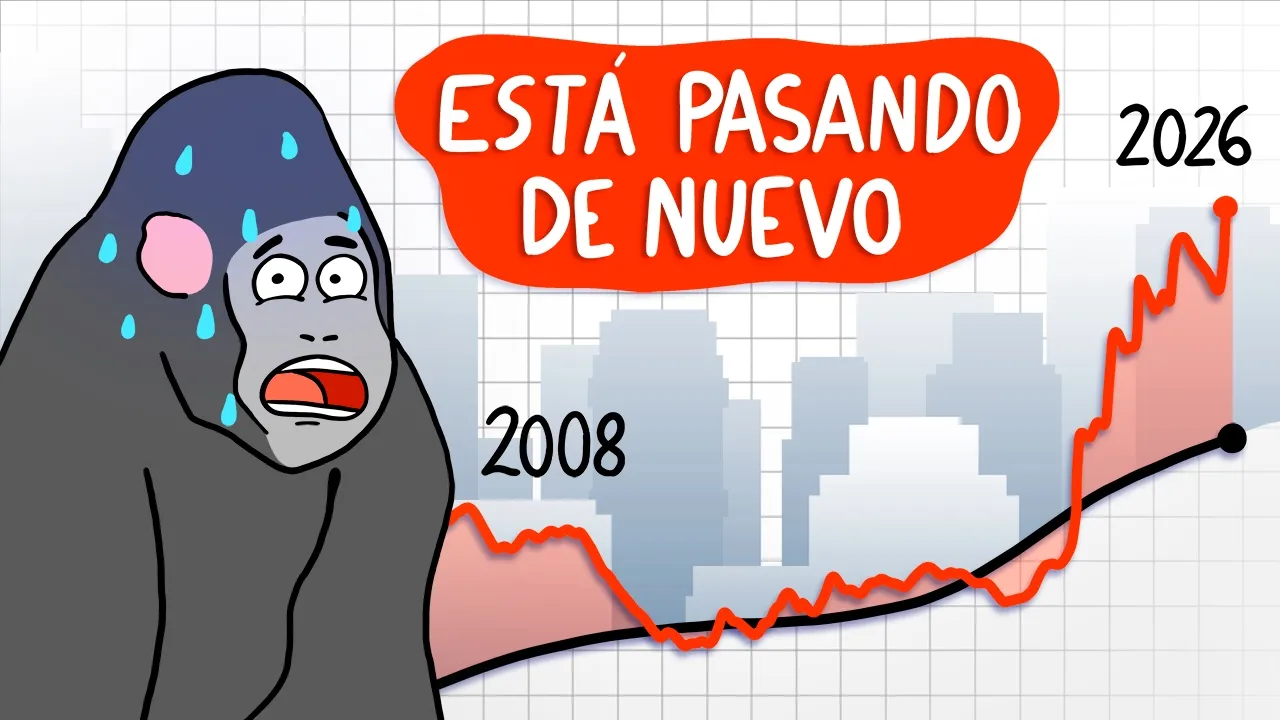
Una nueva crisis de vivienda acaba de llegar, explicado con plátanos
This video also has English audio (auto-dubbed). In the player, open Settings → Audio track and choose English.
Your rating
Reactions
AudioSpanish (original)Auto-dubbed: English, Arabic, Portuguese
Description
La crisis de la vivienda ya no depende solo de lo que cuesta una casa. La subida de los tipos de interés, el euríbor y la inflación están encareciendo las hipotecas, disparando el precio del alquiler y dejando fuera del mercado a miles de jóvenes que tienen sueldo y ahorros. En este vídeo descubrirás: - Por qué el precio de la vivienda en España sube un 12,2 % interanual y qué tiene que ver la falta de obra nueva. - Cómo un conflicto en Oriente Próximo encarece el petróleo, dispara la inflación y lleva al Banco Central Europeo (BCE) a subir los tipos de interés. - Qué es el euríbor, por qué alcanzó el 3,23 % en octubre de 2026 y cómo afecta a las hipotecas variables y a quien busca una hipoteca nueva. - Por qué, cuando las hipotecas se encarecen, también sube el alquiler: un 5,6 % más que hace un año en España. - Por qué en la provincia de Barcelona cada anuncio de alquiler recibe de media 401
Contact
contactos en sus primeros diez días, según el Observatorio del Alquiler. - Cómo es posible que el banco no te deje pagar 920 euros de hipoteca, pero acabes pagando 1.100 euros de alquiler por un piso parecido. - Quién sigue comprando pisos cuando los bancos dejan de prestar: compradores que pagan al contado, inversores y propietarios que compran para alquilar.
AI Overview
A banana-themed story explains how housing can become harder to buy even when a home’s listed price has not changed. In the example, a couple finds a home priced at 250,000 green leaves, but their expected mortgage payment rises from 790 to 920 a month as interest costs increase. The bank rejects their application because the larger payment would take too much of their income. The video links rising borrowing costs to inflation, including higher energy and transport costs that can follow conflict in the Middle East. It explains that the European Central Bank raises official interest rates to help curb price increases, while making loans more expensive. The story also points to a housing shortage, with new construction not keeping up with demand, as a reason prices are rising.
Topics · economics · financial education · housing market · real estate
Questions answered
- Why can a home become harder to buy when its asking price stays the same?
- Higher interest rates increase mortgage payments, so a buyer may no longer qualify for a loan even if the home’s price has not changed.
- How can conflict in the Middle East affect mortgage costs?
- Disruption to energy supplies can raise fuel and other business costs, contributing to inflation. The European Central Bank may raise interest rates to curb inflation, making borrowing more expensive.
- What does a Euribor of 3.23% mean for borrowers?
- The Euribor is a reference rate used for many mortgages. A higher Euribor can raise payments on variable-rate mortgages when they are reviewed and make new mortgage terms more expensive.
- Why can higher mortgage costs put additional pressure on rents?
- Some people who can no longer afford to buy continue to need housing and compete for rentals. When rental supply is limited, greater competition can put upward pressure on prices.
- Who can keep buying homes when mortgage lending becomes harder?
- Buyers with savings, inheritances, or other assets can purchase without a mortgage. Some may buy homes to rent them out.