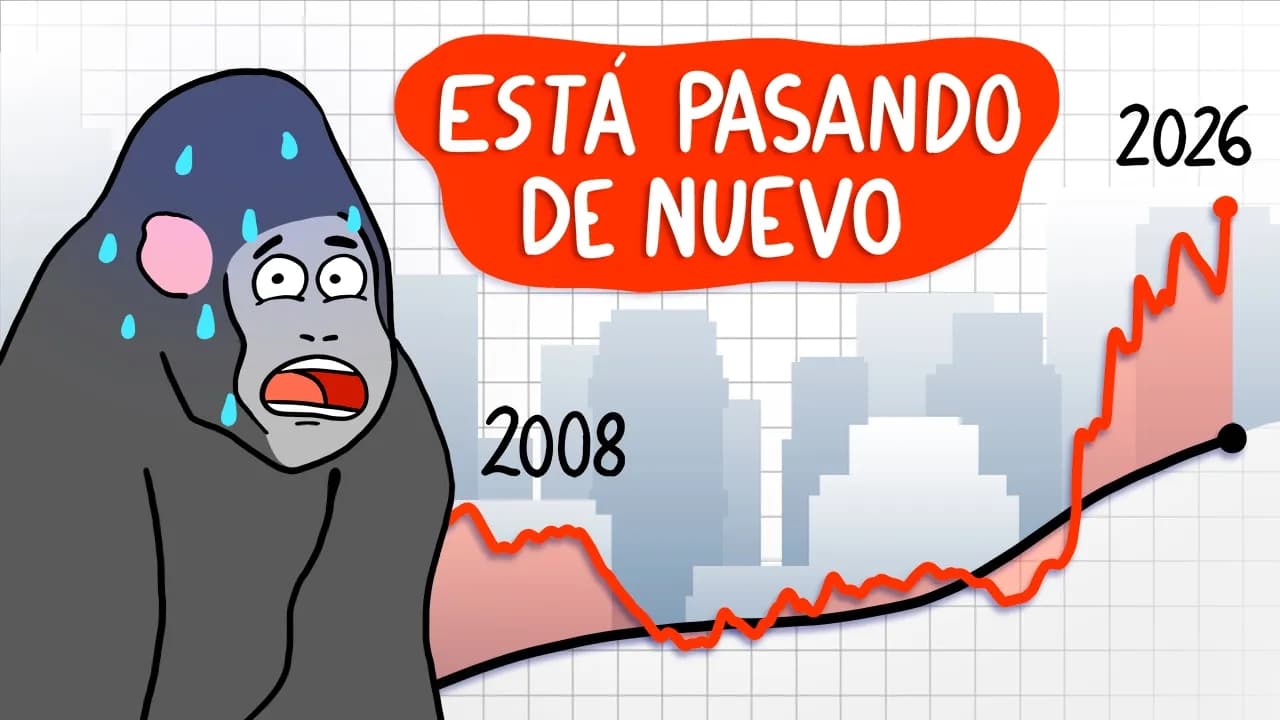
El timo de las salidas a bolsa, explicado con plátanos
This video also has English audio (auto-dubbed). In the player, open Settings → Audio track and choose English.
Your rating
Reactions
AudioSpanish (original)Auto-dubbed: English, Arabic, Portuguese
Description
Abre tu cuenta en Proton aquí: proton.me publi Anthropic debutó en el NASDAQ hace poco tiempo, y se espera ver cómo el otro gigante de la IA, OpenAI también entrará a bolsa más pronto que tarde. Hoy mono analiza cómo una compañía debuta en el mercado bursátil superando las expectativas iniciales de valoración. A través de este caso, observamos cómo el capital mueve las decisiones de pequeños y grandes inversores a la hora de decidir si compran acciones de una empresa. Aprenderemos a interpretar los indicadores que mueven el sector de la inversión en tecnología, sobretodo en inteligencia artificial. Entender estos ciclos permite identificar cómo las empresas gestionan su entrada al mercado y por qué el valor de las acciones suele generar tanta atención entre los inversores. IPO, Anthropic, openAI, bolsa, inversión, inversiones, finanzas, mercado
AI Overview
The video explains how an initial public offering works through a fictional banana-sorting company. Moncho first sells 10% of his company to Don Banano, then seeks more capital to expand and launches an IPO at 100 green leaves per share. Large funds can receive shares at that initial price before public trading begins, while many small investors can only buy after trading starts. Strong demand pushes the share price to 150 and then 175, even though the company itself has not changed. The example shows how early allocations can create gains for some investors while later buyers pay a higher price. The video also explains lock-up periods, which often restrict early investors from selling for about 180 days, though the terms vary by IPO. Rivian is used as a real-world example: its shares rose after its 2021 debut, and the end of the lock-up period coincided with a sharp price decline, alongside production and cost problems. The video then discusses OpenAI's reported 2025 revenue of about 13 billion and expenses of about 34 billion, alongside a reported March 2026 valuation of 852 billion. It explains that investors may value a company based on hoped-for future profits, while warning that those profits may not materialize and that AI infrastructure is expensive. It also notes that Microsoft-like cloud services and Nvidia chips can absorb investment money, and concludes that investors should assess earnings, sellers, and whether a share price is justified.
Topics · financial education · stock market · investment · economy · technology companies
Questions answered
- What happens when a company launches an IPO?
- A company offers shares to investors for the first time on the public market, often to raise money for expansion.
- Why can IPO shares cost more for small investors once public trading begins?
- Large investors may receive shares at the initial offering price before trading starts. If demand is high and few shares are available for sale, public-market buyers may have to pay more.
- What is an IPO lock-up period?
- It is a period during which some founders and early investors are restricted from selling their shares. The video says it often lasts about 180 days, but terms vary by IPO.
- Why can a company's share price fall when an IPO lock-up ends?
- More shares may become available for sale. If many shareholders sell and there are not enough buyers, the price may fall, although a decline is not automatic.
- How can OpenAI have a high valuation while spending more than it earns?
- Investors may be valuing expected future profits rather than current profits. The video warns that the expected profits may never arrive and that costly data centers and chips add to the business's expenses.