Las únicas inversiones que sobreviven a una crisis, explicado con plátanos
This video also has English audio (auto-dubbed). In the player, open Settings → Audio track and choose English.
Your rating
Reactions
AudioSpanish (original)Auto-dubbed: English, Arabic, Portuguese
Description
Gana cashback comprando en las mejores marcas del mundo: bit.ly publi* ¿Qué hacer con tus ahorros cuando llega una crisis? Hoy mono analiza las inversiones que realmente sobreviven a la incertidumbre. Enseñamos cómo las decisiones impulsivas frente al mercado financiero pueden destruir nuestro patrimonio. Aprender a distinguir entre oportunidades reales y espejismos de consumo es el primer paso de una educación financiera sólida, vital para proteger el dinero cuando el entorno se complica. --- * Financiación sujeta a la aprobación de seQura, previo análisis de solvencia. Servicio para residentes en España de +18 años.
AI Overview
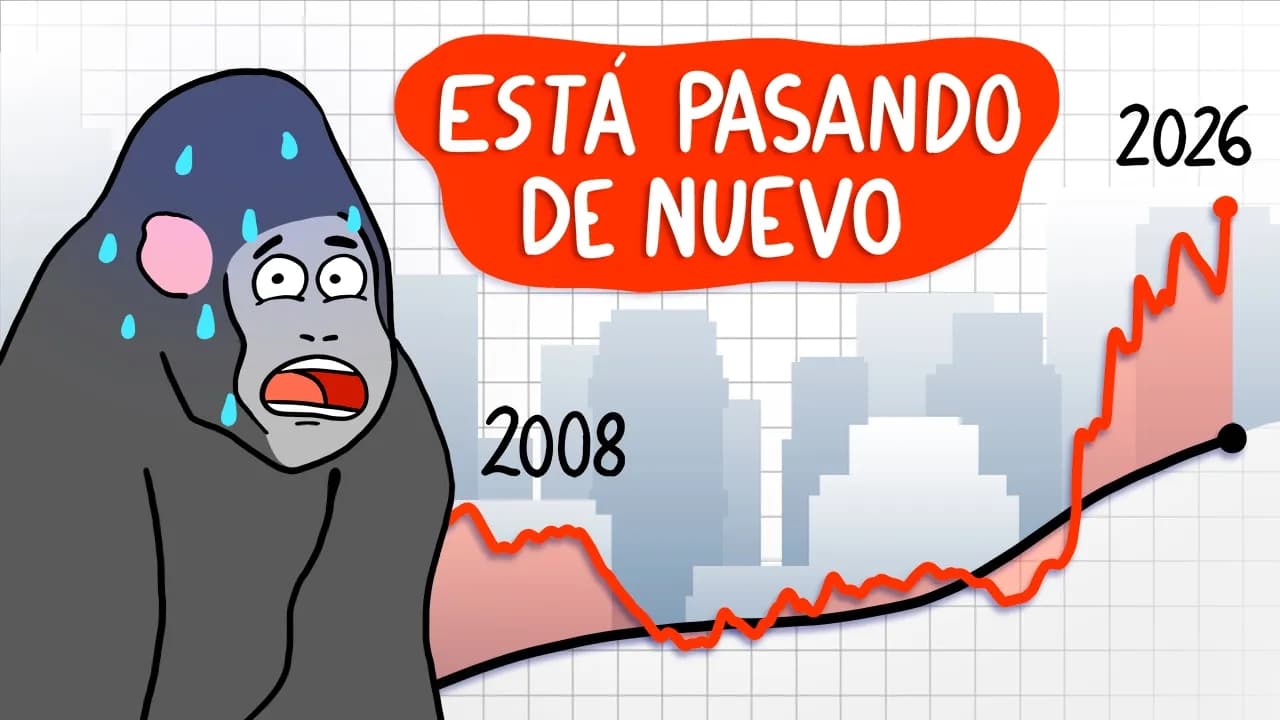
The video uses a story about a laid-off worker with 20,000 “green leaves” in severance pay to explain investments that have historically held up during crises. It first considers consumer staples, such as food and toilet paper, because people continue to need them even when they cut back on luxuries. In 2008, the broad market fell 57%, while consumer staples fell about 28%, a smaller loss but still a loss. The narrator also explains why avoiding a large decline matters: after losing 50%, an investment needs to gain 100% to recover, whereas a 28% loss requires about a 39% gain. Agricultural land is presented as another example, with an index of farmland reportedly returning nearly 15.8% in 2008. The video also notes that farmland can be hard to sell quickly and can suffer from drought.
Topics · investing · crisis investing · financial education · personal finance · economics
Questions answered
- Which investments does the video identify as historically resilient during major crises?
- It discusses consumer staples, agricultural land, long-term Treasury bonds, and gold mining shares as investments that have shown resilience in particular historical crises. It also stresses that none is guaranteed to perform well in every crisis.
- How did consumer staples perform compared with the broader market in 2008?
- The video says the broad market fell 57% in 2008, while consumer staples fell about 28%.
- Why can agricultural land be useful during a financial crisis, and what are its risks?
- Farmland can produce food and is a limited asset, and the video cites an agricultural land index that returned nearly 15.8% in 2008. However, drought can damage farmland, and selling it may take weeks or months.
- Why can long-term Treasury bonds rise in value when markets are falling?
- When investors seek safer assets, demand for existing bonds can increase their prices. If new bonds offer lower interest rates, older bonds with higher payments can become more attractive. The video notes that rising interest rates can have the opposite effect.
- How did Homestake Mining perform during the Great Depression, and what risk does the video mention?
- The video says Homestake Mining rose 474% during the Great Depression. It also warns that mining stocks can be highly volatile, citing losses of as much as 80% between 2011 and 2015.