The economist billionaires fear: this is how we get a wealth tax
Your rating
Reactions
AudioEnglish (original)Auto-dubbed: Dutch, French, German, Spanish, Arabic, Bangla, Hebrew, Hindi, Indonesian, Italian+10 more
Promos
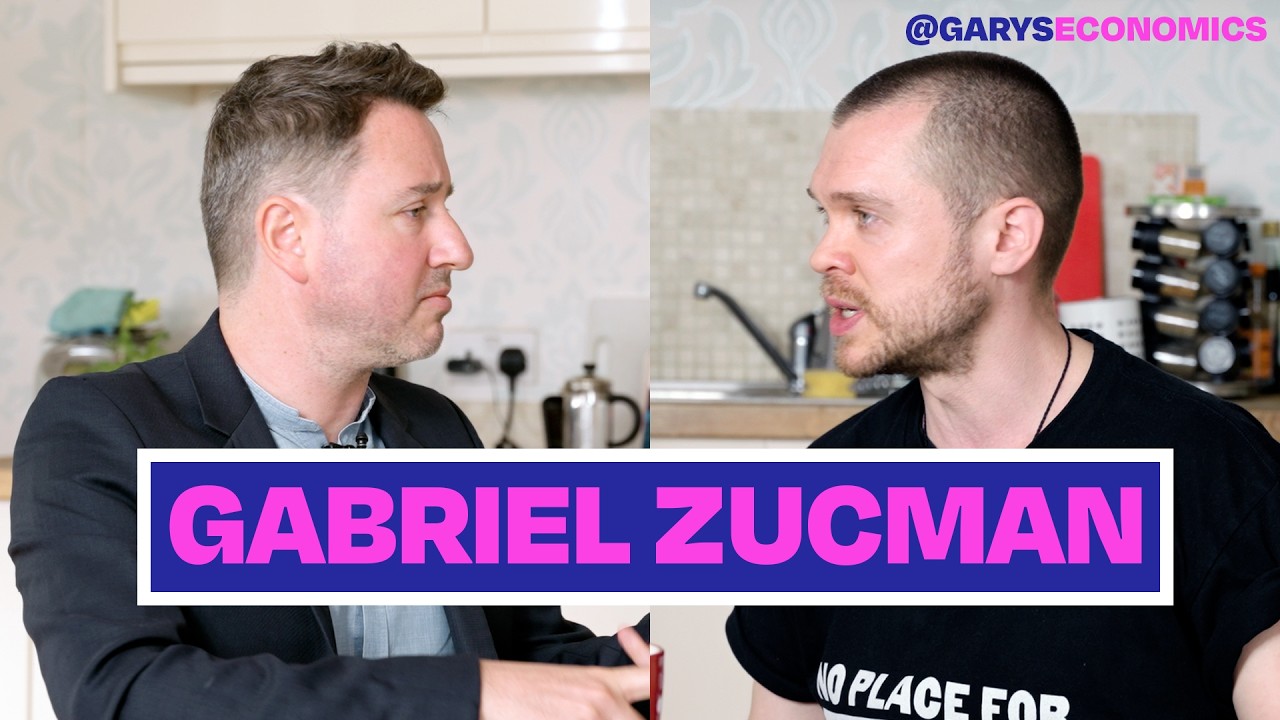
Gabriel Zucman is the most important economist in the world today. And the one billionaires fear most. His wealth tax proposals have passed France's lower chamber of parliament – and will likely be signed into law in the coming years. Here's his advice for how we can tax the super rich more in the UK and other countries. Zucman's book "We Need to Tax Billionaires" is now available in bookshops, and my book "The Trading Game" is now available in French as "Confessions d'un Trader Repenti". Enjoy!! 00:00 Intro 02:57 Who is Gabriel Zucman? 07:14 Why universities ignore inequality 14:05 What is the problem? 20:12 How we tax billionaires more 26:51 Gabriel’s billionaire tax in France 27:46 Learn from taxes in past 30:14 The current situation is radical 33:29 Wealth is concentrating at the top 39:07 How the UK can adopt this tax 46:02 Message to The Rest is Politics 50:12 Final message ––––––––––– JOIN OUR PATREON – patreon.com GET MERCH – shop.garyseconomics.org DONATE – buy.stripe.com JOIN GARY'S MAILING LIST – subscribepage.io GET THE TRADING GAME – penguin.co.uk ––––––––––– Follow Gary on other channels: LINKEDIN – linkedin.com SPOTIFY – open.spotify.com INSTAGRAM – @garyseconomics TIKTOK – @garyseconomics BLUESKY – bsky.app X – twitter.com FACEBOOK – @garyseconomics DISCORD – discord.gg WEBSITE – garyseconomics.org
AI Overview
Gary Stevenson introduces economist Gabriel Zucman as a leading researcher on inequality and taxation, then asks about his background and work. Zucman says he grew up in Paris and moved to the San Francisco Bay Area at 26, where the contrast between tech wealth and homelessness sharpened his interest in inequality. He says billionaire wealth has surged since the 1980s, accelerated after the 2008–09 financial crisis, and rose by 40% globally in the two years he discusses. Zucman argues that the growth of billionaire wealth has also increased political influence, making inequality a major economic and democratic concern. The conversation turns to why inequality has often been marginal in academic economics. Zucman describes a postwar focus on efficiency and contrasts it with earlier economists’ attention to how income was divided among social groups. He credits Tony Atkinson with helping revive the study of long-run wealth and income concentration, and points to a British tradition of measuring national income and inequality. Asked for advice to students, he encourages them to study inequality and contribute to expanding the field. Stevenson asks why Zucman has moved from academic research into public policy advocacy. Zucman says social scientists should establish facts, share them beyond specialist circles, and propose solutions that can be debated democratically. He describes a central problem as extremely wealthy people paying less tax relative to their income than other groups. He says researchers should explain and defend policy proposals while leaving choices to citizens and voters, rather than presenting them as unquestionable expert instructions. Zucman explains the central idea behind his proposed billionaire minimum tax: people with more than €100 million in wealth would owe an unavoidable minimum amount of tax each year. He argues that a tax based only on income can be avoided when wealthy people report little taxable income, even while their wealth grows. A minimum tax calculated as a share of wealth is intended to close that gap. He gives 2% as a rate that would bring billionaires’ overall tax burden closer to that of the rest of the population, while noting that he personally supports higher rates for the very richest. The proposal was developed in connection with Brazil’s 2024 G20 presidency and the discussion of international cooperation on taxation. Zucman says the French National Assembly passed a bill in February 2025 for a 2% minimum tax on people with more than €100 million, but the Senate blocked it, so it had not become law at the time of the interview. He compares the emergence of wealth-tax proposals with the earlier spread of progressive income taxes, citing the UK’s 1909 People’s Budget, France in 1914, and the United States in 1913. His argument is that one country’s adoption could help build momentum elsewhere. Asked about claims that taxing the rich simply takes money from them to give to the poor, Zucman argues that extreme wealth is enabled by society, including public education, healthcare, infrastructure, and other collective contributions. He says his research with tax administrations in multiple countries found that working- and middle-class people pay roughly 40–50% of their income in taxes overall, compared with about 20–25% for billionaires. He also cites UK figures showing that the wealth of the roughly 200 richest families rose from the equivalent of 5% of GDP in 1989 to 25% in the latest figures he discusses. Zucman distinguishes ordinary household wealth, which can provide security, from extreme wealth, which he says can confer political and market power. The discussion links concentrated wealth to risks for democracy. Zucman describes a cycle in which wealth can produce political influence, which can in turn help generate more wealth, and refers to a reported arrangement involving Donald Trump and the IRS as an example of concerns about political power and tax oversight. He also says French billionaires used their media ownership to oppose the proposed tax and pressure elected representatives. Stevenson then asks whether a wealth tax could work in the UK and whether Zucman would help design one; Zucman answers yes to both. Zucman says previous European wealth taxes often performed poorly, but argues that this reflects their design rather than proving that a well-designed tax cannot work. He identifies two key design issues: prevent avoidance through exemptions and deductions, and address the possibility that wealthy people will move abroad. He describes France’s 1980s exemption for certain business assets as an example of a loophole that weakened a wealth tax. His proposed approach would apply above a high threshold, such as £100 million in the UK, without exemptions or deductions. On migration, Zucman says some wealthy people may leave, though he considers the scale of such movement exaggerated in public debate. He proposes that the UK could continue taxing people for five or ten years after departure if they had lived in the country for a long time and accumulated substantial wealth there. He contrasts this with the United States’ citizenship-based tax system, which can continue to apply to citizens living abroad. Zucman’s broader point is that governments are not powerless to prevent relocation from entirely eliminating tax obligations. Asked about claims that economists do not support the proposal, Zucman cites an opinion article signed by seven Nobel Prize winners and support from other economists, including former IMF chief economist Olivier Blanchard. He says the principle is that billionaires should not be able to pay less than nurses, teachers, or other workers, and argues that equality before the law is central to the proposal. He agrees to discuss the issue on The Rest Is Politics. The interview closes with his call for a country to lead by adopting the policy, investing in education, healthcare, and infrastructure, and demonstrating that a 2% tax could raise an estimated £15 billion a year in the UK.
Topics · economics explained · wealth inequality · tax the rich · tax wealth not work · billionaire · education
Questions answered
- How would Gabriel Zucman's proposed minimum tax on billionaires work?
- People above a very high wealth threshold, proposed as €100 million, would pay an unavoidable minimum tax calculated as a share of their wealth rather than only their taxable income. Zucman discusses a 2% rate as a way to bring billionaires’ overall tax burden closer to that of the rest of the population.
- Why does Gabriel Zucman argue that a billionaire tax should be based on wealth instead of income?
- Very wealthy people can have little taxable income by not taking a salary, distributing dividends, or selling shares, even while their wealth grows substantially. A tax based on wealth is intended to make a minimum tax harder to avoid by reporting little income.
- What design features does Gabriel Zucman say make a wealth tax more effective?
- He argues for a high threshold, no exemptions or deductions that allow the ultra-rich to avoid the tax, and rules that can continue taxing former residents for a period after they move abroad.
- How much could a 2% tax on the UK's super rich raise?
- Zucman estimates that a 2% tax on the wealth of the UK’s super rich could raise about £15 billion per year.
- Why does Gabriel Zucman say wealth concentration can threaten democracy?
- He argues that extreme wealth can buy political influence, shape public debate and markets, and create a cycle in which wealth generates more power and power helps generate more wealth.
- Did France enact Gabriel Zucman's proposed 2% billionaire tax?
- The French National Assembly passed a bill for a 2% minimum tax on people with more than €100 million in wealth in February 2025, but the Senate blocked it, so it had not become law at the time of the interview.