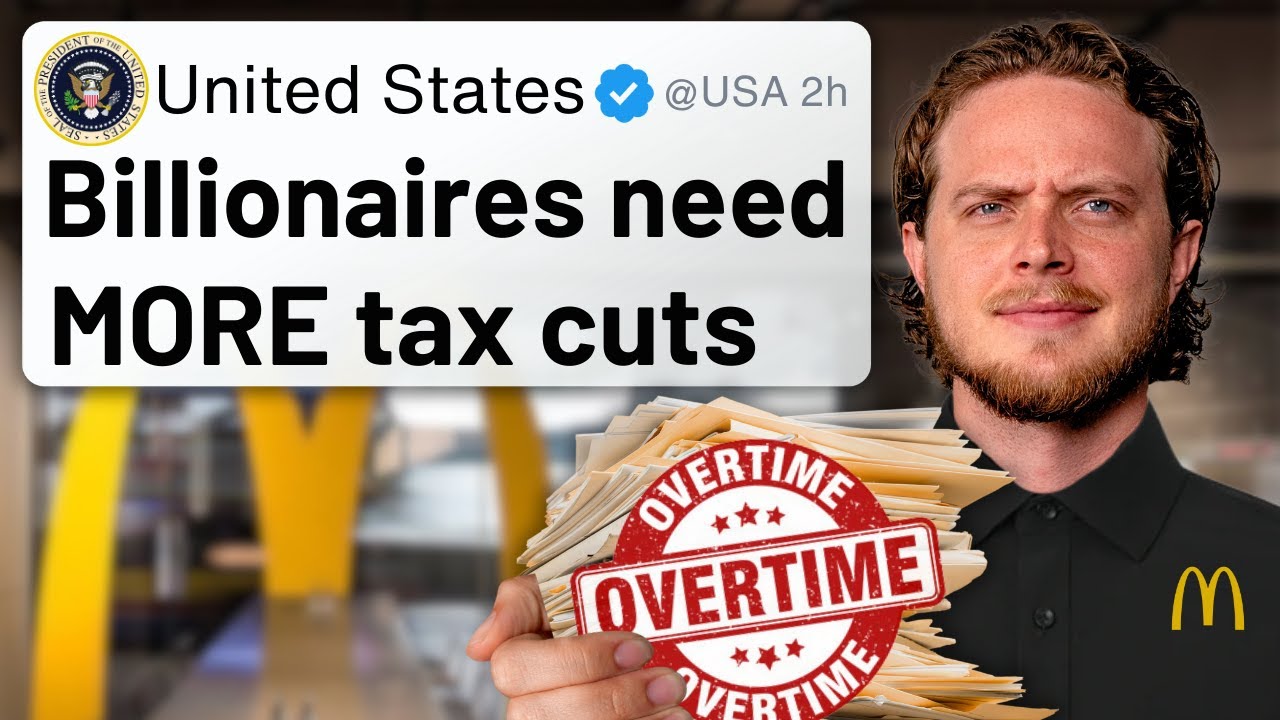
Why Capitalism FAILED The Working Class
Your rating
Reactions
AudioEnglish (original)Auto-dubbed: Dutch, French, German, Spanish, Hindi, Indonesian, Japanese, Malayalam, Polish, Portuguese+1 more
Channels and socials
American capitalism has become a system defined by billionaires, wealth inequality, and a shrinking middle class, leaving millions wondering how an economy built on opportunity ended up producing record poverty, unstable wages, and constant economic collapse. In a country that once promised upward mobility, the modern job market now feels like a maze of layoffs, stagnant pay, rising costs, and corporate decisions that prioritize profits over people. As billionaire influence grows across politics, business, and culture, working Americans are left struggling to understand why productivity keeps rising while quality of life keeps falling. This story isn’t about socialism or capitalism on their own, but about the gap between what an economic system claims to offer and what everyday workers actually experience. The rise of mass layoffs, the spread of contract jobs, and the shift toward temporary and unstable work have reshaped how people think about security. The job market collapse many fear is less about sudden disaster and more about a slow erosion of stability that affects everything from housing to retirement. While billionaires benefit from record gains, working families face harder choices, tighter budgets, and fewer opportunities. Companies continue to adopt automation and new technologies, promising efficiency while quietly creating uncertainty. The ai boom has inspired excitement and fear at the same time, raising questions about ai layoffs, disappearing entry level positions, and the possibility of an ai bubble fueled more by hype than long term growth. As corporations experiment with automation, many workers worry that entire professions could be transformed, replaced, or outsourced. The debate isn’t just about machines and software, but about who benefits and who pays the price when industries restructure. Across the country, conversations about poverty, wages, and economic fairness are intensifying. People are asking why the richest generation of billionaires continues to grow their influence while working class communities lose bargaining power. Wealth inequality shapes everything from taxes to housing affordability, creating frustration among Americans who feel like the economy no longer rewards hard work. Discussions about capitalism and socialism reopen old arguments about what systems should provide and who they should protect, especially as younger generations struggle with debt, rising rent, and unstable jobs. The job market today feels like a trap where every advancement is matched by new risks. Workers navigate fear of mass layoffs, unpredictable schedules, and corporate restructuring that leaves them without a clear path forward. Economic anxiety has become normal, especially during periods when recession warnings spread across media and social platforms. These shifts impact how people think about their future, their families, and their ability to build a stable life. At the center of the conversation is a simple question: who is the economy really working for now? Whether discussing billionaire influence, the ai bubble, rising poverty, or shrinking opportunities, Americans across generations are confronting the reality that the system no longer reflects the promises they were raised to believe in. The debate continues, and the stakes have never felt higher for the working class, the job market, and the future of American capitalism. #financialeducation #financialfreedom #history How You Can Support The Channel: patreon.com 0:00 Intro 0:18 What Caused The Initial Creation Of Capitalism 1:20 Why Adam Smith Would Have DESPISED American "Capitalism" 2:53 Why The United States INSTANTLY Abused Capitalism 3:51 Why The Gilded Age Specifically Exploited The Working Class 5:06 Why Henry Ford Started REAL American Capitalism 5:59 Why The Dodge Vs. Ford Case Ruined Capitalism 7:07 Why The Greatest Generation Was Actually Socialist/ Communist 8:23 How World War 2 Created Adam Smiths Version Of Capitalism 10:10 Why Shareholder Primacy Destroyed The Working Class 11:16 How Neoliberal Propaganda Gutted the Working Class 12:39 How Ronald Reagan Sold Out The Working Class 13:40 Why Outsourcing American Jobs Bankrupted The Working Class 14:26 Why This Is ACTUALLY Corporatism 15:09 Why Our Leaders Don't Care About The Working Class 18:12 How I Would "Lead" The Working Class 22:28 Capitalism Vs Socialism Vs Communism Titles for the ALGO! The OVERDUE Collapse Of American Capitalism Why Capitalism FAILED The Working Class Welcome To The Collapse Of American Capitalism You Are Witnessing The Collapse Of American Capitalism You Are Witnessing The FALL Of American Capitalism
AI Overview
The video argues that American capitalism has drifted from Adam Smith’s vision of broad prosperity, which the host says depended on restraining monopolists and supporting high wages. It contrasts Smith’s ideas with Bernard Mandeville’s argument that consumption and self-interest could drive economic activity. The account traces early exploitation through child labor and harsh factory conditions, then describes Henry Ford’s 1914 introduction of an eight-hour workday and a $5 daily wage. It presents the 1919 Dodge v. Ford case as a turning point that placed shareholder returns ahead of Ford’s plans to expand operations, raise wages, and lower prices. The video then connects the Great Depression and World War II mobilization to unemployment, job creation, rising wages, and expanded worker benefits. It describes postwar union membership, progressive taxation, and homeownership as features of a period when working-class prosperity grew.
Topics · economy · job market · work · education · wealth inequality · capitalism
Questions answered
- How does the video distinguish Adam Smith’s vision of capitalism from modern American capitalism?
- It describes Smith’s vision as a commercial society with private property and free markets, but with restraints on monopolists and powerful interests, alongside high wages and progressive taxation.
- What labor reforms did Henry Ford introduce in 1914?
- Ford introduced an eight-hour workday, six days a week, and a daily wage of $5, described as more than double the industry standard at the time.
- What did the Dodge v. Ford case establish about shareholder returns?
- The Michigan Supreme Court ruled that Ford’s plans to reinvest profits, raise wages, and lower prices were secondary to maximizing investor returns. The video notes that the ruling applied in Michigan.
- How did World War II affect American jobs and wages?
- The video says wartime mobilization created more than 17 million jobs, lowered unemployment to 1.2%, and coincided with wage increases of nearly 65% and expanded benefits.
- What changes does the host propose to improve conditions for workers?
- The host proposes profit sharing, shorter workweeks, paid commute time, stronger unions, limits on stock buybacks, higher taxes on the ultra-rich and corporations, and a minimum wage that supports a basic standard of living.


