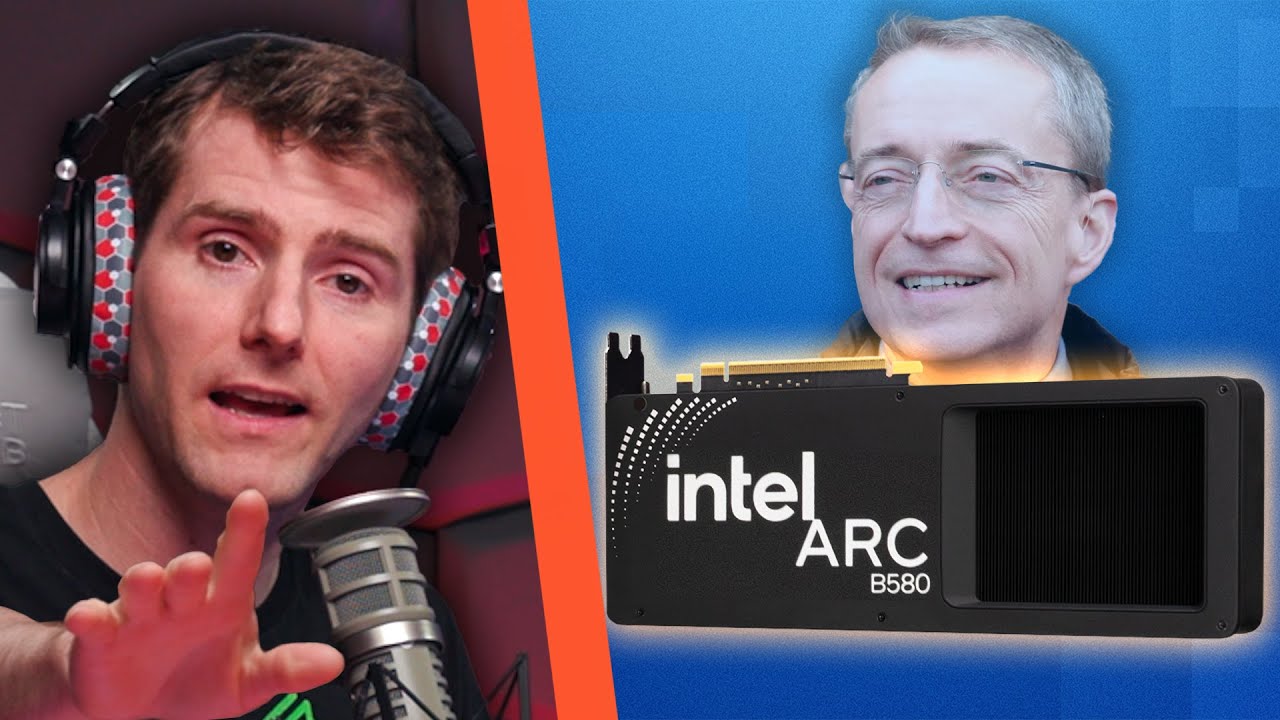
Linus Ranting About Intel for 30 minutes
Your rating
Reactions
Description
lmg.gg Thanks to Secretlab for being the title sponsor of LMG Clips this year!
Promos
Check out their ergonomic gaming chairs at the link above. Your back will thank you! Linus and Luke discuss Intel’s launch of the Arc B580 graphics card and how it’s made them feel things they haven’t felt in a long time. Watch the full WAN Show: youtu.be ► GET MERCH: lttstore.com ► GET EXCLUSIVE CONTENT ON FLOATPLANE: lmg.gg ► SPONSORS, AFFILIATES, AND PARTNERS: lmg.gg
AI Overview
Linus and Luke begin with Intel’s Arc B580 launch, describing a $249 graphics card with 12 GB of VRAM and strong 1080p and 1440p results. Their testing showed it ahead of the RTX 4060 in some comparisons, though they note that benchmark results vary by game and testing suite. They explain that reviewers choose games to test specific features and performance characteristics, not only because those games are popular. After discussing the B580 selling out and Intel’s expected weekly restocks, Linus urges Intel and its partners to prioritize availability and keep pricing competitive, including in Europe. The conversation turns to Pat Gelsinger’s comments about Intel employees and the difficulty of judging leadership when projects take years to develop. Linus says the B580 still has compatibility issues in some games, including Starfield, and mentions a Cyberpunk 2077 ray-tracing test that crashed. He advises buyers not to rely solely on promises of future driver improvements, while saying Intel has previously shown a credible commitment to improving Arc drivers. The hosts then reflect on how unusually enjoyable it was to review a genuinely appealing budget graphics card after years of products they felt offered less compelling value. Linus describes the B580 review as a welcome change from having to criticize overpriced or disappointing hardware. He says a $250 GPU that people genuinely want to buy has been rare for years, contrasting it with products that customers felt forced to choose because alternatives were poor. He also discusses the frustration of being criticized for reporting that a product is a reasonable deal in a bad market, while stressing that reviewers cannot control what companies charge. The segment emphasizes that the positive response to the review should also credit Intel’s engineering and software teams, not just the creators who covered it. The hosts praise Intel’s work on the GPU and say graphics development also supports Intel’s data-center and mobile ambitions, including Lunar Lake. Linus refers to reports that the hardware groundwork for the Celestial architecture is complete and that Druid is in development. He also applauds Intel’s launch communication, saying the company shared useful performance information, including cases where the card performed poorly, rather than hiding weaknesses. They argue that transparent information helps reviewers explain a product accurately and helps buyers make informed decisions. Linus says years of high prices, limited availability, and expensive technology have weakened interest in PC hardware, making it harder to create content about the hobby. He says recent PC-building guides performed poorly, while the B580 launch drew attention, and argues that exciting products can bring new people into the market. He expects Intel Arc to pressure Nvidia and AMD to offer more competitive prices, and says the B580 is a credible option for some builds if buyers check whether their games run well. The hosts also discuss using an APU for older games that may be less compatible with the B580. The discussion broadens to AMD’s lineup, with Linus asking where current-generation Ryzen 3 processors and non-X Ryzen 9000 models are. He criticizes the industry for focusing on selling products at the highest price the market will bear instead of launching accessible products that build enthusiasm. The hosts acknowledge that Intel has also previously neglected investment and innovation, and argue that buyers should judge brands by what they have done lately rather than by lasting brand loyalty. They mention the 2024 Mac Mini as an example of a product that feels exciting, while noting that compelling launches are scarce. In the final stretch, Linus explains that fewer hardware launches make it difficult for a technology channel to keep producing GPU and CPU reviews without repeating itself. He points out that major graphics card generations can be separated by more than two years, while prices may remain high between launches. The hosts say their team now has to work harder to create interesting concepts because fewer naturally exciting products arrive at the office. Linus closes by praising the team’s work while emphasizing that frequent, compelling hardware releases would make coverage easier and more engaging.
Topics · science & technology · hardware · pc · podcast · opinion · clip
Questions answered
- What performance and price did the Intel Arc B580 offer at launch?
- The Arc B580 launched at $249 with 12 GB of VRAM. The hosts cite their testing as showing strong 1080p and 1440p performance and a 20% uplift over the RTX 4060 in their comparison, while noting that results depend on the games tested.
- What should buyers consider before choosing the Intel Arc B580?
- Buyers should check performance and compatibility in the specific games they play. The hosts mention Starfield as a problem title and discuss driver issues, while noting Intel’s history of improving Arc drivers.
- Why does Linus want Intel to keep Arc B580 prices competitive?
- He argues that attractive pricing and reliable availability can build market share, win over gamers, and encourage Nvidia and AMD to offer more competitive graphics cards.
- Why does Linus say PC hardware coverage has become harder to produce?
- He says compelling hardware launches are less frequent, prices and availability have discouraged interest in the PC hobby, and major GPU generations can be separated by more than two years.
- What does Linus say about brand loyalty when choosing PC hardware?
- He says buyers should avoid permanent brand loyalty and instead consider what each company has done lately.


