Your rating
Reactions
Promos
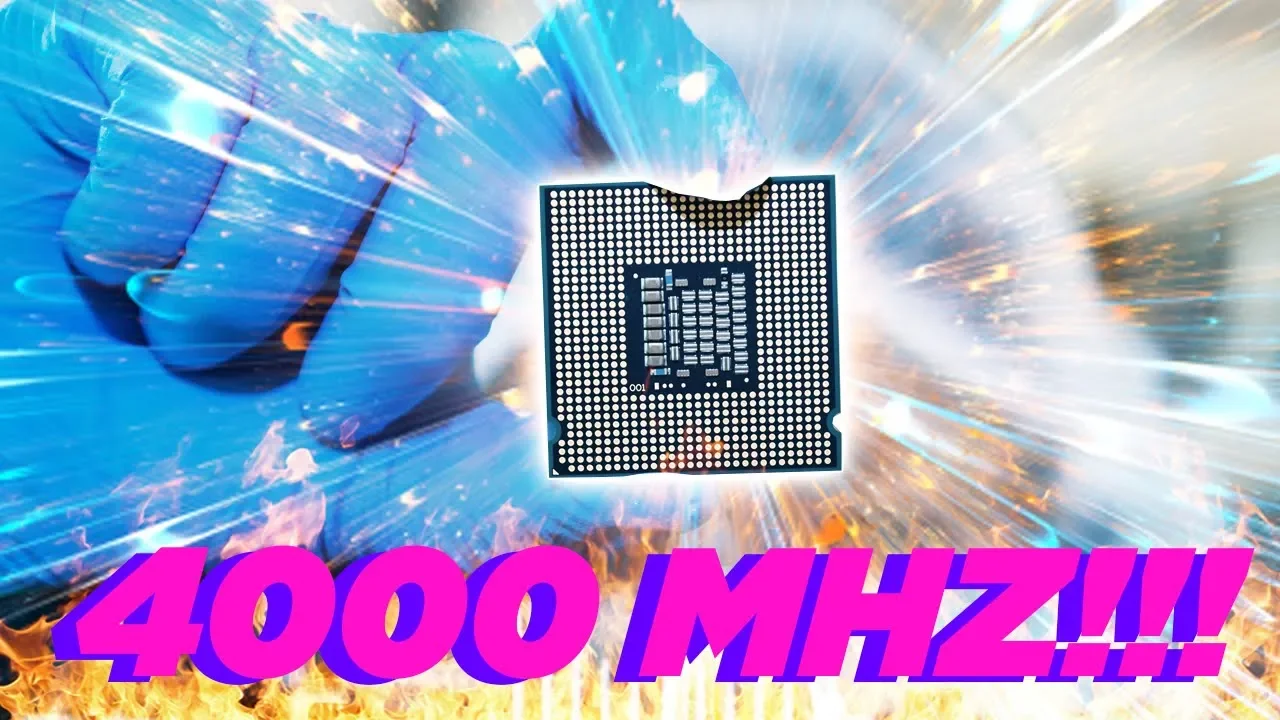
Freshbooks message: Head over to freshbooks.com and don’t forget to enter Tech Quickie in the “How Did You Hear About Us” section when signing up for your free trial. Advertised clock speeds for CPUs usually don't matter that much - but why? Techquickie Merch Store: designbyhumans.com Techquickie Movie Poster: shop.crowdmade.com Follow: twitter.com Leave a reply with your requests for future episodes, or tweet them here: twitter.com Join the community: linustechtips.com Intro Theme: Showdown by F.O.O.L from Monstercat - Best of 2016 Video Link: youtube.com iTunes Download Link: itunes.apple.com Listen on Spotify: open.spotify.com
AI Overview
Does CPU clock speed actually matter is a deep dive into why raw MHz or GHz alone is not a reliable measure of processor performance. The video opens by challenging the marketing habit of listing high clock speeds and explains that modern CPUs are limited by more than just cycles per second. It defines what a clock cycle is and describes how the performance of a CPU depends on instructions per clock, a concept sharpened by pipelining and how instruction execution is overlapped in stages. The host then explains that various microarchitectural features determine IPC and pipeline efficiency, such as out of order execution, branch prediction, and caching, which dramatically affect real-world performance. The discussion moves to how memory types and cache levels influence data access speed, making it clear that cache locality can trump clock speed in many tasks. The video emphasizes that multi-core designs can speed up workloads through parallelism, which again shifts the focus away from solely chasing higher clock speeds. Finally, the host notes that while clock speed remains a useful comparative metric under strict conditions, it should not drive purchasing decisions in isolation and likens the decision to other features like car cupholders, which should not dictate overall value. The overall takeaway is that for CPU selection, you should compare CPUs with the same architecture, core count, and cache and consider IPC and memory subsystem alongside clock speed to gauge true performance. The segment also touches on practical usage tips and a brief product pitch for FreshBooks, but the core educational message remains that clock speed alone is a poor predictor of performance across different CPU designs and workloads.
Topics · technology · computing · cpu-architecture · hardware-performance · processor-design
Questions answered
- Why is MHz/GHz not a reliable sole predictor of CPU performance?
- Because CPU performance depends largely on instructions per clock, IPC, and microarchitectural features like pipelining, out-of-order execution, branch prediction, and cache efficiency, which can vary greatly between architectures and models.
- What factors should you consider besides clock speed when choosing a CPU?
- Consider the architecture, number of cores, IPC, cache size and efficiency, memory support, and how well the workload can be parallelized, as well as power efficiency and specific use cases like gaming, content creation, or multi-threaded workloads.


