Your rating
Reactions
Promos
Sign up for Private Internet Access VPN at lmg.gg Is it all a big conspiracy to get you to keep spending money on new motherboards, or is there more to it than that? Buy AMD CPUs On Amazon (PAID LINK): geni.us On Newegg (PAID LINK): geni.us On B&H (PAID LINK): geni.us Buy Intel CPUs On Amazon (PAID LINK): geni.us On Newegg (PAID LINK): geni.us On B&H (PAID LINK): geni.us Leave a reply with your requests for future episodes, or tweet them here: twitter.com GET MERCH: lttstore.com SUPPORT US ON FLOATPLANE: floatplane.com LTX EXPO: ltxexpo.com AFFILIATES & REFERRALS --------------------------------------------------- Affiliates, Sponsors & Referrals: lmg.gg Get Private Internet Access VPN at lmg.gg Get a Displate Metal Print at lmg.gg Support a Creator code LINUSMEDIAGROUP on Epic Games Store: lmg.gg Get a 30-day free trial of Amazon Prime at lmg.gg Our Test Benches on Amazon: lmg.gg Our Production Gear: lmg.gg FOLLOW US ELSEWHERE --------------------------------------------------- Twitter: twitter.com Facebook: @LinusTech Instagram: @linustech Twitch: twitch.tv FOLLOW OUR OTHER CHANNELS --------------------------------------------------- Linus Tech Tips: lmg.gg TechLinked: lmg.gg ShortCircuit: lmg.gg LMG Clips: lmg.gg Channel Super Fun: lmg.gg Carpool Critics: lmg.gg
AI Overview
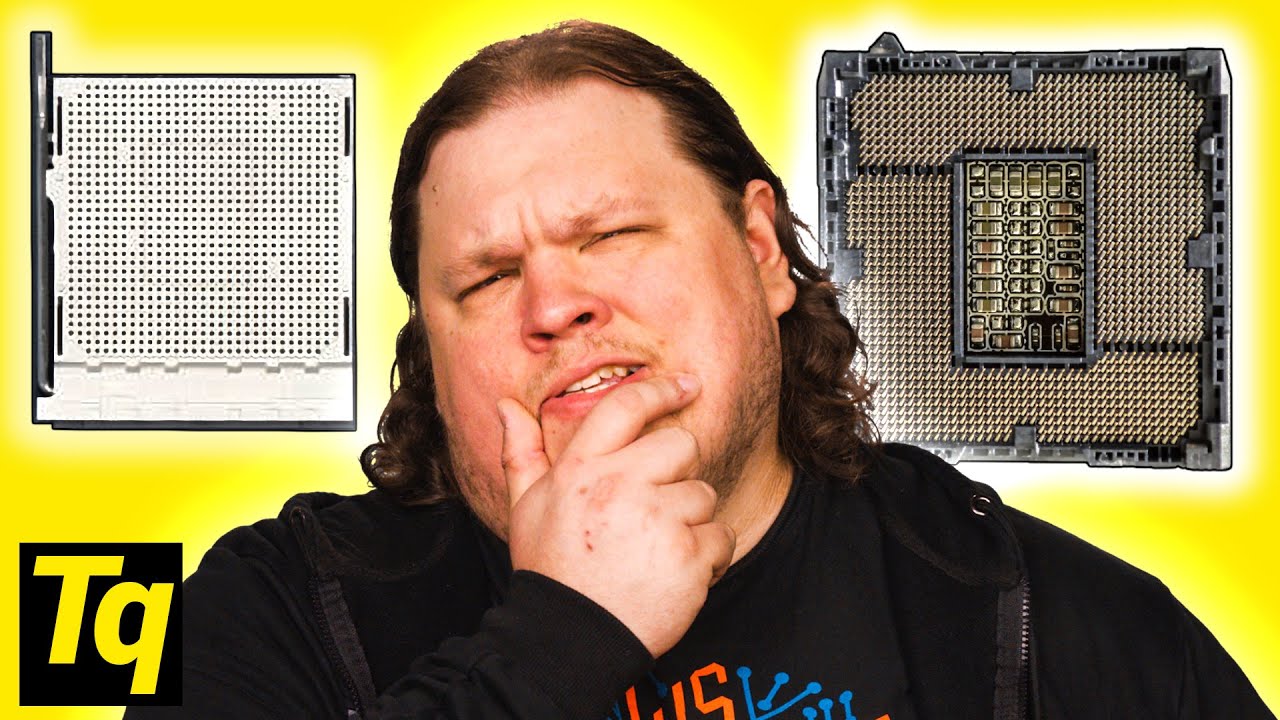
The video explains why CPU sockets change more often than users expect, focusing on how pin layouts are fixed for specific purposes and have limited wiggle room for platform changes. Pins on a CPU are designated for power delivery, data transmission, and even reserved pins for potential future functionality, which constrains how socket designs can evolve. The host points out that as processors demand more power, have faster interfaces like PCI Express and USB, and require better signal integrity, motherboard manufacturers must adapt with new sockets to accommodate these needs. The discussion includes concrete examples, such as AMD using reserved pins to add PCIe 4.0 support with Zen 2, and Intel increasing pin count with its 10th Gen processors to handle higher TDP. The video frames how these changes create a cycle where new CPUs demand upgraded motherboards and sometimes new BIOS approaches, which can be frustrating for consumers but are intended to improve reliability and user experience in the long run. The segment also touches on AMD’s Zen 3 chipset transition and the BIOS size considerations that influenced socket decisions, illustrating the balance between backward compatibility and advancing performance. Finally, the presenter notes that while socket changes can feel like a money grab, manufacturers often view them as necessary to reduce consumer confusion and to ensure new CPUs work with correctly designed power delivery and motherboard standards. The piece closes with a light aside on upgrades and a plug for related content and sponsorships, reinforcing the practical takeaways about budgeting for future motherboard upgrades alongside CPU purchases.
Topics · technology · hardware · computer_hardware · semiconductors
Questions answered
- Why do CPU sockets frequently require changes across generations?
- CPU socket changes are driven by fixed pin assignments for power delivery, data transmission, and reserved pins for future features, plus the need to support higher power and faster interfaces, which can necessitate new socket designs.
- What are some factors that push socket changes besides power delivery?
- Faster memory, USB, and PCI Express speeds increase demands on signal integrity, potentially requiring a thicker PCB, more layers, and stricter motherboard standards that motivate a new socket to preserve performance and reliability.
- How do manufacturers justify socket changes to consumers?
- They aim to reduce consumer confusion by making upgrade paths clearer, even if it means requiring a BIOS update or a new motherboard, balancing backward compatibility with improved power delivery and future-proofing.


