Your rating
Reactions
Promos
What are the differences between the different CPU models in AMD's new Ryzen lineup? Freshbooks message: Head over to freshbooks.com and don’t forget to enter Tech Quickie in the “How Did You Hear About Us” section when signing up for your free trial. Techquickie Merch Store: https://www.designbyhumans.com/shop/L... Techquickie Movie Poster: https://shop.crowdmade.com/collection... Follow: twitter.com Leave a reply with your requests for future episodes, or tweet them here: twitter.com Intro Theme: Showdown by F.O.O.L from Monstercat - Best of 2016 Video Link: youtube.com iTunes Download Link: itunes.apple.com Listen on Spotify: open.spotify.com
AI Overview
The video explains the AMD Ryzen lineup with a focus on the meaning behind the Ryzen 3, 5, and 7 naming, and how each tier fits different use cases. It starts by noting that the numbers do not map directly to a simple performance ladder but reflect positioning within the lineup, with Ryzen 3 targeting basic gaming and everyday tasks, Ryzen 5 covering mid-range scenarios including light content creation, and Ryzen 7 addressing more demanding workloads and multitasking. The presenter compares these desktop CPUs to Intel equivalents to give viewers a frame of reference, highlighting that Ryzen 3 uses a 65 watt TDP and ships with a basic cooler, while Ryzen 5 offers both 4-core/8-thread and 6-core/12-thread variants with variable coolers such as the Wraith Stealth or Wraith Spire depending on the model. The Ryzen 7 family is described as an 8-core/16-thread tier with similar thermal characteristics, while the high-end Threadripper line expands the concept to 8, 12, and 16-core configurations designed for extreme multitasking, virtualization, and compute throughput, complete with substantial PCIe lane counts. The guide emphasizes two practical takeaways: every Ryzen SKU is unlocked for overclocking and Ryzen’s strength lies in multi-threaded workloads, with single-core performance sometimes trailing Intel in certain games. Throughout, the host balances practical buying advice with real-world use-case scenarios, suggesting the Ryzen 3 as a solid gaming entry point, Ryzen 5 for mixed workloads and streaming, Ryzen 7 for heavier tasks, and Threadripper for specialized, high-end setups, while noting that cooling and power considerations are important across the lineup. The segment ends by inviting viewer feedback and questions, transitioning into a sponsorship and closing call to action that emphasizes project management and invoicing productivity for freelancers.
Topics · technology · computing · hardware · cpus
Questions answered
- What does Ryzen 3 actually signify in AMD's lineup?
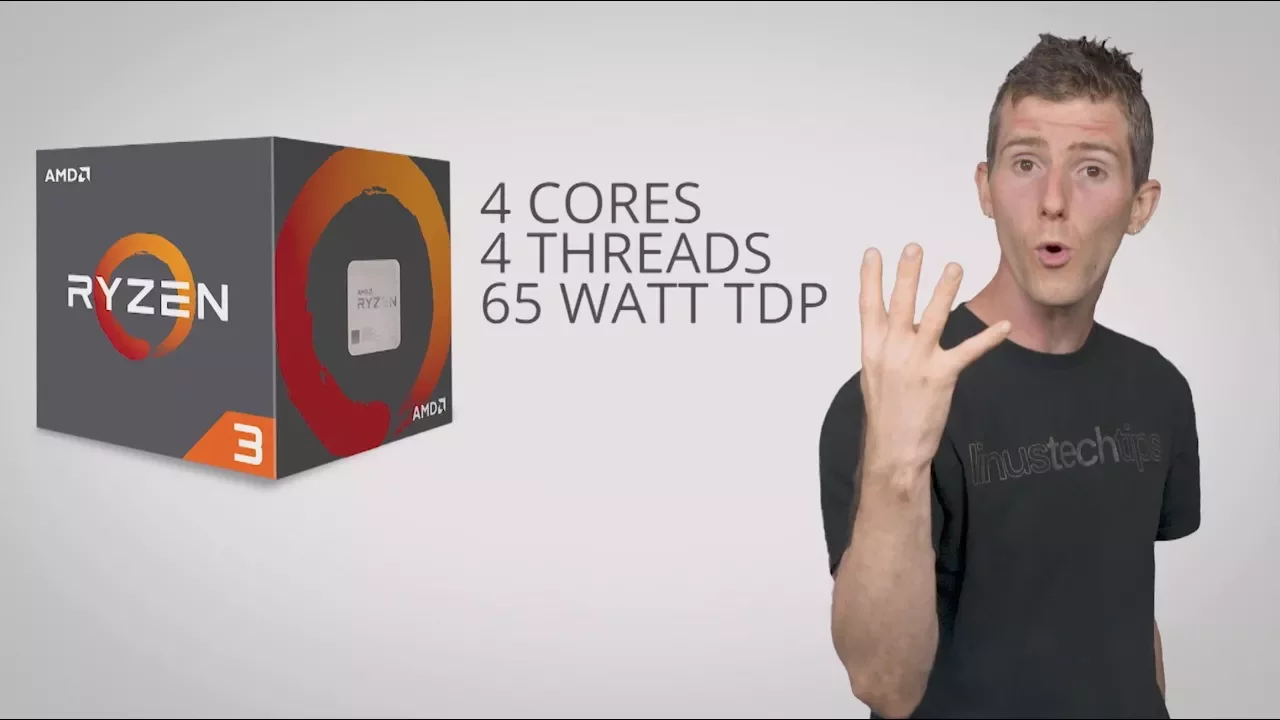
- Ryzen 3 denotes the entry tier in AMD's consumer lineup, featuring 4 cores and 4 threads with a 65 watt TDP and a basic cooler, aimed at solid gaming and general tasks without heavy overclocking.
- How do Ryzen 5 models differ from Ryzen 3 and who should consider them?
- Ryzen 5 includes both 4-core/8-thread and 6-core/12-thread variants, uses a more capable cooler on most SKUs, and targets mainstream gaming plus light content creation or streaming, offering better multi-threaded performance than Ryzen 3.
- What is Ryzen Threadripper and who would buy it?
- Ryzen Threadripper is AMD's high-end consumer/prosumer line with 8, 12, or 16 cores and 16 or more threads, designed for extreme multitasking, virtualization, and heavy GPU compute workloads, featuring many PCIe lanes and higher power requirements.


