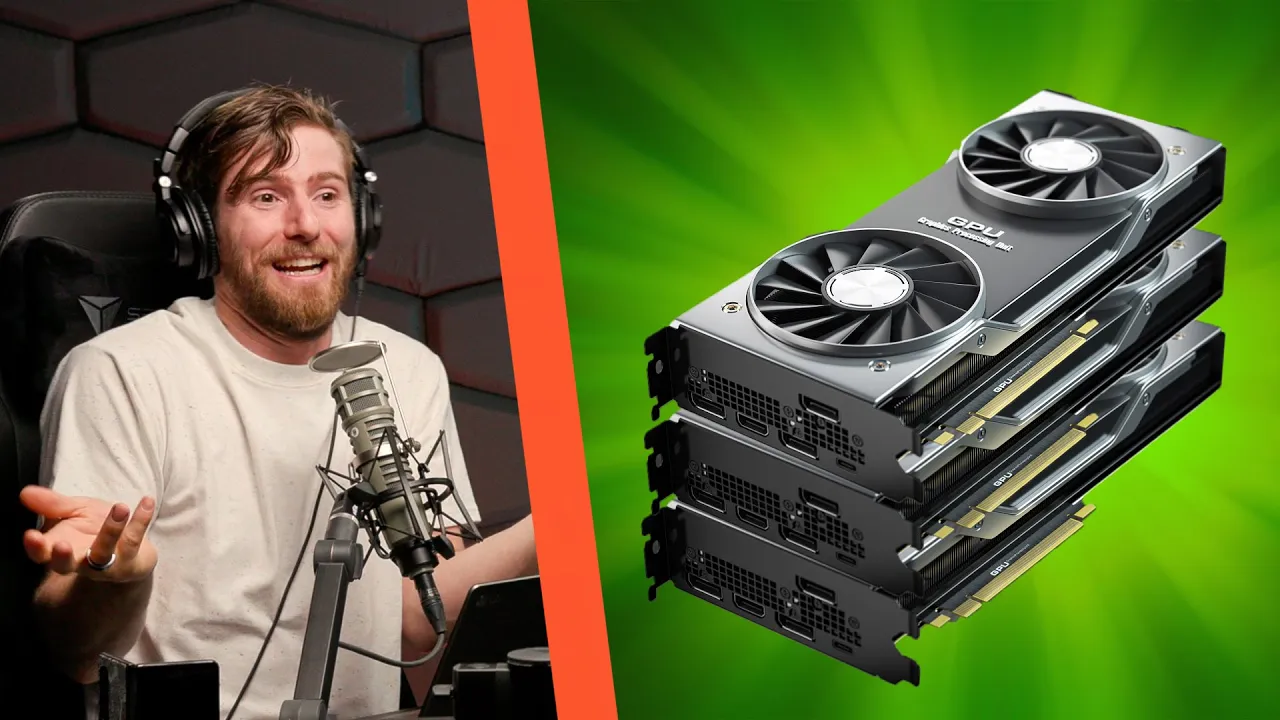
Nvidia may be stuck with a TON of 40 series GPUs
Your rating
Reactions
Promos
Oh no.... Anyways. Watch the full WAN Show: youtube.com ► GET MERCH: lttstore.com ► AFFILIATES, SPONSORS & REFERRALS: lmg.gg ► PODCAST GEAR: lmg.gg ► SUPPORT US ON FLOATPLANE: floatplane.com FOLLOW US ON SOCIAL --------------------------------------------------- Twitter: twitter.com Facebook: @LinusTech Instagram: @linustech TikTok: @linustech Twitch: twitch.tv
AI Overview
The discussion focuses on whether NVIDIA could be left with more next-generation GPU production capacity than it needs after the crypto market downturn. The speakers say NVIDIA had booked 5-nanometer wafer capacity with TSMC before the change in demand, with production plans apparently based in part on the high GPU sales volumes seen during cryptocurrency mining. They criticize NVIDIA and AMD as companies that sell GPUs to the most profitable customers, rather than acting as advocates for gamers. They also question NVIDIA’s past statements about how much of its GPU sales went to miners, pointing to its reported fine for not properly disclosing the role of mining in sales.
Topics · science & technology · hardware · gpu · pc · podcast
Questions answered
- Why might NVIDIA have excess production capacity for its RTX 40 series GPUs?
- NVIDIA had booked 5-nanometer wafer capacity with TSMC before the crypto downturn changed GPU demand, apparently basing its plans partly on the high sales volumes associated with mining.
- Can NVIDIA easily cancel its TSMC wafer orders?
- The discussion says reports suggested TSMC would not make major concessions, and that NVIDIA might have to find replacement customers for any orders it wanted to leave.
- Could automakers readily take over NVIDIA's 5-nanometer wafer capacity?
- Probably not. The speakers say automakers generally do not need leading-edge manufacturing nodes for their chips, and that updating designs to newer processes can be difficult.
- Would data centers take over NVIDIA's unused wafer capacity?
- The speakers distinguish between buying GPUs and buying wafer or fabrication capacity, saying data centers would buy finished GPUs rather than the wafer capacity itself.


