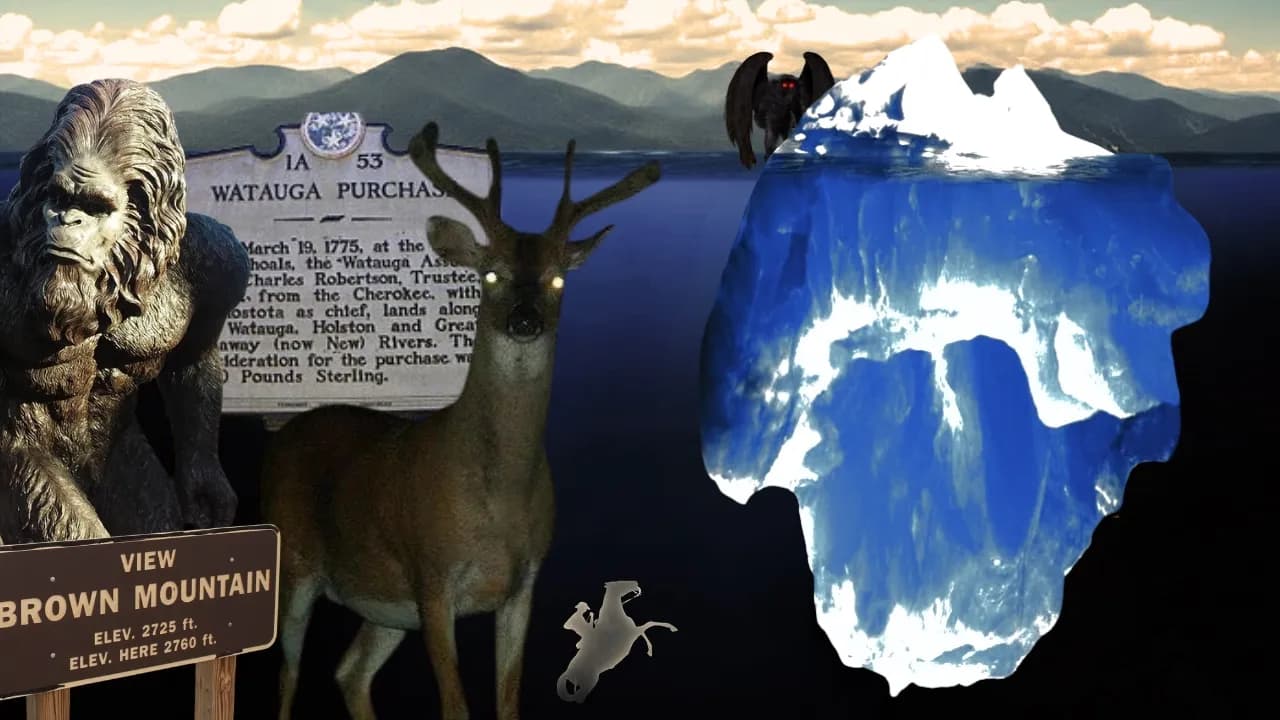
Mysteries and Legends of Alabama
Este vídeo también tiene audio en español (doblaje automático). En el reproductor, abre Configuración → Pista de audio y elige español.
Tu valoración
Reacciones
AudioInglés (original)Doblaje automático: Español, Alemán, Francés, Neerlandés, Árabe, Bengalí, Coreano, Hebreo, Hindi, Indonesio+8 más
Descripción
Welcome to the strange and obscure mysteries and legends of Alabama. I hope you all enjoy, make sure to subscribe, and thank you for watching! Copyright disclaimer under section 107 of the copyright act 1976, allowance is made for fair use for purposes such as criticism, comment, news reporting, teaching, scholarship, and more. no copyright infringement intended. Shoutout to 13 Alabama Ghosts and Jeffrey by Kathryn Tucker Windham and Margaret Gillis Figh for some of the entries! Timestamps: 0:00 - Intro 0:13 - Ghost of Grancer Harrison 3:26 - Bill Sketoe's Hole 7:07 - The Face in the Courthouse Window 11:03 - Red Lady of Huntingdon College 14:51 - Pegues’ Ghost 18:04 - The Crying Spirit at the Well 21:34 - Mobile's Pipe-Smoking Captain 24:49 - The Ruined Banker 28:04 - Rocky Hill Castle 30:55 - The Drish House 34:55 - Kenworthy Hall 37:29 - The Ghosts of the Tombigbee 40:42 - Ghost of Gaineswood 43:28 - Hell's Gate Bridge 46:28 - Aunt Jenny Johnston 49:58 - Boyington Oak 53:15 - Metal Man of Alabama 56:34 - Sally Carter's Grave 59:16 - Sloss Furnace Music: Avith Ortega - Sunset Through Mist
Resumen de IA
This collection presents Alabama legends and reported hauntings, pairing supernatural stories with historical details and occasional doubts about the accounts. The Ghost of Grancer Harrison centers on a wealthy Coffee County cotton planter remembered for hosting dances and wanting to be buried in his dance clothes. Locals later reported hearing fiddles and dancing near his cemetery on Saturday nights. In 1964, vandals dynamited his tomb while searching for rumored gold, but none was found. Bill Sketoe’s legend describes a hole that supposedly reappeared after people tried to fill it, though flooding and bridge work buried the original site in 1990. The Pickens County Courthouse story links the image of a face in a window to Henry Wells, a freedman accused of arson and killed after an alleged escape attempt. The account notes that the historical timeline challenges the legend, since courthouse windows were reportedly installed weeks after Wells died. At Huntington College, the Red Lady story became connected with a student named Martha, whose ghost was said to appear in a red glow after her death. Pegues’ Ghost is described as a floating white light reported near Colonel C.C. Pegues’ home and gardens in Cahaba. In Furman, a well collapse and a worker’s death gave rise to tales of a crying spirit and a black hand appearing near the sunken ground. Mobile’s pipe-smoking captain is said to have remained around his former home, where residents reported footsteps, doors opening, and the smell of tobacco. In Selma, the legend of banker John McGee Parkman grew from his financial collapse and a death whose circumstances were described in conflicting accounts. Sturdivant Hall later became associated with reports of his ghost near the arbor, portico, and cupola. Rocky Hill Castle’s lore includes a curse from its architect, a woman in blue, hidden treasure, and a disembodied voice. The Drish House stories include unexplained lights in its tower, sounds of footsteps, and reports of a presence comforting children. At Kenworthy Hall, the story of Ann Carlisle says she awaited news of her soldier sweetheart and died after seeing a red flag that signaled his death. The Eliza Battle legend recalls the 1858 steamboat fire on the Tombigbee River, in which 33 people died, followed by reports of a burning vessel and cries in the fog. The Gainswood story concerns Evelyn Carter, whose body was kept in the mansion’s cellar through winter before burial, after which residents reportedly heard piano music and footsteps. These accounts connect tragic events and historic buildings with later reports of unexplained activity. The stories generally preserve local legends rather than establish that the reported hauntings occurred. Hell’s Gate Bridge in Oxford is tied to tales of a fatal car accident and a ghostly girl appearing in a car’s backseat. Aunt Jenny Johnston’s story draws on accounts that the Home Guard killed her husband and son, while details of her family’s revenge remain disputed. The Boyington Oak legend follows Charles Boyington, who was convicted of murdering Nathaniel Frost and declared that an oak would grow from his grave as proof of his innocence. A tree later grew at the site, and people interpret it either as a sign supporting his words or as coincidence. These stories mix regional folklore with claims that the narration itself identifies as uncertain or embellished. The Falkville Metal Man account describes police chief Jeff Greenhaw’s 1973 report of a tall, reflective humanoid that moved rapidly and was photographed with a Polaroid camera. The narration says the photographs were later reported stolen, while the encounter remains unconfirmed and has been interpreted as either a hoax or an unexplained being. Sally Carter’s legend follows reports of a young girl’s ghost at Cedarhurst and a later cemetery relocation where workers reportedly found a strand of pearls and a juju bag in her coffin. At Sloss Furnaces, stories of dangerous industrial deaths are linked to apparitions, voices, cold spots, and other reported phenomena. Together, the collection presents Alabama’s ghost stories, historical tragedies, and unresolved claims as a broad survey of local folklore.
Temas · paranormal · alabama folklore · alabama mysteries · unexplained · ghosts · legends · unsolved mysteries
Preguntas respondidas
- What is the legend of Bill Sketoe’s Hole in Alabama?
- The legend says that a hole dug beneath Bill Sketoe during his 1864 hanging repeatedly reappeared after people tried to fill it. Flooding and bridge-stabilization work buried the original site in 1990, and a replica was later created nearby.
- Who was Henry Wells in the Pickens County Courthouse legend?
- Henry Wells was a freedman accused of setting fire to the Pickens County Courthouse. The legend says his face remained visible in a courthouse window, but the account notes that records place the installation of the windows after his death.
- What is the Red Lady legend at Huntington College?
- The legend tells of a red-clad apparition associated with the college and a student named Martha, who was said to haunt Prather Hall after her death.
- What happened to the steamboat Eliza Battle on the Tombigbee River?
- On March 1, 1858, a fire ignited cotton aboard the Eliza Battle during its journey toward Mobile. The vessel burned, and 33 people died; later legends describe a burning steamboat and cries appearing in river fog.
- What is the story behind the Boyington Oak in Mobile, Alabama?
- Charles Boyington was convicted of murdering Nathaniel Frost and maintained his innocence. Before his execution, he declared that an oak tree would grow from his grave, and a tree later grew at the site.
- What did Jeff Greenhaw report during the Falkville Metal Man encounter?
- Greenhaw reported seeing a tall, reflective humanoid near Falkville in 1973, photographing it with a Polaroid camera, and pursuing it in his patrol car before it disappeared.
- Why is Hell’s Gate Bridge associated with ghost stories?
- Local legends connect the bridge with a fatal car accident involving teenagers and claims of a ghostly girl or a fiery image appearing to people who stop there at night.
- What paranormal activity is reported at Sloss Furnaces?
- Stories associated with Sloss Furnaces include apparitions, disembodied voices, shadows, cold spots, unexplained movements, and reports of electronic voice phenomena.