If Buying Isn't Owning, Piracy Isn't Stealing
Jouw beoordeling
Reacties
AudioEngels (origineel)Automatisch nagesynchroniseerd: Duits, Frans, Spaans, Hindi, Indonesisch, Italiaans, Portugees
Promoties
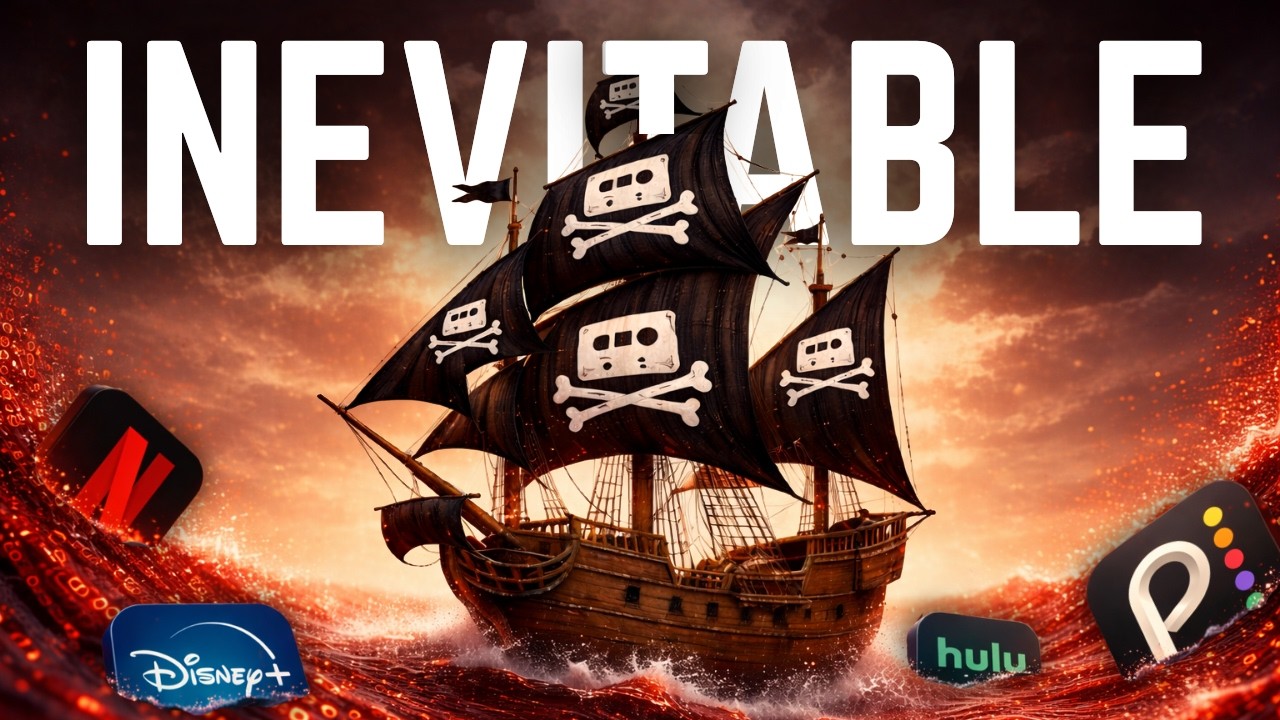
If Buying Is Not Owning Piracy Is Not Stealing Get 20% off DeleteMe by going to joindeleteme.com and use code Damon to protect your privacy! Piracy has returned to the center of cultural conversation as the cost of living crisis collides with a subscription economy that demands more money for less access. Across entertainment, music, film, and television, consumers are navigating a system where ownership has quietly disappeared, replaced by licenses, restrictions, and recurring fees. As prices rise and platforms fragment, piracy is increasingly viewed not as rebellion, but as a rational response to a system that no longer aligns with how people live, earn, or consume media. From the early days of Napster to the modern pirating comeback, piracy has always followed moments of consolidation and economic pressure. When access narrows and costs increase, pirates emerge not out of novelty, but necessity. Streaming platforms like Netflix, Paramount, HBO Max, and Peacock have reshaped entertainment into an endless series of subscriptions, each claiming exclusivity while offering shrinking catalogs and rising prices. The subscription economy thrives on dependence, not ownership, creating a growing disconnect between what people pay for and what they actually control. The phrase if buying isn’t owning then piracy isn’t stealing has become a defining sentiment of the digital age. Digital purchases no longer guarantee permanence, access, or control, and content can disappear without warning. In that environment, piracy reframes itself from theft into preservation, access, and resistance to systems designed around extraction rather than value. Pirating is no longer confined to underground forums; it reflects broader dissatisfaction with how culture is packaged and sold. The modern pirate is not driven by ideology alone, but by economics. As the cost of living crisis continues to squeeze households, discretionary spending on entertainment becomes harder to justify. A single household juggling multiple subscriptions faces a system that assumes infinite tolerance for price hikes, ads, and fragmented access. Piracy fills the gap left behind by a market that prioritizes growth over fairness and convenience over accountability. Piracy discussions increasingly intersect with debates about control, consent, and digital rights. The resurgence of pirating mirrors a wider pushback against platforms that redefine ownership while maintaining full authority over access. As companies tighten restrictions, piracy loosens them, offering an alternative that reflects how people actually engage with media. The pirate archetype has evolved into a symbol of consumer frustration with monopolized distribution and artificial scarcity. Napster once exposed how quickly centralized control could be disrupted, and today’s pirating resurgence echoes that same pressure point. The cycle repeats as platforms consolidate power, raise prices, and fracture access across competing ecosystems. Piracy thrives not because rules are ignored, but because systems fail to adapt to reality. In an era dominated by subscriptions, rising costs, and disappearing ownership, piracy represents a mirror held up to the modern media economy. The ongoing piracy comeback highlights unresolved tensions between access and control, value and price, legality and legitimacy. As long as entertainment remains locked behind escalating paywalls and diminishing returns, piracy will continue to exist not as an anomaly, but as an inevitable outcome of the system itself. #financialeducation #financialfreedom #history 0:00 Intro 0:21 Why Piracy Is Making An EPIC Comeback 0:40 Why Piracy NEVER Emerges During Fair Markets 1:16 How Napster Created The Online Piracy Movement 1:57 Does Piracy Actually Hurt Creators? 2:50 Why Streaming Was Originally Destroying Piracy 3:25 Why Pirating Is Bad... But Acceptable For Companies 4:14 The HIDDEN Way Companies Steal Your Data For Advertising 5:47 How I Protect My Personal Data 7:07 Why AI Companies Are Pirating IMMENSE Amounts Of Data 8:18 Pirating Content Is Illegal... Unless Your An AI Company 8:58 Why Streaming Lost And Piracy Won 10:00 Why Piracy Is Justified 10:43 Why The Laws DON'T Apply To Those In Power 11:47 I End Piracy In 16 Seconds 12:04 I End The Population Collapse In 9 Seconds 12:50 Why Piracy Is Morally Acceptable 13:50 They Think You Are Just A Filthy Consumer 16:16 Why Piracy Is A Digital Revolution To Corruption 17:53 STOP Using Streaming Services Titles for the Algo! Why Piracy Is Making An EPIC Comeback Why Piracy Is GREAT Again Piracy Is The ONLY Logical Solution Streaming Lost. Piracy Won. Why Streaming Lost And Piracy Won
AI-overzicht
De video betoogt dat piraterij doorgaans toeneemt wanneer entertainment duur, versnipperd of moeilijk toegankelijk wordt, en niet wanneer de markt consumenten waar voor hun geld biedt. De video voert dit argument terug naar de muziekindustrie van eind jaren 90 en beschrijft de controle van grote platenlabels, boetes voor prijsafspraken over cd’s en de snelle groei van Napster als alternatief voor het delen van muziek. De presentator vergelijkt de straffen voor Napster met de lagere boetes voor praktijken in de muziekindustrie en merkt op dat sommige onafhankelijke artiesten Napster toeschreven aan het helpen vinden van een publiek. Volgens de video concurreerden streamingdiensten aanvankelijk met piraterij door uitgebreide catalogi tegen betaalbare prijzen aan te bieden, maar door consolidatie, hogere tarieven, advertenties en krimpende catalogi is die aantrekkingskracht afgenomen. Ook bekritiseert de video het verzamelen van kijk- en apparaatgegevens door streamingbedrijven, waaronder automatische contentherkenning op smart-tv’s. De centrale stelling is dat piraterij voor consumenten kan aanvoelen als een reactie op oneerlijke systemen wanneer digitale aankopen weinig controle bieden en toegang steeds duurder wordt, ook al blijft piraterij illegaal.
Onderwerpen · onderwijs · digitale piraterij · streamingdiensten · digitale rechten · gegevensprivacy · consumentenrechten
Beantwoorde vragen
- Waarom stelt de video dat online piraterij terugkeert?
- De video stelt dat hogere abonnementsprijzen, advertenties, versnipperde catalogi en beperktere toegang legaal entertainment minder aantrekkelijk maken voor consumenten.
- Hoe verbindt de video Napster met moderne piraterij?
- De video beschrijft Napster als een peer-to-peerplatform voor het delen van muziek dat snel groeide te midden van hoge cd-prijzen en de controle van platenlabels, en vergelijkt die periode met de huidige onvrede over streamingdiensten.
- Welke zorgen over privacy uit de video over smart-tv’s?
- De video stelt dat automatische contentherkenning audio en video kan identificeren die op een televisie worden weergegeven, waaronder content uit verschillende bronnen, en dat kijkgegevens kunnen worden gebruikt om advertentieprofielen op te stellen.
- Welke voorbeelden geeft de video van AI-bedrijven die gepirateerd of auteursrechtelijk beschermd materiaal gebruiken?
- De video bespreekt berichten dat Nvidia toegang zocht tot boeken van Anna's Archive en dat medewerkers van Meta materiaal downloadden via torrents voor AI-training, en merkt daarbij op dat de rechtszaken nog liepen.
- Wat zou volgens de video piraterij terugdringen?
- De video stelt dat bedrijven piraterij kunnen terugdringen door meer waar voor je geld, betaalbare prijzen en redelijke toegang tot entertainment te bieden.