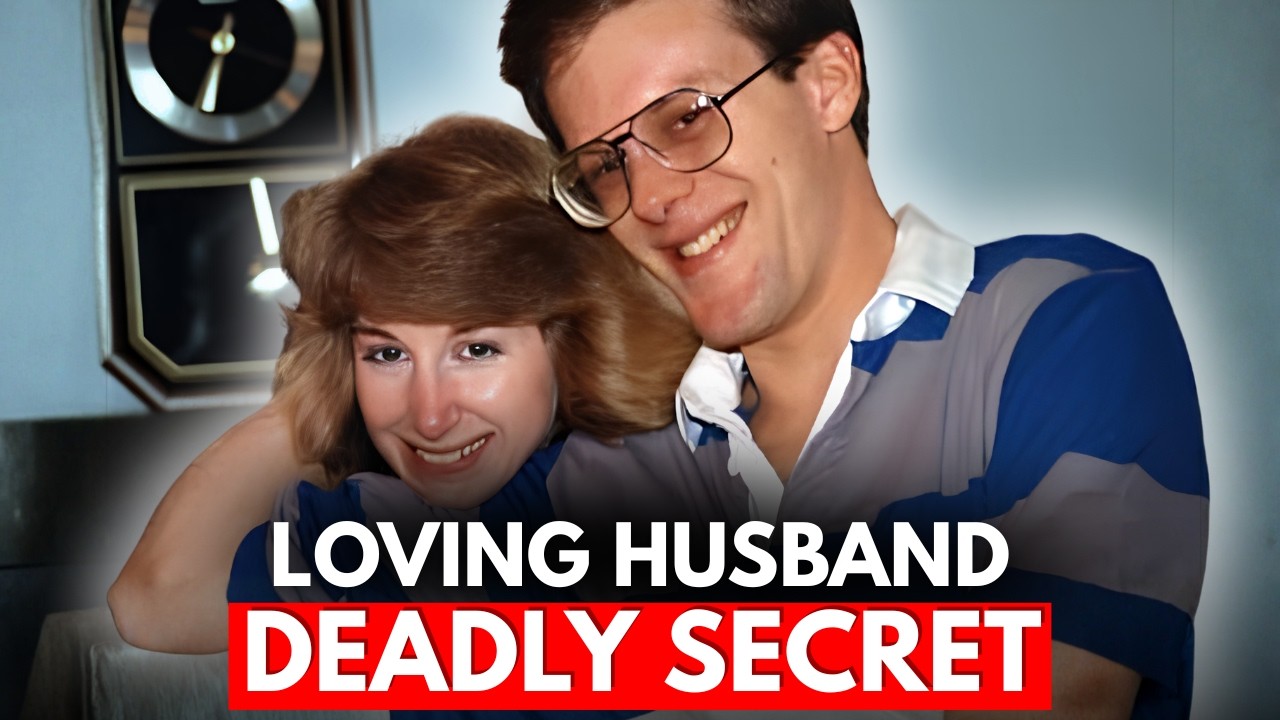
This Is The Most Disturbing Case I've Covered - True Crime Documentary
Your rating
Reactions
AudioEnglish (original)Auto-dubbed: Dutch, French, German, Spanish, Arabic, Bangla, Hebrew, Hindi, Indonesian, Italian+10 more
Description
Unreal True Crime - Latin Edition Available on:
Channels and socials
Amazon - shorturl.at Some links in this description are affiliate links, which means I may earn a commission at no extra cost to you. ------------------------------------------------------------------------ Mark Jensen had a marriage, a home, two young sons.Mark Jensen had a marriage, a home, two young sons. Then, in late 1998, someone began poisoning Julie Jensen — in her own bed. What followed was a sealed letter, a secret affair, and antifreeze in her blood. The danger wasn't outside her life. Prosecutors said it was inside her marriage. ------------------------------------------------------------------------ Unreal True Crime creates original narratives based on extensive research using publicly available sources such as news reports, court documents, interviews, and archival material. While we strive to investigate each case as thoroughly and accurately as possible, some details may be incomplete or subject to interpretation, and unintentional errors may occur. This content is published in accordance with Fair Use principles under Section 107 of the U.S. Copyright Act, allowing the use of limited portions of copyrighted material for purposes such as commentary, criticism, education, and analysis. For narration, this channel may use AI-generated voice technology as a production tool to deliver the script clearly and consistently. All scripts are originally written and structured by our team, and the use of AI voice does not replace human research, writing, or editorial judgment. Unreal True Crime does not seek to glorify violence or exploit tragedy. Our goal is to inform, analyze, and encourage critical thinking about real criminal cases.
AI Overview
Julie Jensen was found dead in her Wisconsin home on December 3, 1998. Two weeks earlier, she had left a sealed letter with neighbors, asking them to give it to police if anything happened to her. The letter named her husband, Mark Jensen, and described her fear that he would kill her. Julie had also reported harassment, kept a log of incidents, and told people close to her that she feared for her life. The case examines how her warnings and records became central to the investigation. Investigators found ethylene glycol, a toxic ingredient in antifreeze, in Julie’s blood, stomach, and urine. Computer searches at the Jensen home included topics related to drugs, poisoning, toxicology, and ethylene glycol in the weeks before her death. Prosecutors argued that the search timeline showed planning, while the defense suggested Julie could have made the searches herself to frame Mark. Evidence also included Mark’s affair with coworker Kelly Labonte and testimony about his conduct after Julie’s death. The prosecution further presented accounts of harassment and Mark’s alleged interest in undetectable poison. Mark was charged in 2002 and convicted of first-degree intentional homicide in 2008. That first conviction was overturned after courts ruled that Julie’s letter could not be used at a new trial under the confrontation clause. At the 2023 retrial, prosecutors presented the remaining evidence, including computer searches, witness testimony, and medical evidence. The jury again found Mark guilty after about six and a half hours of deliberation. He was sentenced to life in prison without parole. The documentary describes the case as circumstantial, with investigators building their account from toxicology, digital records, and witness testimony rather than an eyewitness to the killing. It explains that the suffocation theory was disputed, while prosecutors argued that poisoning alone supported the homicide conviction. The story also discusses the harassment Julie documented as a possible pattern of coercive control. At sentencing, the couple’s sons expressed different views about whether Mark should ever be eligible for parole. The case concludes with the significance of Julie’s warnings and the evidence that remained persuasive without her letter.
Topics · people & blogs · true crime · crime documentary · criminal justice · domestic violence
Questions answered
- Who was Julie Jensen, and how did she die?
- Julie Jensen was a Wisconsin mother found dead in her bed on December 3, 1998. Toxicology found ethylene glycol, an ingredient in antifreeze, in her blood, stomach, and urine.
- What warning did Julie Jensen leave before her death?
- She gave her neighbors a sealed letter and asked them to deliver it to police if anything happened to her. The letter said Mark Jensen should be the first person investigated.
- What evidence did prosecutors present against Mark Jensen?
- Prosecutors relied on toxicology results, computer searches related to poisoning and ethylene glycol, witness testimony, evidence of Mark Jensen’s affair, and Julie’s documented fears and reports of harassment.
- Why was Mark Jensen’s 2008 conviction overturned?
- Courts ruled that Julie Jensen’s letter was testimonial evidence and could not be used at a new trial because Mark could not cross-examine her.
- What was the outcome of Mark Jensen’s 2023 retrial?
- A jury again found Mark Jensen guilty of first-degree intentional homicide. He was sentenced to life in prison without parole.
- What was disputed about the medical evidence in the Jensen case?
- The prosecution argued that Julie was poisoned over several days, sedated with Ambien, and ultimately suffocated. The defense disputed the suffocation theory and argued that the medical evidence was inconclusive, while the prosecution maintained that poisoning alone supported the conviction.


