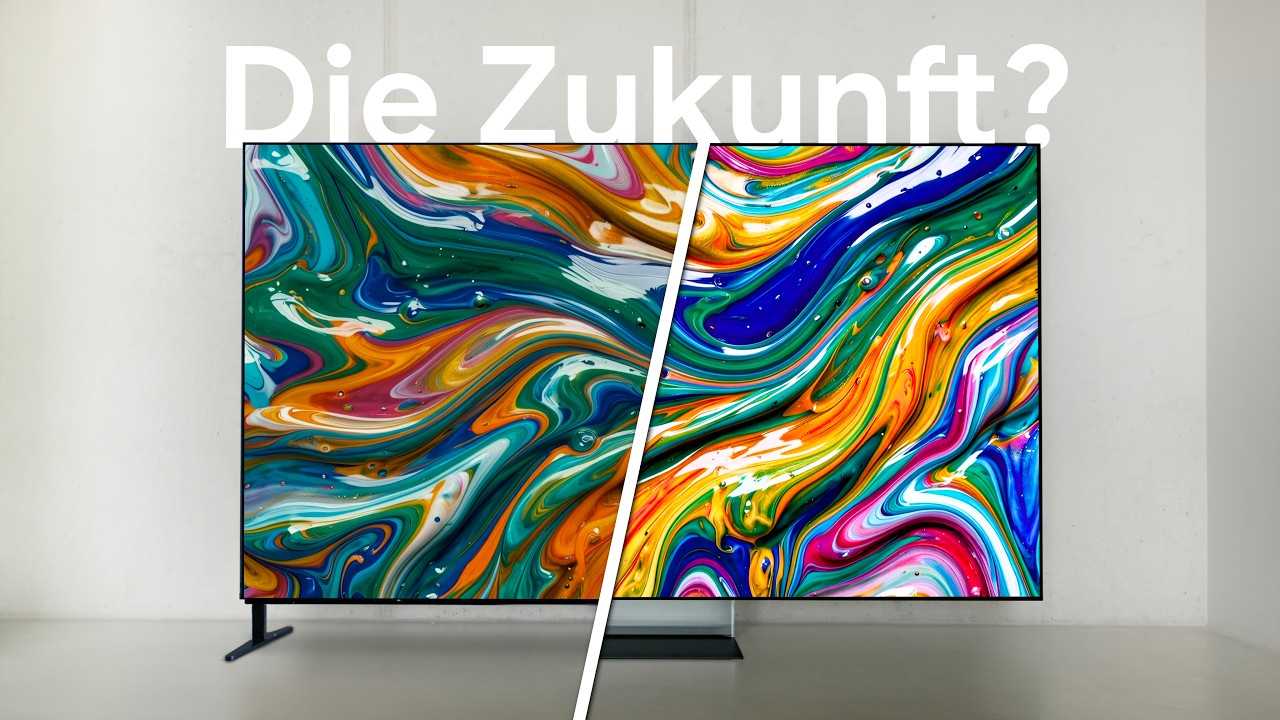
Wirklich besser als OLED? RGB-LED getestet!
This video also has English audio (auto-dubbed). In the player, open Settings → Audio track and choose English.
Your rating
Reactions
AudioGerman (original)Auto-dubbed: English
Channels and socials
OLED gilt als die beste TV-Technik, doch jetzt gibt es eine Alternative: RGB-LED. Doch ist das wirklich besser? Anzeige - Weitere Infos zum BRAVIA 9 II findet ihr auf: sony.de #Sony #Bravia9II #SonyHomeEntertainment #SonyRGBTV #SonySmartTV #FernseherVergleich @sonydeutschland.österreich Dieses Video wurde durch Sony unterstützt. Alle Meinungen sind meine eigenen. Mein Shop mit dynamischen Hintergrundbildern und Kaffee: kram.store Instagram: @iknow.mp4 Twitter: twitter.com TikTok: @iknow.mp4 Meist die Hintergrundmusik: bit.ly Oft aber auch:* epidemicsound.com *Affiliate Links unterstützen meinen Kanal - der Einkauf kostet für dich genau gleich viel :)
AI Overview
The review compares Sony’s BRAVIA 9 II RGB LED television with OLED and Mini LED, explaining how RGB LED uses separate red, green, and blue backlight LEDs rather than a white backlight. The presenter says this design improves color volume and brightness while reducing energy use and colored halos around bright objects. The BRAVIA 9 II is reported to cover 91.6% of the BT.2020 color spectrum, compared with about 78% for WOLED and 84% for QD-OLED. Its measured brightness is described as reaching 4,300 nits at 5% and 10% screen coverage, and 1,000 nits full-screen. The reviewer also praises the matte screen coating for limiting reflections. Sony supported the video and loaned the televisions used for the comparison. OLED retains advantages in thinness, extreme viewing angles, pixel-level black control, and gaming motion clarity. The reviewer notes that RGB LED still shows some glow around bright objects and slight motion streaking, while its near-black gradients appear smooth and 24 fps films avoid the judder the presenter associates with OLED. The BRAVIA 9 II includes 4K 120 Hz, VRR, and ALLM, but has only two HDMI 2.1 ports. Its other discussed features include Dolby Vision HDR, IMAX Enhanced, Android TV, and built-in speakers. The 65-inch model is said to have launched at €3,500, while the television is available in sizes up to 115 inches. The conclusion is that RGB LED is a significant advance over Mini LED, but OLED remains preferable for some viewing and gaming priorities, and the new technology’s main drawback is its price.
Topics · science & technology · consumer electronics · television · display technology
Questions answered
- How does RGB LED television technology differ from Mini LED?
- RGB LED uses separate red, green, and blue backlight LEDs instead of a white backlight, allowing the backlight color to better match the image.
- How does the Sony BRAVIA 9 II compare with OLED in brightness and color coverage?
- The review reports 4,300 nits at 5% and 10% screen coverage, 1,000 nits full-screen, and 91.6% BT.2020 color coverage for the BRAVIA 9 II. It cites about 78% for WOLED and 84% for QD-OLED.
- What advantages does OLED retain over RGB LED?
- OLED is thinner and lighter, has wider viewing angles, controls black levels pixel by pixel, and offers faster pixel response with less motion streaking.
- What gaming features and HDMI 2.1 connectivity does the Sony BRAVIA 9 II offer?
- It supports 4K 120 Hz, VRR, and ALLM, and has two HDMI 2.1 ports.
- How much did the 65-inch Sony BRAVIA 9 II cost at launch?
- The 65-inch model was reported to cost €3,500 at launch.


