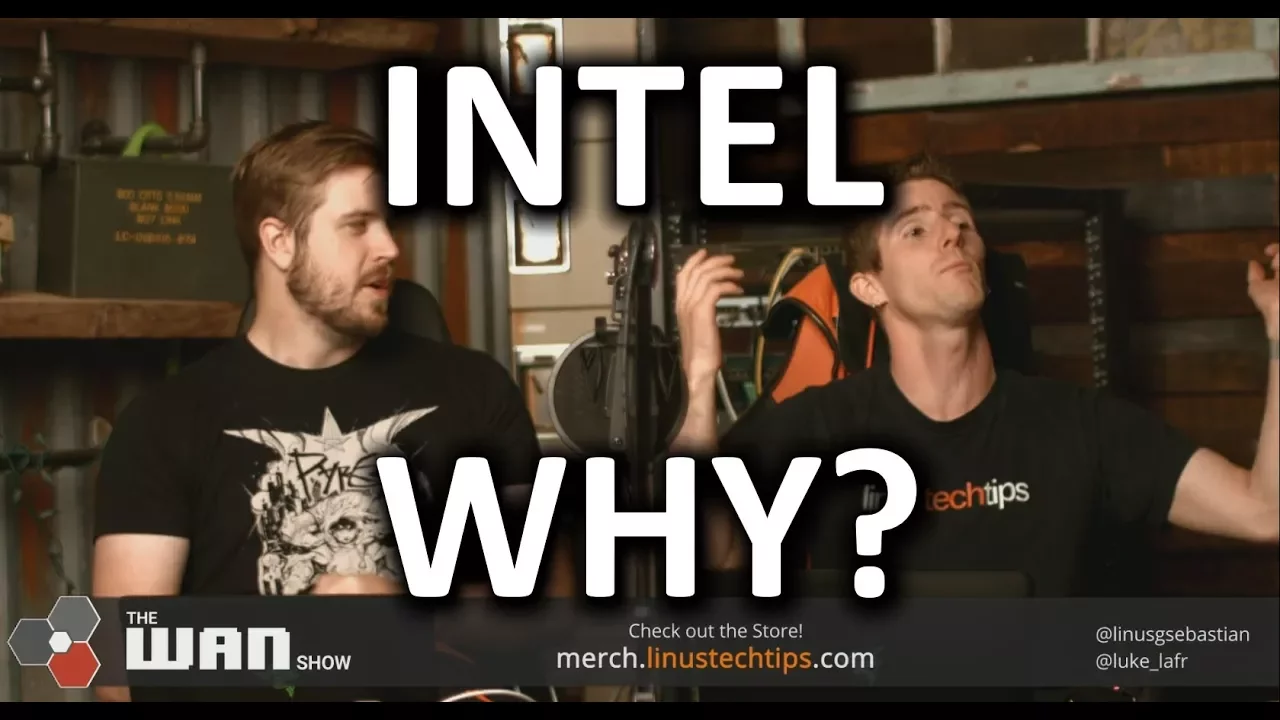
Intel Obscuring Specs? - WAN Show October 6, 2017
Your rating
Reactions
Promos
For your unrestricted 30 days free trial, go to freshbooks.com and enter in “The WAN Show” in the how you heard about us section. Visit squarespace.com and use offer code WAN for 10% off Head over to symless.com and save 50% on Synergy today! Soundcloud: soundcloud.com Forum: linustechtips.com Timestamps from Beezohh 05:50 - Intel to rebrand Pentium as "Pentium Gold" 28:00 - 8700K Cinebench has very different benchmark results 33:41 - Sponsor: Freshbooks 34:50 - Sponsor: Squarespace 37:39 - Sponsor: Synergy 39:23 - Logitech upset by Linus' screw up 44:13 - Pixel 2 & Pixel 2 XL Specs 51:13 - NCIX uploaded the last Netlinked Episode (for now) 1:00:00 - Intel Will No Longer Provide Per-Core Turbo Frequencies, Making Motherboard Tuning Impossible 1:02:26 - AIM Instant Messaging closes down 1:03:00 - Microsoft Edge coming to iOS & Android 1:03:22 - Blackberry leaked all-touchscreen smartphone 1:04:48 - Upcoming Floatplane uploads
AI Overview
The WAN Show episode dated October 6, 2017 opens with Linus describing a period of exceptionally high work tempo, noting that over three weeks he has had limited time for regular content while juggling multiple live projects and events. He reflects on the challenge of keeping up with content production while balancing hands-on exploration of new hardware. The team teases several on-going projects, including a Threadripper build, an upgraded cooling loop, and a future “vanity” Linus Tech Tips build on a working chip, all of which illustrate the heavy, hands-on nature of Linus’s tech workflow. The discussion then pivots to Intel related news and naming strategies, signaling that Intel content will dominate the episode’s focus for a segment. The hosts acknowledge a shift in Intel coverage, with more attention paid to their branding and product naming strategies rather than purely performance figures. This sets the stage for a deeper dive into how naming conventions impact consumer perceptions and hardware purchasing decisions. Around the 5 minute mark, the hosts kick off the Intel news segment by examining the decision to rebrand Pentium processors as Pentium Gold as part of a broader branding refresh. The discussion highlights the confusion created by the mix of gold, silver, bronze and other color-based branding, and questions why Intel would move away from established naming conventions. The hosts dissect the perceived inconsistency and argue that the branding changes may undermine consumer understanding rather than clarify it. The team also notes that power user and enthusiast communities are particularly sensitive to how core product lines are named and categorized, since names often signal performance tiers and platform compatibility. By roughly 10 minutes in, the conversation broadens to include a wider critique of Intel’s naming schema across generations, noting the awkwardness of terms like core i3, i5, i7, and the later addition of i9. Linus provides historical context on how Intel’s naming has evolved, including the debate over whether the addition of i9 cleanly differentiates high-end products or merely adds another layer of confusion. The crew uses visuals from popular community resources to illustrate how the public understands (or misunderstands) Intel’s lineup, emphasizing that clarity in naming is essential for effective consumer guidance. They also contrast Intel’s approach with AMD’s branding history, drawing parallels to how naming can influence perceived value and purchase decisions. In the middle portion of the episode, the team returns to practical hardware implications behind naming changes, including how motherboard chipsets and platform constraints affect end-user upgrades. They discuss Per-core turbo frequencies and the reality that some platform features can be limited by design choices, not just silicon capability. The dialogue touches on the tension between backward compatibility and the desire to push new platforms, suggesting that brand-driven decisions sometimes supersede technical idealism. Linus and guests debate whether Intel’s strategy is financially motivated or a genuine attempt to better segment products for diverse user needs. Towards the 15 to 20 minute mark, the discussion shifts toward performance measurements and how different reviews can yield divergent Cinebench results across CPUs such as Coffee Lake. The team analyzes how motherboard choice, BIOS updates, power delivery (VRM) quality, and Windows scheduling can impact benchmark outcomes. They present anecdotal evidence from their testing and from community data showing wide variance in scores, and they critique the practice of cherry-picking configurations to present a particular narrative. The segment underscores the complexity of fair benchmarking when hardware ecosystems are rapidly evolving and supplier firmware plays a significant role in observed performance. As the show continues, Linus dives into the broader ecosystem questions raised by Intel’s branding moves, including the decision to revive older brands like Pentium in a modern context. The host compares the historical prestige of the Pentium line with its current positioning as a more budget-oriented tier, and discusses how this rebranding might affect consumer expectations and motherboard compatibility. The panel debates whether this is a revenue-driven refresh or a marketing attempt to re-energize interest in legacy brands. They also contrast Intel’s choices with AMD’s, highlighting how different branding strategies can influence the perceived value of competing ecosystems. The later portion of the show uses live analytics as a lens on the YouTube distribution model and audience engagement. The team presents internal analytics showing typical watch patterns and subscriber notifications, using the WAN Show as a case study for how YouTube’s algorithm can impact discovery and notifications. They discuss Floatplane as an alternative distribution avenue and reflect on the value of diversifying content delivery beyond YouTube to better serve their audience. The discussion acknowledges the imperfect alignment between viewer expectations and platform algorithms, while emphasizing the importance of experimenting with distribution channels to maximize reach and engagement. The episode also covers viewer interaction and channel strategy, with comments highlighting the desire for more diverse voices from the Linus Team. Viewers express interest in camera work, editing, and other topics outside Linus’s core persona, prompting the team to consider broader representation of expertise within the channel. The hosts acknowledge Luke’s return and the possibility of rotating guest appearances or more team-led content to diversify the channel’s voice. The show closes with a recap of ongoing hardware coverage and a reminder of sponsor segments, including FreshBooks, Squarespace, and Synergy, while teasing additional coverage on Pixel devices and other upcoming tech topics. In closing, the WAN Show crew reflects on the pace of hardware launches and the challenges of reviewing new CPUs under rushed timelines. They discuss the potential for platform-wide BIOS updates to affect performance, the role of VRM throttling, and the need for balanced testing across multiple motherboard vendors to avoid cherry-picking results. The group emphasizes transparency in benchmarking methodology and the importance of communicating uncertainties to viewers. They remind the audience of ongoing content pipelines, future product reviews, and the value of staying adaptable in a fast-moving hardware landscape. Throughout the episode, the wit and humor of the Linus Tech Tips team shine through as they navigate complex branding decisions, perform quick-witted banter about the latest tech, and acknowledge viewer feedback with candor. The show deftly blends business context with hands-on hardware discussion, illustrating how naming schemes, platform design, and testing methodology collectively shape consumer perception and real-world performance expectations. The overall message is a reminder that behind every product name there are strategic decisions affecting compatibility, value, and long-term upgrade paths for PC enthusiasts and mainstream users alike.
Topics · technology · hardware · cpu · tech_news
Questions answered
- Why did Intel rebrand Pentium as Pentium Gold and what impact might it have on buyers?
- Intel introduced Pentium Gold as part of a branding refresh intended to clarify the product tier, but the hosts argue the change is confusing and may blur lines between performance and budget segments, potentially affecting upgrade decisions.
- What is the issue with per-core turbo frequencies and motherboard compatibility mentioned in the show?
- The hosts note that Intel may not provide per-core turbo frequencies across generations, limiting motherboard tuning and complicating cross-generation upgrades, which can lead to misleading expectations about performance.
- How do Cinebench results vary across Coffee Lake CPUs, and what factors influence them?
- Variations come from platform BIOS, VRM quality, Windows scheduling, and potential tuning differences among motherboards, which can cause large score differences even among similar CPUs.
- What is the show's stance on benchmarking fairness and transparency?
- The hosts emphasize the importance of testing across multiple platforms and being transparent about methodology, acknowledging that market dynamics and platform limitations can influence results.