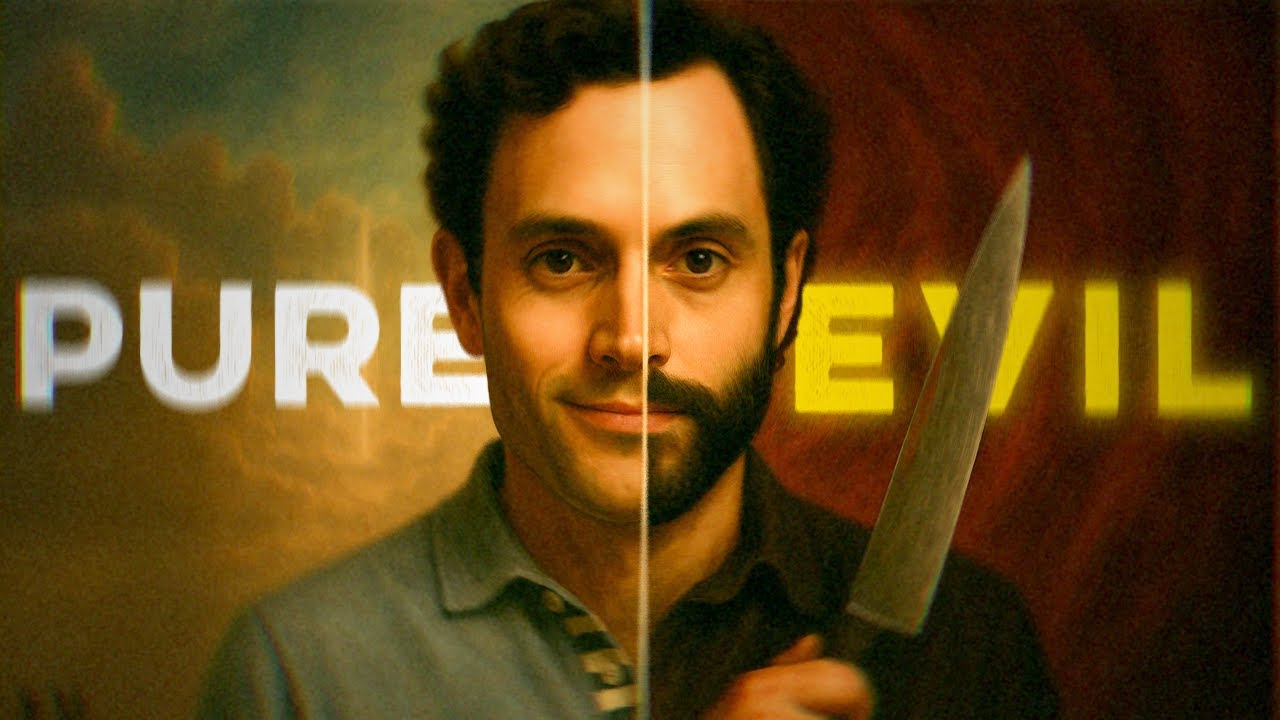
What Made Joe Goldberg So Dangerous? | Psychological Analysis
Your rating
Reactions
AudioEnglish (original)
Description
Join the J Wisdom Patreon for exclusive tutorials, video breakdowns, early access, and more: patreon.com ~ Joe Goldberg is more than a hopeless romantic, he's a master manipulator, a covert predator, and one of TV's most disturbingly complex characters. In this psychological breakdown, we dive deep into the trauma, obsession, and dark transformation of Joe Goldberg across all four seasons of YOU. From childhood abuse and identity dissociation to narcissistic projection and moral detachment, this is the definitive analysis of how a boy seeking love became a man consumed by control.This is The Dark Psychology of Joe Goldberg. He's just pure evil ~
MUSIC Epidemic Sound → epidemicsound.com Artlist → artlist.io ~ #YouNetflix #JoeGoldberg #DarkPsychology #CharacterAnalysis #PsychologicalBreakdown #Netflix #SerialKillerAnalysis
AI Overview
The analysis argues that Joe Goldberg’s danger grows from childhood experiences of abuse, neglect, and abandonment. His father is abusive, while his mother, Sandy, is described as inconsistent and eventually leaves him in a group home. After Joe kills his father to protect her, Sandy praises him for protecting her, which the narrator says links violence with love and duty in Joe’s mind. At the group home, Joe witnesses abuse and feels powerless to help a nurse he cares about. The narrator connects these experiences to Joe’s later need to rescue women and control relationships. The central conclusion is that trauma helps explain his behavior, but does not excuse the harm he causes. Joe’s later guardian, bookstore owner Ivan Mooney, also shapes his ideas about affection and control. Mooney physically and psychologically abuses Joe while claiming that punishment and discipline are expressions of love. The analysis interprets Mooney’s glass cage as a model for Joe’s adult pattern of containing, observing, and controlling people. After Candace Stone betrays him, Joe kills the man she was seeing, and Mooney reinforces Joe’s belief that the killing was justified. When Joe becomes obsessed with Gwen Beck, he stalks her, studies her life, and adapts his interests and personality to appear like a suitable partner. The narrator highlights mirroring, gaslighting, and boundary violations as part of Joe’s calculated manipulation. The analysis examines how Joe frames different killings as protection, justice, or a way to remove obstacles. He kills Benji after holding him in the basement cage, and later kills Peach, whom he sees as a threat to his relationship with Beck. His killing of Ron is presented as an attempt to protect Paco, while Beck’s discovery of evidence against Joe ends with her being imprisoned and killed. The narrator says Joe casts himself as a misunderstood hero, labeling other people as villains to make violence seem morally acceptable. In the Love Quinn storyline, Joe’s fixation, his discomfort with Love’s own violence, and his eventual murder of her reveal how strongly he resists losing control. He then stages his death and blames Love for the other murders. In the season-four discussion, Joe assumes the identity of Jonathan Moore and the analysis describes his visions of Rhys Montrose as a way of externalizing his own violent choices. Joe’s memory gaps and hallucinations help him deny responsibility, even as the narrator argues that he is choosing to kill and protect his own image. He kidnaps Maryanne and stages her apparent overdose, but she survives and escapes. The narrator interprets Joe’s grief as grief for the fantasy he has lost, rather than for Maryanne herself. After surviving a jump from a bridge, Joe is described as accepting his identity as a killer instead of seeing himself as a good man struggling against violence. The analysis closes by anticipating Joe’s downfall in season five.
Topics · entertainment · character analysis · dark psychology · criminal psychology · psychological analysis
Questions answered
- What childhood experiences does the analysis connect to Joe Goldberg’s dangerous behavior?
- The analysis points to abuse by his father, neglect and abandonment by his mother, violence in the group home, and Mooney’s abusive control as experiences that shaped Joe’s ideas about love and power.
- Why does Joe Goldberg describe his stalking and violence as acts of love or protection?
- He imagines himself as a rescuer and believes controlling or harming people can protect someone he loves. The analysis says he uses those explanations to justify actions that serve his own need for control.
- How does Joe Goldberg manipulate Beck?
- He studies Beck’s life through stalking and information gathering, mirrors her interests, and lies or gaslights her when she questions his behavior.
- How does Joe Goldberg justify killing the people around Beck?
- He treats Benji and Peach as obstacles to his relationship with Beck, and the analysis says he labels people as villains so he can frame their deaths as justified or protective.
- What does Rhys Montrose represent in Joe Goldberg’s season-four story?
- The version of Rhys that Joe sees is described as a hallucinated alter ego that reflects Joe’s own violent impulses and helps him disown responsibility for his actions.
- How does Joe Goldberg change by the end of season four?
- After surviving a jump from a bridge, Joe is portrayed as accepting that he is a killer rather than continuing to view himself as a good man who is merely struggling with his dark side.