The Inflation Problem... It's Worse Than You Think
Your rating
Reactions
AudioEnglish (original)Auto-dubbed: French, German, Spanish, Bangla, Hebrew, Hindi, Indonesian, Italian, Japanese, Malayalam+5 more
Promos
Protect your privacy on the cellular level with Cape at cape.co Use code CASUAL33 at checkout for 33% off your first 6 months. 63 months straight. That's how long the Fed has missed its own inflation target. The Federal Reserve's preferred measure of inflation, the PCE, is now more than double its target. And it just started climbing higher. Publicly, the language is still cooling and patience. Internally, they just created a new task force to reassess how they understand inflation at all. In this video, I'll break down: • Where the Federal Reserve's 2% inflation target actually came from • Why the inflation number you see is structurally late, and where to actually look • America's incentives problem when it comes to spending • How hiking interest rates can work against itself • The lever that moves inflation more than interest rates, and why almost nobody watches it If one video wasn’t enough, I post everyday here: @casuallyfinance All illustrations, visuals, and animations in this video are original and hand-drawn by a freelance artist. Disclaimer: The information provided in this video and on this channel (collectively, the “Content”) is for informational, educational, and entertainment purposes only and does not constitute investment, financial, legal, or tax advice, nor a recommendation to buy, sell, or hold any security or investment strategy. Investing involves risk and you must do your own research. Nothing in the Content should be interpreted as creating a fiduciary relationship, financial advisory relationship, or client relationship of any kind. The host, the channel, and all affiliated entities expressly disclaim any and all liability for any direct or consequential loss or damage arising directly or indirectly from the use of, reliance upon, or interpretation of the Content. By viewing or interacting with the Content, you acknowledge and agree to these terms and release the host and all related parties from any and all claims related to your reliance on the information provided.
AI Overview
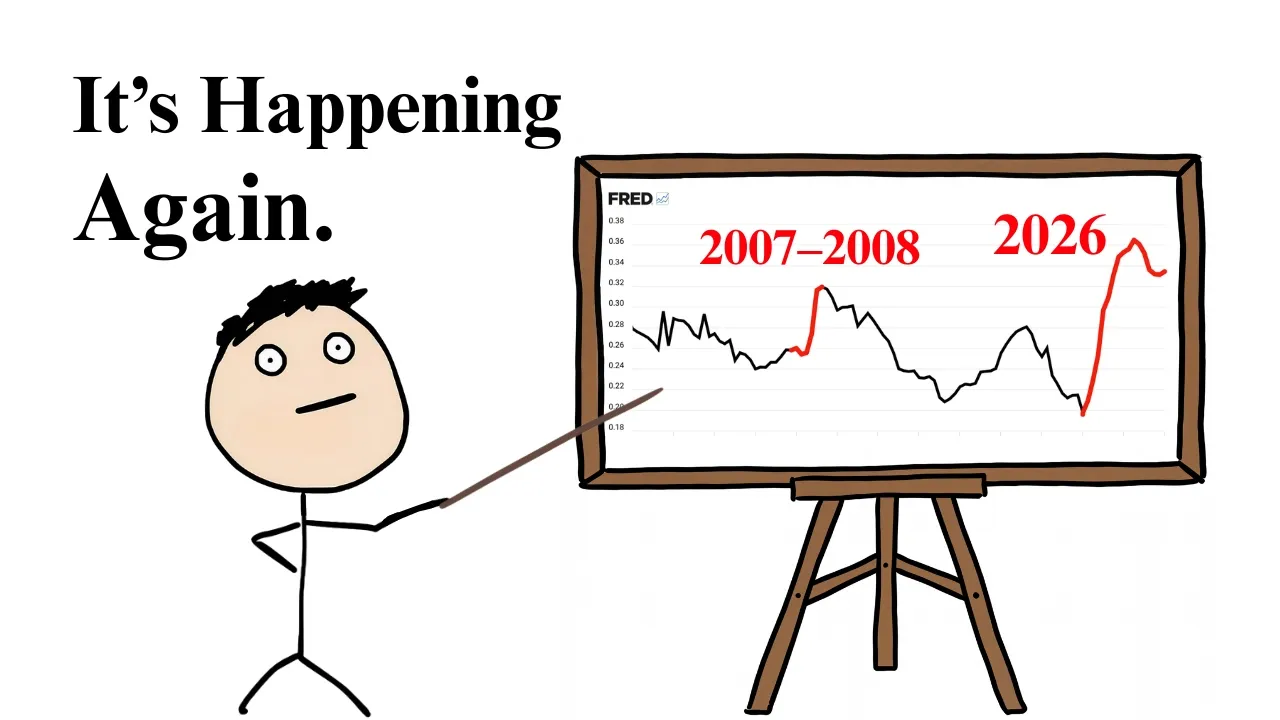
The video argues that blaming recent inflation on a five-month-old Middle East conflict misses a longer-running problem: the Federal Reserve’s preferred PCE inflation measure has been above its 2% target for 63 consecutive months and is now a little over 4%. It explains that the 2% target was chosen as a compromise: some inflation gives the Fed room to cut interest rates during downturns, while a much higher rate would make prices and long-term business planning less predictable. The host contrasts this with the Great Moderation, when inflation appeared to settle naturally but was repeatedly brought back toward target by monetary policy. The video then revisits Paul Volcker’s rate increases in the early 1980s, which helped push inflation down but came with two recessions.
Topics · economics · finance · business · debt markets · education
Questions answered
- Why does the Federal Reserve target 2% inflation instead of zero?
- A positive inflation target leaves room for the Federal Reserve to cut interest rates during a recession, while remaining low enough to keep price changes relatively predictable.
- Why might raising interest rates have mixed effects on inflation when national debt is high?
- Higher rates can reduce private borrowing and economic activity, but they also raise the government’s interest costs. Those payments go to bondholders and other investors, who may spend or reinvest the money.
- Why can headline inflation figures lag current price pressures?
- Some major components, especially housing, adjust slowly. Rents often reset only when leases renew, so reported housing costs can reflect conditions from months earlier.
- What does M2 measure, and why does the video focus on it?
- M2 is one measure of the money supply. The video treats changes in money circulating through the economy as an indicator of inflationary pressure that can move before headline inflation figures.
- What are quantitative easing and quantitative tightening?
- Quantitative easing is when the Federal Reserve creates money to buy bonds and add money to the financial system. Quantitative tightening reduces the Fed’s bond holdings as bonds mature without being replaced, withdrawing money from the system.
- What deficit rule did Warren Buffett propose?
- He proposed making sitting members of Congress ineligible for re-election whenever the federal deficit exceeds 3% of GDP.