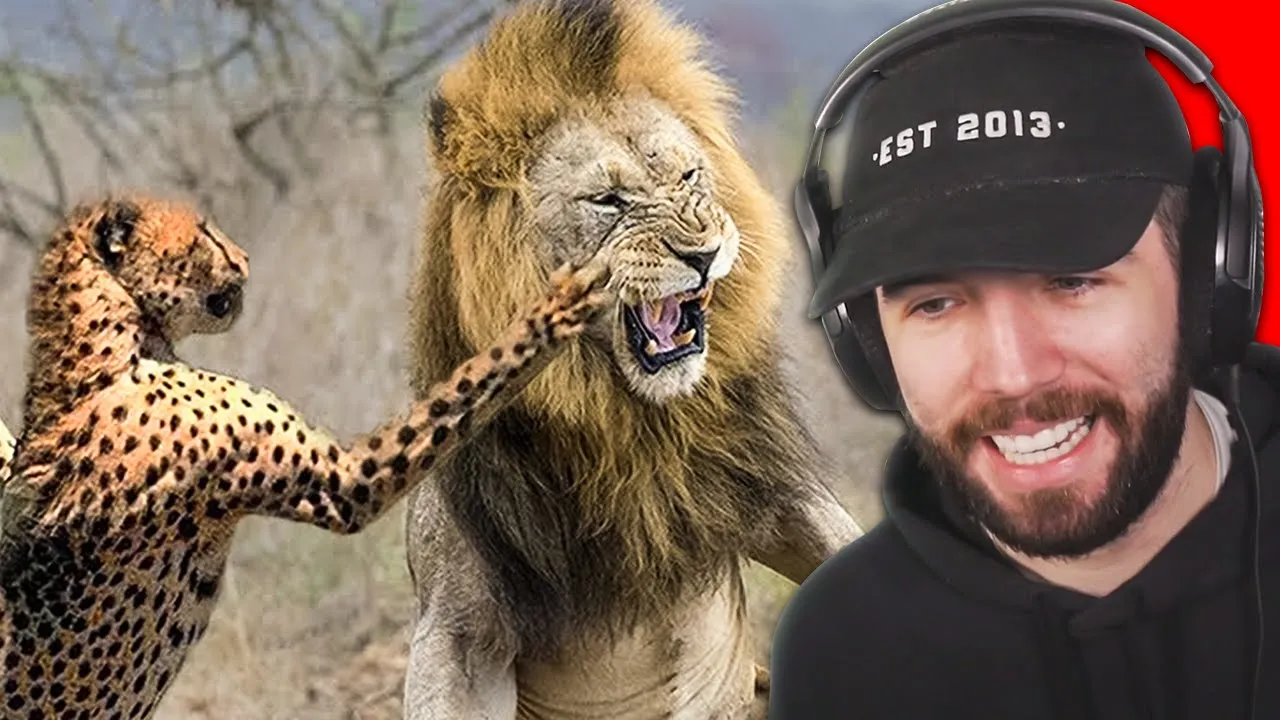
The 10 Most Aggressive Animals in the World
Your rating
Reactions
Channels and socials
What do you want us to react to? Use this form - forms.gle The 10 Most Aggressive Animals in the World ORIGINAL VIDEO: (youtube.com
AI Overview
The hosts react to a countdown of ten animals described as especially aggressive, starting with hippos and ending with the Tasmanian devil. The list says hippos are territorial and can attack boats, including a reported incident in Niger in which a hippo overturned a boat and 13 people died. It attributes black rhinos’ tendency to charge partly to poor eyesight and notes their size and powerful horns. The honey badger is presented as unusually bold, able to challenge larger animals and withstand threats such as bee stings and snake venom. Cape buffalo are described as dangerous when wounded or when defending members of their herd, while baboons are noted for social aggression and raiding vehicles for food. The countdown also covers the black mamba, cassowary, polar bear, and Tosa Inu dog.
Topics · entertainment · people & blogs · sidemen reacts · wildlife · animal behavior
Questions answered
- Which ten animals appear in the aggressive animals countdown?
- The countdown lists the hippo, black rhino, honey badger, Cape buffalo, baboon, black mamba, cassowary, polar bear, Tosa Inu, and Tasmanian devil, in that order.
- Why are hippos described as dangerous to people and boats?
- They are described as highly territorial and capable of attacking without provocation, including overturning boats. The account cites a Niger incident in which a hippo overturned a boat and 13 people died.
- What makes the honey badger notable in the countdown?
- It is portrayed as fearless toward much larger opponents and resilient to bee stings, porcupine quills, animal bites, and even snake venom.
- Why is the black mamba considered dangerous?
- The black mamba is described as fast and unpredictable, with venom that can kill a human in as little as seven hours.
- Why does the countdown say Tosa Inu dogs need careful handling?
- Their size, athleticism, potential predatory behavior, and ability to pull more than 3,000 pounds make them a serious responsibility to control.


