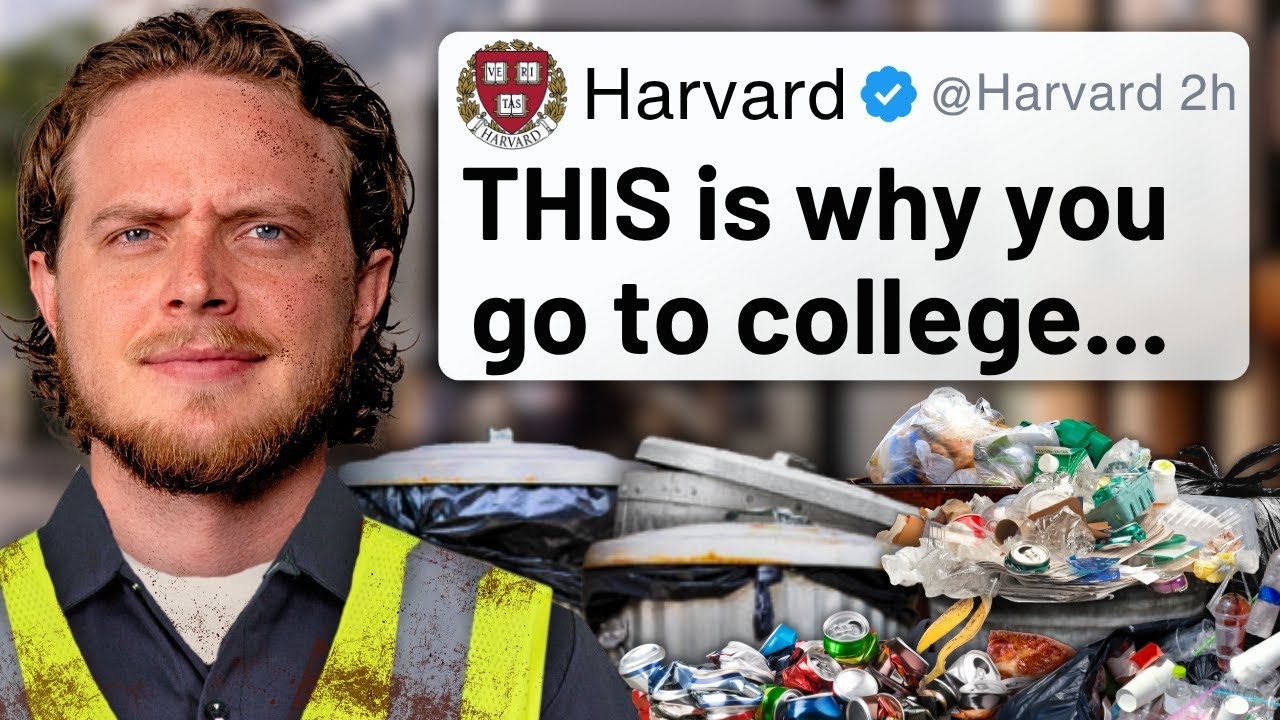
Why Society HATES Blue Collar Workers
Your rating
Reactions
AudioEnglish (original)Auto-dubbed: Dutch, French, German, Spanish, Hindi, Indonesian, Italian, Japanese, Malayalam, Polish+2 more
Description
For generations, the divide between blue collar workers and white collar workers has shaped how Americans define status, success, and social value. Blue collar jobs and skilled trades, once celebrated as the foundation of national progress, are now often overshadowed by the perceived prestige associated with white collar jobs. This cultural shift raises a serious question: why are the skilled trades, which remain essential to the functioning of modern society, viewed as inferior paths compared to college educated careers. The stereotype that the working class is less successful has pushed millions away from the trades and into expensive college degrees that do not guarantee opportunity. Historically, this blue collar vs white collar divide was more balanced. Skilled labor was the backbone of industrial growth, supporting manufacturing, transportation, infrastructure, mechanical repair, and national development through tangible work. But as higher education became marketed as the only respectable path, vocational schooling was pushed to the sidelines. Careers in the trades became socially stigmatized, and the value of practical skill was replaced with the pursuit of white collar status symbols. This rebranding not only weakened blue collar pride, it also reshaped how young people evaluate their future, shifting attention away from electricians, plumbers, carpenters, ironworkers, machinists, and construction workers who keep the country operational. Today, the working class continues to deliver the physical output that every white collar office building depends on. Yet these same skilled workers are often viewed as less accomplished than corporate job titles. And while white collar careers are associated with status or higher social ranking, they cannot exist without the skilled trades that make literal everyday life possible. Blue collar workers are not simply filling roles; they are the operational core of the economy, the supply chain, the infrastructure, the fabrication, the logistics, and the mechanical support that holds modern society together. The declining respect for vocational schooling has contributed to a growing skills gap where industries that rely on skilled trades cannot find enough talent. Young adults are often steered away from blue collar jobs to avoid embarrassment or judgment, despite the stability these careers offer. And as demand continues to rise for infrastructure, manufacturing, and industrial capacity, the consequences of neglecting the trades become impossible to ignore. The conversation around blue collar jobs cannot remain rooted in outdated assumptions about class or education. Rebuilding respect for the skilled trades begins with recognizing the strategic importance of working class labor. It requires rejecting the belief that only white collar jobs define success and acknowledging that national strength depends on people who can build, repair, construct, maintain, and keep systems functioning. Reframing how society sees blue collar workers is not about diminishing the value of white collar work—it is about restoring balance, dignity, and honest respect for the trades. The future of America depends as much on welders, mechanics, and construction workers as it does on executives, analysts, engineers, and managers. Recognizing the skilled trades as essential is the first step toward repairing a cultural narrative that has ignored their importance for far too long. #financialeducation #financialfreedom #history Full interview with Joe: patreon.com 0:00 Intro 0:22 Why Society Looks Down On Blue Collar Workers 0:51 How Ronald Reagan Destroyed The Trades 1:33 Why Society Thinks Blue Collar Workers Are "Dumb" 3:08 The Biggest Issue With The Trades 3:33 Why We Have To STOP Telling Everyone To Go To College 5:10 How To Get Into The Blue Collar Industry (Truck Driving) 6:51 How To Become A Blue Collar Worker (Union/ Carpenter) 8:00 Why High School Is FAILING Blue Collar Workers 10:14 Why The Trades Can Help Turn Someones Life Around 10:53 The Stigma I Received As A Garbage Man 12:54 Why Blue Collar Workers Have Such A Strong Community 14:50 Why Baby Boomers Are DISCOURAGING Blue Collar Work 15:52 Why White Collar Workers Are Now Facing A Stigma 18:14 Why The Blue Collar Industry Is ALREADY Seeing Wage Stagnation 20:27 Why We Should Not SHAME People For Their Jobs 21:35 How We Can Save The Trades & White Collar Work Titles for the Algo! Why Society OVERLOOKS Blue Collar Workers Why Blue Collar Workers Face A NEGATIVE Stigma Why Gen Z Is REVIVING Blue Collar Careers Why Gen Z Is SAVING Blue Collar Careers Why Gen Z Is SAVING Blue Collar Jobs
AI Overview
The discussion examines why blue-collar work is often treated as less prestigious than college-educated, white-collar careers. Its opening cites an estimate of a roughly 7 million blue-collar worker shortage by 2030 and notes that many high school students pursue college partly to avoid vocational-school stigma. Guests who have worked in carpentry and truck driving describe how practical trades use substantial skills, including trigonometry to build roof trusses. They also say that many young people are encouraged to attend college without being shown trade career options or how to enter those fields. The guests describe routes into work such as getting a commercial driver's license, asking experienced workers for guidance, and learning on the job. They argue that blue-collar careers can include sales and management as well as physical labor.
Topics · education · jobs · labor market · social class · skilled trades
Questions answered
- Why do blue-collar workers face social stigma?
- The discussion attributes the stigma to the elevated status given to college degrees and office careers, along with assumptions that trade workers are less educated or successful.
- What skills can carpentry require?
- Carpentry can require practical mathematics, including trigonometry used to understand roof trusses, angles, and load-bearing structures.
- How can someone get started in a blue-collar career?
- Possible first steps include speaking with people already working in the trade, pursuing relevant training or a commercial driver's license, and applying to employers that train new workers.
- What does the discussion say young people need to know about trade careers?
- They need clearer information about available trades, how to enter them, and the range of roles, which can include sales and management as well as hands-on work.
- Why can telling everyone to enter the trades be harmful?
- The discussion argues that pushing everyone toward one career path can lead to labor oversupply and wage suppression, and that people have different skills and interests.