Your rating
Reactions
AudioEnglish (original)Auto-dubbed: Dutch, French, German, Spanish, Arabic, Bangla, Hebrew, Hindi, Indonesian, Italian+9 more
Promos
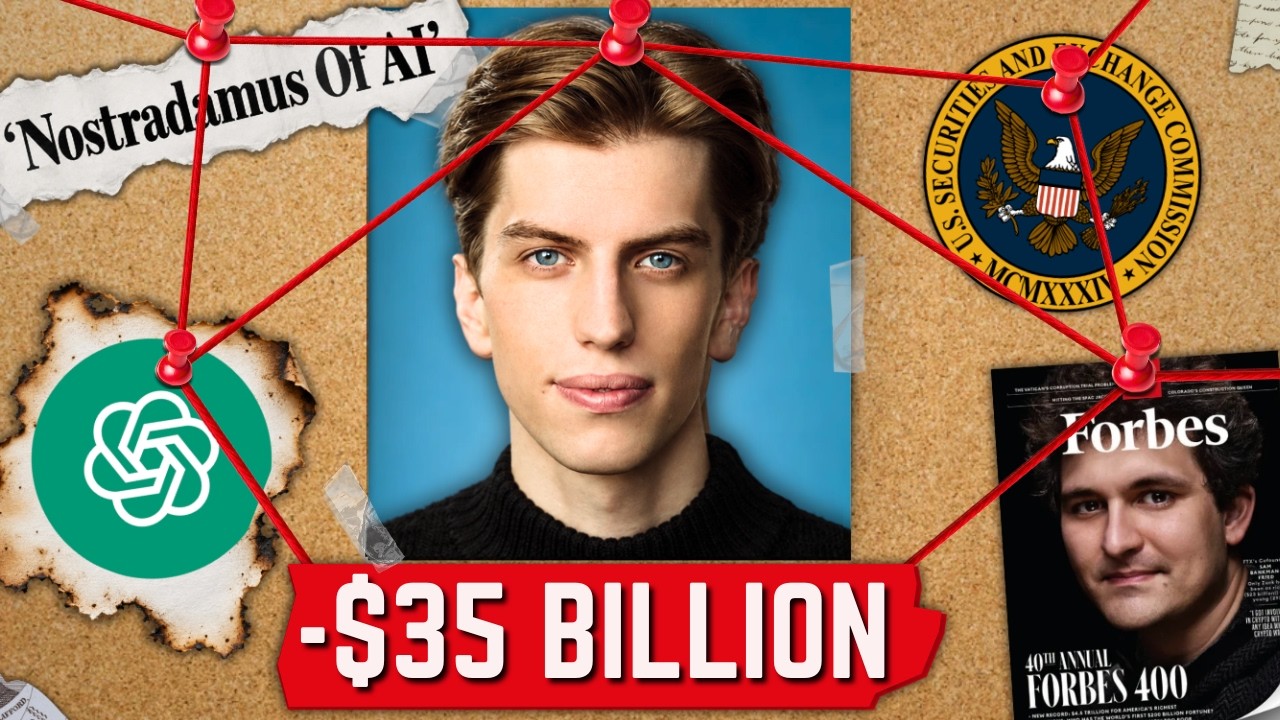
Thanks to Monarch for partnering with me! Start your free trial and get 50% off your first year of total money clarity using my link monarchmoney.yt.link or code damon50 for 50% Off Monarch Core tier. The artificial intelligence boom has created one of the most aggressive investment cycles in modern technology, as Silicon Valley, Wall Street, and the broader financial industry attempt to position themselves for an AI revolution that could reshape the global economy. At the center of this AI bubble is Leopold Aschenbrenner, whose Situational Awareness thesis became closely associated with predictions of rapidly advancing AI, automation, and a technological transformation unlike anything experienced before. As expectations surrounding artificial intelligence continue to grow, enormous amounts of money are being wagered on the assumption that AI will fundamentally change how the economy operates. Leopold Aschenbrenner represents a generation of Silicon Valley thinkers who believe artificial intelligence and the ai industry could advance far faster than society expects. After spending time at OpenAI, the company responsible for ChatGPT, Aschenbrenner became widely associated with the future of AI through Situational Awareness, his sweeping argument about where artificial intelligence could be heading. The ideas surrounding AI development, automation, AGI, computing infrastructure, semiconductors, and the broader AI revolution quickly became more than predictions about technology. They became an investment thesis built around identifying which companies could benefit most if the future unfolded as expected. The AI bubble transformed that confidence into an opportunity to make enormous financial bets. As OpenAI, ChatGPT, Anthropic, Nvidia, AI data centers, semiconductor companies, and other businesses connected to the ai industry attracted extraordinary attention, Aschenbrenner’s predictions placed him directly within a financial race surrounding the future of technology. But when an investment strategy becomes dependent on a specific vision of the AI revolution actually happening, the difference between identifying the future and simply betting on continued AI hype can become increasingly difficult to distinguish. Leverage makes that distinction even more important especially in an AI bubble. Borrowing money can dramatically increase the potential returns from a successful investment while making losses significantly more destructive when markets move in the opposite direction. Combining leverage with concentrated bets surrounding AI stocks and the AI industry creates a strategy heavily dependent on artificial intelligence continuing to meet extraordinary expectations. When that confidence breaks down, an AI crash can quickly turn aggressive investment into margin calls, forced selling, and enormous financial losses. The story of Leopold Aschenbrenner and Situational Awareness therefore extends far beyond one massive financial loss. It represents the AI bubble and the extraordinary confidence surrounding AI, OpenAI, ChatGPT, automation, Silicon Valley, Wall Street, AI stocks, leverage, hedge funds, and the artificial intelligence revolution. As investors continue betting billions on a future dominated by AI, the larger question is what happens when enormous amounts of money depend not on what artificial intelligence can accomplish today, but on predictions about what it might eventually become. #financialeducation #financialfreedom #history 0:00 Intro 0:22 Who Is Leopold Aschenbrenner 1:08 Leopold Aschenbrenner’s Connection With Sam Bankman- Fried 2:05 Leopold Somehow Starts Working At OpenAI… And Gets Fired 3:08 How Leopold Became “The Nostradamus Of AI” 3:51 You Will Never Hear A Glazing Like This Again 4:18 I Tortured Myself And Actually Read “Situational Awareness” 5:03 Proof We Are In An AI Bubble 5:34 How Leopold Aschenbrenner Became “ The Next Warren Buffett” 6:27 Turns Out Leopold Aschenbrenner Forgot To Hedge…. 7:48 How I Am Saving For A 6 Month Road Trip Throughout America 9:03 How To Lose $35 Billion... So MORE Investors Come!!! 10:04 Why Leopold Aschenbrenner Is Failing Forwards 11:41 How This Plays Into The AI Bubble 12:23 Even Blackstone Turned Leopold Down 12:54 Looks Like The AI Bubble Is The "Bubble Of All Bubbles" 14:04 Why Is There Such Limited Information On Leopold?? 16:37 I Mean WTF Is Going On?? 18:18 The Super Tinfoil Hat Perspective On Leopold Aschenbrenner Titles for the Algo! How Leopold Aschenbrenner Lost $35 Billion Betting On AI How To BLOW $35 Billion On AI The 24 Year Old Who Gambled Away $35 Billion Dollars How To Lack Situational Awarness
AI Overview
The narrator examines Leopold Aschenbrenner’s rise from a Columbia economics and mathematics graduate to an AI investor, including his time at the FTX Future Fund and OpenAI. The video says he left the FTX team after Sam Bankman-Fried’s company collapsed, then joined OpenAI’s superalignment team and was later fired over alleged leaks, which Aschenbrenner disputed. After publishing the essay “Situational Awareness: The Decade Ahead,” Aschenbrenner gained attention for predictions that AI capabilities could advance rapidly and reshape technology and geopolitics. The narrator argues that the essay attracted praise but offered little new insight for readers already familiar with AI. Aschenbrenner then launched a hedge fund with about $225 million and invested in AI-related chips, energy, and infrastructure. The narrator presents the fund’s rise and subsequent reported losses as a cautionary example of the risks of concentrated, leveraged bets.
Topics · ai · artificial intelligence · finance · stock market · education
Questions answered
- Who is Leopold Aschenbrenner, and why is he associated with AI investing?
- Leopold Aschenbrenner is a former OpenAI employee who published the AI-focused essay “Situational Awareness: The Decade Ahead” and later started a hedge fund that invested in AI-related companies and infrastructure.
- What did Leopold Aschenbrenner predict in “Situational Awareness: The Decade Ahead”?
- He argued that AI could reach or exceed human capabilities in some areas within a few years, potentially accelerating technological progress and creating an economic and military race.
- How did leverage contribute to the reported losses at Aschenbrenner’s hedge fund?
- The fund’s market exposure reportedly reached about four times its capital. When AI-related stocks fell, losses triggered margin calls and forced selling, which intensified the losses.
- How much did the video say Aschenbrenner’s fund lost during the selloff?
- The narrator cited an approximate $35 billion loss in a matter of weeks, describing it as the largest hedge fund loss in history.
- Why did the narrator criticize the enthusiasm surrounding the AI investment boom?
- The narrator argued that high valuations and major investments depended on optimistic predictions about AI’s future, while investors might not have credible plans for what happens if those predictions fail.


