I Have A Problem with the Light Phone III
Your rating
Reactions
AudioEnglish (original)Dubbed: Spanish, Hindi
Description
The minimal phone life makes sense, but there’s just 1 problem…
Promos
Check out the NEW Ridge Power Bank at ridge.com Light Phone 3: geni.us Boox Palma review: youtu.be The Nothing video on phone pricing: youtu.be MKBHD Merch: shop.mkbhd.com Playlist of MKBHD Intro music: goo.gl Light Phone provided for review. ~ twitter.com @MKBHD @MKBHD 0:00 The Idea 1:45 The Light Phone 3 6:09 The Shortcomings 10:38 The Price 13:43 Conclusion
AI Overview
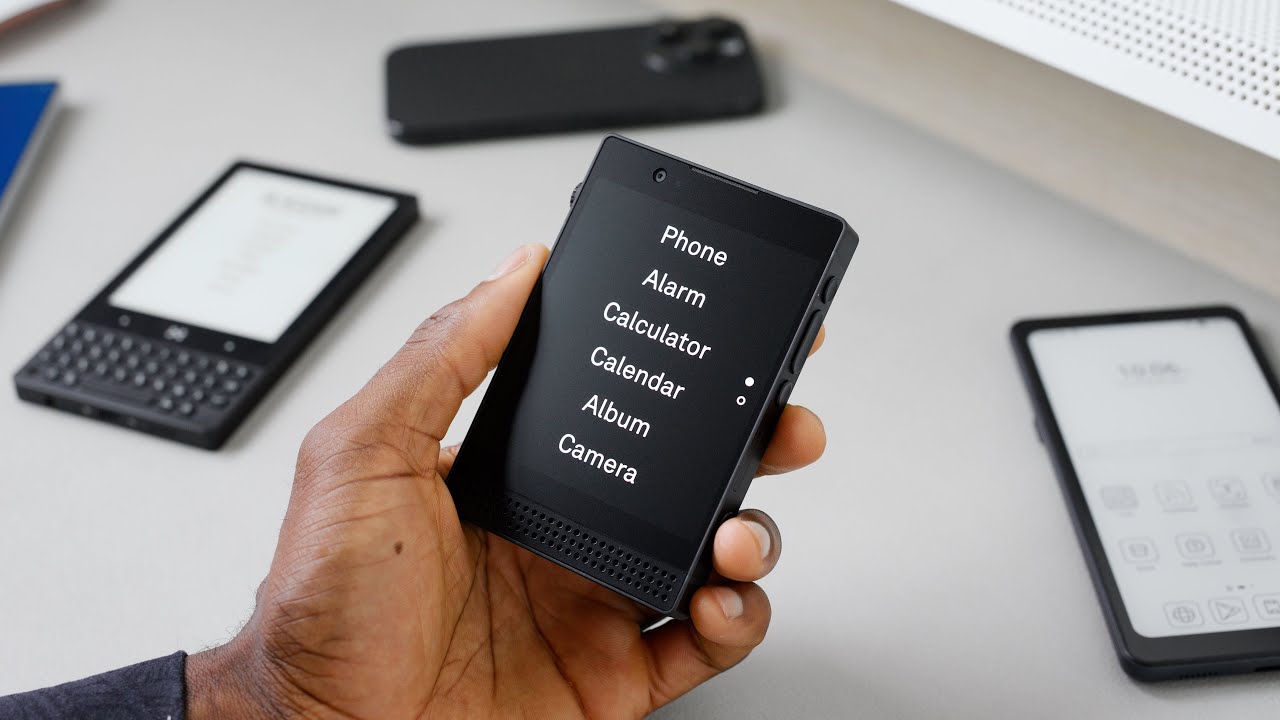
The video opens with Marques Brownlee framing a broader movement toward dumb phones, devices that strip away distractions to focus on essential communication. He juxtaposes the Light Phone III against smartphones and other minimal phones like the BOOX Palma, emphasizing the core concept: remove the endless apps and notifications and keep only what you truly need. The reviewer showcases the Light Phone III’s premium hardware, including an OLED display under matte glass, a metal body, a dial for brightness, a dedicated camera button, and a simple UI with essential tools. He highlights the absence of apps, notifications, email, and web browsing, noting that the phone can only install or remove tools via an online dashboard, which reinforces its intended restrictive experience. The discussion then shifts to practical use: basic calls, a turn-by-turn Maps feature, a modest podcast and music experience, and the ability to pair Bluetooth headphones, while also acknowledging the notable limitation that no apps can be added directly on the device. By the midsection, the reviewer demonstrates how even useful features like calendar directions, navigation, and messaging are hindered by the lack of copy-paste, an underpowered camera, and no RCS support, underscoring the friction of integrating daily tasks with a minimal phone. The critique pivots to price and value, arguing that despite premium construction and a unique concept, $800 feels unjustified for a device that intentionally does less than a modern smartphone, while pre-order pricing at $600 is still seen as steep. In conclusion, the reviewer frames the Light Phone III as a niche, design-forward object that may suit a limited audience, such as someone seeking to avoid doomscrolling or a parent buying a first phone for a child, but not as a practical replacement for a primary device. The video ends with questions for the audience about whether daily driving this phone as the only device is viable, inviting viewer reflection and a final plug for Ridge sponsorship. The overall takeaway is a balance between admiration for the hardware design and skepticism about the price-to-feature ratio. The Light Phone III succeeds as a conversation piece and a premium minimal device, yet its tradeoffs in usability, app ecosystem, and daily-task efficiency lead to a pragmatic verdict: it may serve as a secondary or specialty phone rather than a universal replacement for a typical smartphone. Viewers are reminded that minimalism can be appealing but costly, and the video encourages thoughtful consideration of personal needs before considering such an investment. The closing question invites audience participation on whether they could daily drive this as their only phone and for how long, emphasizing the experiential nature of the product’s appeal.
Topics · technology · consumer electronics · product review · mobile phones
Questions answered
- What is the core idea behind the Light Phone III as described in the video?
- The core idea is to remove the distractions of a typical smartphone by offering a minimal phone that handles essential tasks only, without social apps, web browsing, or push notifications.
- Why does the reviewer consider the Light Phone III overpriced?
- Because it costs $800 for hardware and software that intentionally provides fewer features than many $200-$400 smartphones, making the price difficult to justify for most users.
- Can the Light Phone III function as a daily primary phone?
- The video argues it is unlikely for most people to use it as a sole daily driver due to limited apps, lack of copy-paste, no email, and absence of essential services like messaging apps and mobile payments.