Your rating
Reactions
Promos
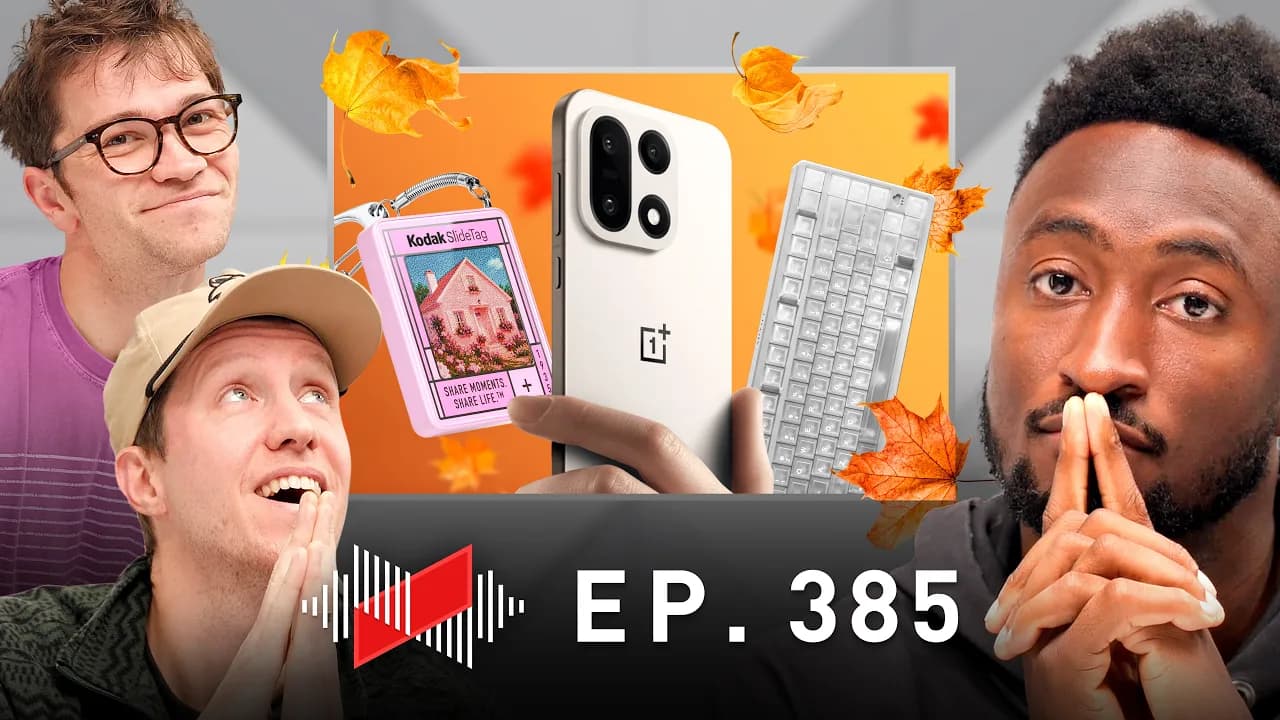
It was a headlines in a hat week because there was just so much to talk about! First, we get into the new Galaxy XR headset from Samsung and Google before talking about why some iPhones 17 Pro are turning pink. We also talked about the new Liquid Glass beta, the ChatGPT Atlas browser, and the AWS outage before getting into trivia. Enjoy! Chapters: 00:00 Intro 01:29 Galaxy XR 13:47 Pink iPhone updates 27:15 OpenAI ChatGPT Atlas browser 40:18 Liquid Glass beta 46:52 Ads 47:07 AWS outage 54:25 Aura e-ink photo frames 01:03:57 Apple Vision Pro M5 01:12:03 T-Mobile (Sponsored) 01:12:36 Pixel Superfans beta testing new phones 01:19:25 SpaceX launches 10,000th Starlink 01:24:51 Trivia Links: MKBHD - Android XR video: youtu.be MKBHD - M5 Apple Vision Pro video: youtu.be MetaversePhilosopher - Apple Vision Pro Dino demo: youtube.com Waveform - ICANN and the 7 keys to the internet: youtube.com Reddit - Pink iPhone thread: reddit.com 9to5Mac - Pink iPhone: 9to5mac.com OpenAI ChatGPT Atlas: openai.com Apple TV x F1: openai.com Verge - Color e-ink photo frame: theverge.com Verge - Liquid Glass Beta: theverge.com Verge - SpaceX launches 10,000th satellite: theverge.com Waveform - New Space Race: youtube.com Music provided by Epidemic Sound Shop the merch: shop.mkbhd.com Social: Waveform Threads: @waveformpodcast Waveform Instagram: @waveformpodcast Hosts: Marques: @mkbhd Andrew: @andrew_manganelli David: @davidimel Adam: @parmesanpapi17 Ellis: twitter.com TikTok: @waveformpodcast Join the Discord: discord.gg Music by 20syl: bit.ly Waveform is part of the Vox Media Podcast Network.
AI Overview
The hosts open with their “headlines in a hat” format and discuss Samsung’s Galaxy XR headset, which runs Android XR and costs $1,799. They note its YouTube app, Gemini features, lighter and more open fit, and included subscription offers, while comparing its software and construction with Apple Vision Pro. The group also considers the trade-offs of cartoon-style avatars and whether a headset can support computer displays. They describe the Galaxy XR as a more comfortable, plastic-built alternative, but say they need more time with it to assess its capabilities. The Galaxy XR discussion continues with questions about heat, eye strain, and the headset’s open design compared with other headsets. The hosts then turn to the pink iPhone reports, tracing them from an initial Reddit post to additional posts and a TikTok video showing similar discoloration. They discuss a theory that cleaners containing bleach or hydrogen peroxide could affect the iPhone’s anodized finish, but stress that the owners have not confirmed using such cleaners. They also question whether a rare cleaning-related change would amount to a widespread product defect. The pink iPhone segment ends with more skepticism about the cause and some joking talk of testing cleaning chemicals on a phone. The next headline is Apple TV’s exclusive US Formula 1 coverage deal, set to begin in 2026 and last five years. The hosts dislike sports exclusivity, while noting that F1 TV’s multiple feeds are expected to be included with the Apple TV subscription and that some coverage will be free. They discuss how the deal could suit viewers who already want Apple TV for other content, and imagine ways a headset could combine a race broadcast with a track map. The Formula 1 conversation broadens into how Apple has acquired sports rights and how a virtual reality broadcast might provide a useful view of a race. The hosts then introduce OpenAI’s ChatGPT Atlas browser, available on macOS at launch, and compare it with other AI-oriented browsers such as Dia and Arc. They find Atlas familiar but incomplete, noting missing mobile syncing and other features, while its connection to ChatGPT history could help retrieve previously viewed pages. They describe the browser market as competitive again, though they are unsure how useful its agent features will be for most people. The browser discussion turns to why OpenAI might want a browser that can use a person’s browsing context, and to the difference between conventional keyword searches and asking an AI in natural language. The hosts identify recalling a page from browsing history as a potentially useful Atlas feature. They also criticize Google’s AI Overviews, saying the results they encounter can be wrong, including errors in coding and temperature units, and complain that sponsored content has made search and shopping results feel less useful. The segment ends with concern that AI search could eventually inherit the advertising clutter of traditional search. The hosts discuss Apple’s Liquid Glass tint option in an iOS 26.1 developer beta, contrasting the clear appearance with a more opaque, frosted setting. They wonder whether the option is mainly for readability or could affect rendering and battery life, but say the battery impact has not been established by the discussion. One host argues that battery benchmarks do not necessarily represent everyday phone use because devices and software manage workloads differently. They also mention that Liquid Glass tint is available on Mac and discuss how the transparent top bar interacts with wallpaper. Before returning to the headlines, the hosts set up trivia and joke about people noticing an AWS outage. They then describe the outage, which affected services from Sunday evening into Monday afternoon, and share examples of connected services that experienced problems. One host says an Eight Sleep bed stopped responding because it was unplugged, not because of AWS, while the group also mentions disrupted work tools and online services. They explain that the incident prompted familiar questions about how many websites and apps depend on AWS. The AWS discussion continues with examples including Slack huddles, Reddit, the McDonald’s app, Fortnite, Canva, Snapchat, and frame.io. The hosts say Amazon attributed the incident to a domain name system issue without specifying the precise cause, and they connect the subject to their podcast series about the internet’s domain name system. They compare the outage’s broad disruption with a YouTube outage that directly interrupted attempts to watch videos. The group then moves on to a color e-ink photo frame from Aura. The Aura frame is described as a 13.3-inch wireless color e-ink photo frame with an estimated three-month battery life and an external charging cable that can reach an outlet while the frame is mounted. The hosts explain that its low power use makes wireless operation possible, while a small front light helps the display in dim conditions. They discuss why battery-powered mounting may be useful for people who do not want a visible cord on a wall. The conversation also weighs its convenience against the need to recharge it. The hosts discuss the frame’s image quality and the trade-offs of color e-ink compared with a conventional display. They say the images can resemble prints or canvas from a distance, but colors may be imperfect, pale faces may look greenish, and individual display elements are visible up close. The frame generally changes its displayed image once a day, and the refresh can flicker for about 30 seconds while the screen updates. They debate whether that slower refresh and periodic charging are worthwhile for a digital photo frame. The discussion of charging and display quality wraps up before the hosts turn to Apple Vision Pro’s M5 update. They say M5 also arrived in the iPad Pro and certain MacBook Pro models, while Vision Pro moved from M2 to M5. The headset’s improvements include somewhat more foveated rendering and rendered pixels, with a modest increase in video playback time, though the hosts are unsure of the exact battery-life comparison. They describe the $99 dual-band strap as the more noticeable practical change because its counterweights shift pressure away from the nose. The Vision Pro conversation covers software changes such as improved Personas, widgets, Apple Intelligence writing tools, and an ultra-wide Mac virtual display. The hosts criticize the hardware refresh for leaving the headset’s weight, heat, and overall design largely unchanged, and question whether Apple has a clear direction for the product. They contrast the relatively small hardware changes with the more substantial software updates. A T-Mobile advertisement then promotes the iPhone 17 Pro with an eligible trade-in and claims customers can save up to 20% versus other major carriers. After the advertisement, the hosts discuss Google letting 15 Pixel Super Fans apply to test unreleased phones. Selected testers would sign an NDA and use protective cases that conceal the device design, leading the hosts to see the program mainly as a way to gather testing feedback and find bugs. They debate whether loyal fans will provide sufficiently candid criticism and whether testers might leak details despite the restrictions. The conversation also touches on Google’s stated interest in changing Pixel design every two to three years. The Pixel discussion ends with a joke about software testers trying unusual inputs and why real users can still uncover unexpected bugs. The final headline is SpaceX’s launch of its 10,000th Starlink satellite, with the hosts citing an estimate that about 8,608 were operational at the time. They discuss satellites leaving orbit, the possibility of debris collisions and Kessler syndrome, and concerns about aluminum oxide from satellite reentries affecting the ozone layer. They also raise the broader question of how to regulate the growing number of satellite constellations. The hosts continue the Starlink discussion by noting that satellites in low Earth orbit are expected to burn up during reentry and that the chance of a collision is low, while still debating the risks of a growing orbital population. They mention that United flights had not yet given one host the Starlink connectivity they had seen advertised online. In the closing trivia, the answers include Venom’s species, the symbiotes or Klyntar, and the thermosphere as the Starlink satellites’ atmospheric layer. The episode ends with the hosts announcing more tech headlines for the following week and signing off.
Topics · apple · android · google · iphone · technology · virtual reality · spaceflight · podcast
Questions answered
- Why are some iPhone 17 Pro models reportedly turning pink?
- A proposed explanation is that cleaners containing bleach or hydrogen peroxide may damage the anodized finish, but the reported owners have not confirmed what caused the discoloration.
- How much does the Samsung Galaxy XR cost, and what software does it use?
- The Samsung Galaxy XR costs $1,799 and runs Android XR, with Gemini features integrated into the operating system.
- What was considered the most useful feature of the ChatGPT Atlas browser?
- It can use browsing history and page context to help find a previously viewed page when a user cannot remember its address.
- When does Apple TV become the exclusive Formula 1 broadcaster in the United States?
- Apple TV's exclusive US Formula 1 coverage is scheduled to begin in 2026 under a five-year deal.
- What are the main trade-offs of Aura's color e-ink photo frame?
- It can be mounted without a continuously connected power cable and is designed for low power use, but its color and detail are less faithful than a conventional display, and it needs periodic charging.
- What changed in the M5 Apple Vision Pro update?
- The headset received an M5 chip and a new $99 dual-band strap with counterweights, alongside modest rendering and battery improvements.
- How many Starlink satellites were reported as operational after SpaceX's 10,000th launch?
- The discussion cited an estimate of about 8,608 operational Starlink satellites.