Your rating
Reactions
Promos
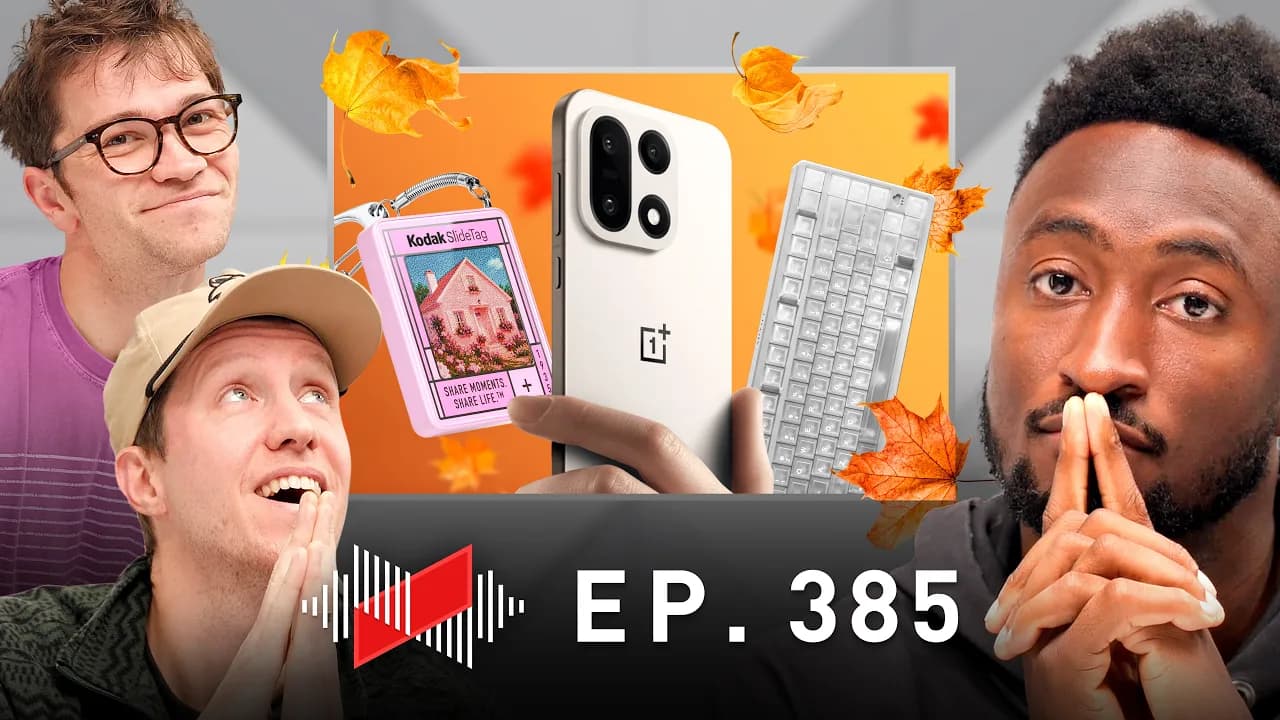
David is back! And after putting the iPhone 17 Pro camera to the test he thought of a fun camera comparison game for us to play (link below if you want to play along). Before that, Marques gives his first impressions using the Meta Display glasses. We also talk about a bunch of new speakers and other hardware from Amazon and Google. We wrap it up with the interview between Marques, James Cameron, and Boz. It's a chaotic episode so we hope you enjoy! Chapters: 00:00 Intro 01:18 Andrew's show and tell 07:24 Meta Ray-Ban Display glasses 16:39 Logitech MX Master 4 21:40 New Amazon Echo and Scribe hardware 30:18 Google Home gets an update 41:10 Shopify (Sponsored) 42:10 Life360 (Sponsored) 43:45 Spaceship (Sponsored) 44:37 iPhone 17 Pro or Leica game 01:08:15 LinkedIn (Sponsored) 01:09:15 Miro (Sponsored) 01:10:15 Zapier (Sponsored) 01:11:21 James Cameron and Boz chat at Meta HQ 01:19:21 Trivia 01:23:50 Outro Links: Casey Neistat - Smart glasses video: youtu.be Verge - Amazon event recap: theverge.com New Google Home devices: blog.google David's slideshow - play along! docs.google.com David's RAW pictures: drive.google.com Music provided by Epidemic Sound Shop the merch: shop.mkbhd.com Social: Waveform Threads: @waveformpodcast Waveform Instagram: @waveformpodcast Hosts: Marques: @mkbhd Andrew: @andrew_manganelli David: @davidimel Adam: @parmesanpapi17 Ellis: twitter.com TikTok: @waveformpodcast Join the Discord: discord.gg Music by 20syl: bit.ly Waveform is part of the Vox Media Podcast Network.
AI Overview
The episode opens with the hosts introducing Techtober and previewing Amazon and Google announcements, a camera-comparison game, and excerpts from an interview with James Cameron. Andrew’s show-and-tell is a pair of Windows XP-themed Crocs, which sparks jokes about their design, comfort, and whether any Croc style could be too much. The group also discusses Bad Bunny and the Philadelphia Eagles before moving to Marques’s new smart glasses. The opening sets the episode’s loose, conversational tone rather than focusing on a single news story. Marques demonstrates the Meta Ray-Ban Display glasses, showing an interface in his field of view and explaining that he can read it while looking as though he is facing someone. The others try to spot the display and discuss its brightness, visibility from different angles, waveguide, and the noticeable thickness of the frames. Marques says the glasses cost $800 and come with a neural band, and he shows how the case folds and charges them. The group considers whether smart glasses will fit everyday life, while noting that some features, including live translation and connected apps, were not yet set up. The hosts compare the display glasses with Meta’s Orion demonstration glasses, describing the new display as brighter and sharper but with a smaller viewing area. They also talk about whether the glasses should blend in or signal that someone is using technology, and Marques says he is unsure what further review would be most useful without more time testing them. The conversation then moves to the Logitech MX Master 4, which the hosts have been trying for about a month. They describe updated materials, a haptic thumb control, an action ring with customizable shortcuts, and a USB-C wireless receiver. The MX Master 4 discussion includes both practical benefits and a small usability warning: storing the receiver in the charging port is possible, but it can be difficult to remove. The hosts then recap Amazon’s new hardware, including Echo Show 8 and 11 models, an Echo Dot Max, a new Echo Studio, Kindle Scribes, Fire TVs, and Ring cameras. They mention the Echo Show display sizes and prices, Amazon’s claim of stronger bass from the Echo Dot Max, and the Echo Studio’s support for Dolby Atmos and linked speakers. They also joke about the naming and marketing of Amazon’s expanding smart-home lineup. The Kindle Scribe Colorsoft gets particular attention because it adds color writing and highlighting, with a stated two-week battery life and a $630 price. The hosts compare its price with reMarkable devices and question whether the paper-like screen and specific form factor justify spending more than on an iPad. They note that other Scribe models cost less, while a front light adds another charge. The discussion then turns to new Amazon Fire TVs, including brighter QLED models with Dolby Vision and HDR10 Plus, and Ring cameras advertised with higher resolutions and AI image processing. The Google Home segment covers Google’s effort to bring Nest-era products and subscriptions together under Google Home branding. The hosts discuss new cameras and a doorbell, a Walmart collaboration with lower-cost devices, and the move from Google Assistant toward Gemini features. They describe possible voice-based home automations, searchable camera history, and more detailed event descriptions, such as identifying what a delivery person is carrying. The group also works through the confusing subscription tiers and notes that some Gemini camera features require the more expensive plan. They discuss Google’s new Home speaker, its position in size between a Nest Mini and Nest Audio, its 360-degree sound, and its bold color options. The speaker is expected in spring 2026, while other new Google Home devices were described as available sooner. The hosts then return to trivia, correct a claim about whether a horse wins a race after its jockey falls, and clarify that the horse may finish but the result does not count as a proper victory for betting purposes. Three sponsored segments follow, for Shopify, Life360, and Spaceship, each describing its service and the offer or code mentioned. David introduces the central camera game, based on photographs he took in the French Alps with an iPhone 17 Pro and a Leica M11. He says he used Halide to capture actual RAW files on the iPhone, rather than ProRAW, and also brought film cameras. The hosts look at a slideshow and guess which images came from which camera, with David withholding the answers. They discuss the limitations of judging compressed slides, along with exposure, shadow detail, sharpening, focal length, and the possible effects of editing. The first landscape photo is revealed as an iPhone image, surprising the group because some had attributed its look to the Leica. In another comparison, the iPhone’s RAW image also impresses the hosts with its detail and dynamic range, prompting debate about how computational processing changes the look of a typical phone photo. David argues that RAW captures can look different from the phone’s usual processed output, particularly when shadows are not automatically lifted. The group continues the game with snowy mountains, an alpine lake, and other landscape images, repeatedly revising guesses based on subtle visual clues. Several guesses go wrong, including one image the group assumes must be from a dedicated camera that David reveals was taken with the iPhone’s selfie camera. The game ends with David’s conclusion that he still prefers traditional cameras for the shooting experience, but that a phone can produce striking photographs and may be hard to distinguish from a Leica in these examples. Marques says the results make him want to compare an iPhone Pro with a Pixel Pro, while the group jokes about RAW camera apps. After another sponsored break for LinkedIn, Miro, and Zapier, the episode plays an interview excerpt featuring Marques, filmmaker James Cameron, and Meta CTO Andrew Bosworth, also known as Boz. In the interview, Cameron considers whether first-person cameras could support a new kind of film or scripted production, while observing that the filmmaker would also become the character. He connects this idea to his 1993 work Strange Days and to a culture in which people record and share personal experiences. The discussion turns to Marques’s product videos as a way of putting viewers in the reviewer’s shoes, and Cameron describes a planned deep-sea expedition involving multiple live first-person feeds. They also talk about watching films in headsets and Cameron’s long experience making stereoscopic 3D content. Cameron argues that 3D is a natural direction for immersive media, linking stereoscopic images to how people see with two eyes and how the visual system responds to parallax. He suggests that stronger visual engagement can make an experience more memorable, while the group considers how media ranges from very short content to long-form games. They distinguish between quickly consumed content and deeper experiences for highly committed audiences. Cameron adds that AI can convert 2D imagery into stereoscopic imagery, though native stereo cameras have an advantage in real-time capture for now. The closing trivia reveals that the Amazon Echo Flex was a USB-A wall adapter with a speaker and Alexa built in. The hosts also learn that Amazon still sells Echo Buds, rather than having discontinued them as the question’s wording implied. They joke about the obscure product names and Amazon’s large business still being run by people. Near the end, they criticize the Sora app for launching on iOS without an Android version, then wrap up by previewing more Techtober episodes and signing off.
Topics · technology · consumer electronics · photography · smart home · artificial intelligence · podcast · apple · google
Questions answered
- Can the iPhone 17 Pro take RAW photos that look comparable to Leica M11 photos?
- In the photo comparison, some iPhone RAW images were difficult for the hosts to distinguish from Leica M11 images, including a shot taken with the iPhone selfie camera. David said he still prefers traditional cameras for the shooting experience.
- How did David capture actual RAW images on the iPhone 17 Pro?
- He used the Halide camera app to capture RAW files, rather than the iPhone’s processed ProRAW format.
- What does the Meta Ray-Ban Display cost, and what is included?
- Marques said the glasses cost $800 and come with a neural band.
- What features does the Logitech MX Master 4 add?
- It has updated materials, a haptic thumb control, a customizable action ring for shortcuts, and a USB-C wireless receiver.
- What does the Amazon Echo Flex do?
- It is a USB-A wall adapter with a speaker and Alexa built in.
- What Gemini features are discussed for Google Home cameras?
- The features include more detailed event descriptions, searchable video history, and voice-assisted home automations. Some camera features require the more expensive Google Home plan.
- What is James Cameron's view on stereoscopic 3D content?
- Cameron views stereoscopic 3D as a natural direction for immersive media because parallax engages the visual system, though he notes that native stereo cameras currently have a real-time advantage over AI conversion.