Your rating
Reactions
Promos
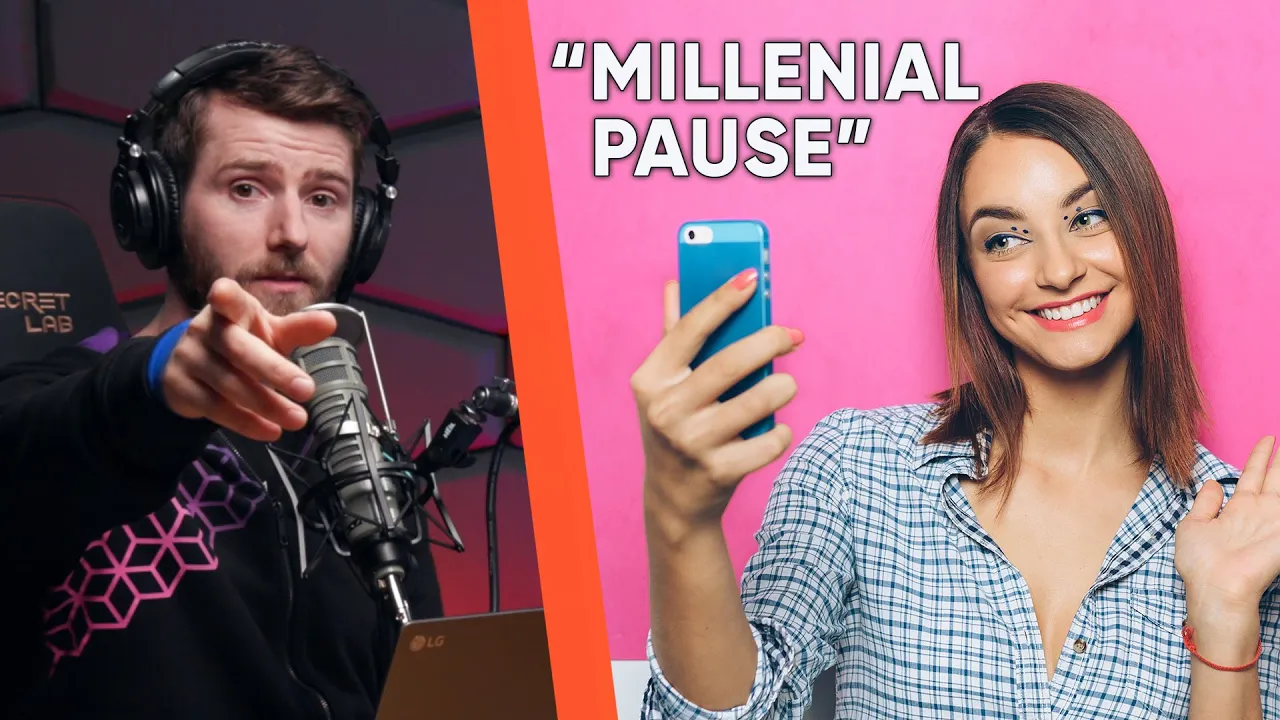
Linus wants to talk about generational differences and the “millennial pause.” Watch the full WAN Show: youtube.com ► GET MERCH: lttstore.com ► LTX 2023 TICKETS AVAILABLE NOW: lmg.gg ► GET EXCLUSIVE CONTENT ON FLOATPLANE: lmg.gg ► SPONSORS, AFFILIATES, AND PARTNERS: lmg.gg ► OUR WAN PODCAST GEAR: lmg.gg FOLLOW US ON SOCIAL --------------------------------------------------- Twitter: twitter.com Facebook: @LinusTech Instagram: @linustech TikTok: @linustech TikTok (LMG Clips): @_lmgclips_ Twitch: twitch.tv
AI Overview
Linus and Luke discuss the “millennial pause,” a brief silence at the start of a recorded video, and question whether it is really a meaningful generational difference. Linus argues that broad claims about Boomers, Millennials, and Gen Z flatten individuals into stereotypes, even though generations can share experiences shaped by their era. They suggest the pause may reflect different habits with recording technology: Millennials may wait to confirm a camera is actually recording, while younger creators may start speaking immediately. Linus connects that habit to unreliable devices he has used and to the different timing expectations of short-form video and live streaming. The conversation turns to the WAN Show’s own broadcast setup, where an intermediary service sends the stream to multiple platforms and YouTube may go live after a variable delay. The hosts explain that pre-show checks and waiting for a live-status indicator function as their version of a pause. They then joke about familiar Millennial stereotypes, including laziness, technology dependence, and praise-seeking, while pointing out that many labels are arbitrary. Linus recalls growing up with printed encyclopedias, then Encarta on CD-ROM, Wikipedia, and increasingly accessible online video, illustrating how Millennials experienced major shifts in information access. They move from internet history to claims about social responsibility and consumption, stressing that generalizations do not describe every person in a generation. Linus contrasts what he sees as more mindless buying among some older relatives with examples of Millennials who also acquire things for comfort or entertainment. The discussion of job-hopping focuses on changing work conditions, including weaker protections, contract work, the gig economy, and the need to change jobs for better compensation. Linus describes choosing full-time employment at Linus Media Group rather than relying on a rotating contractor workforce, and cites his brother’s union-backed but project-based film work as an example of contract employment. The final stretch connects Millennial “entitlement” stereotypes to the rising difficulty of affording housing and everyday goods. The hosts compare current grocery prices with past costs, including a package of chicken they say had doubled in price over several years and a small tray of raspberries priced at more than ten dollars. They also discuss an expensive restaurant meal that did not feel especially worthwhile, while acknowledging that restaurants face costs beyond ingredients, such as labor and rent. The segment closes with a lighthearted response to the “praise hungry” label and a broader point that changing economic conditions help explain some generational complaints better than stereotypes do.
Topics · podcast · opinion · science & technology · technology · clip
Questions answered
- What does “millennial pause” mean in online videos?
- It is a short pause at the start of a recording before the speaker begins talking.
- Why might some Millennials pause before speaking in a recorded video?
- They may wait to confirm that the device has actually started recording, a habit shaped by less reliable recording technology.
- Why might Millennials change jobs more often?
- Changing jobs can be a response to insecure or contract-based work and the need to seek higher compensation as living costs rise.
- How did internet access change during Linus’s school years?
- Information access shifted from printed encyclopedias to Encarta on CD-ROM, then Wikipedia and online video.