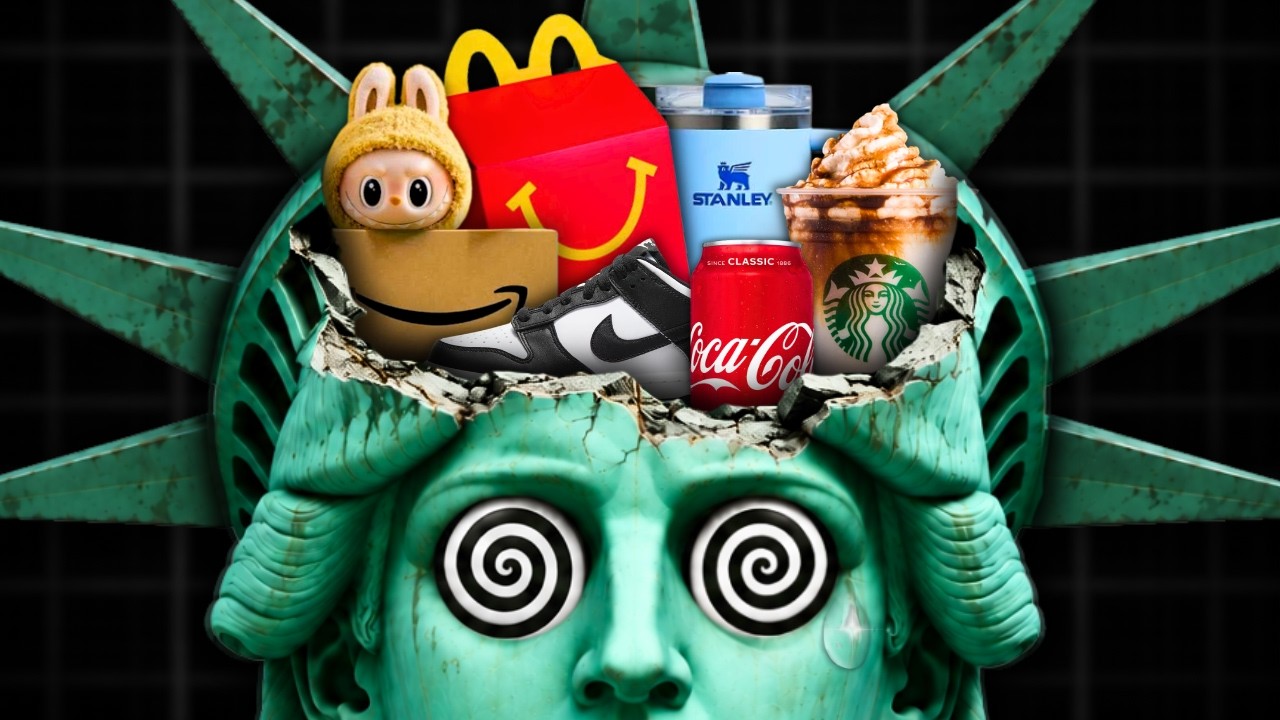
How America Got ADDICTED To Buying Sh*t
Your rating
Reactions
AudioEnglish (original)Auto-dubbed: Dutch, French, German, Spanish, Arabic, Bangla, Hebrew, Hindi, Indonesian, Italian+9 more
Promos
Thanks to Monarch for partnering with me! Start your free trial and get 50% off your first year of total money clarity using my link monarchmoney.yt.link or code damon50 for 50% Off Monarch Core tier. Consumerism is unfolding during a period already defined by a severe cost of living crisis, growing wealth inequality, rising debt, and an economy increasingly disconnected from the financial reality of ordinary Americans. As the American economy remains dependent on endless consumer spending, millions of people are navigating a housing market that feels inaccessible, expensive everyday necessities, career uncertainty, and mounting financial pressure. What was once associated with prosperity and rising living standards has increasingly become a system where maintaining consumption requires Americans to spend money they do not have on lifestyles they can barely afford. The cost of living crisis has exposed the fundamental contradiction at the center of American consumerism. The economy depends heavily on people continuing to buy products, upgrade their possessions, finance vehicles, shop online, and participate in consumer culture, even as financial stability becomes increasingly difficult to achieve. Credit cards, consumer debt, car payments, buy now pay later, and other forms of financing have made it possible for spending to continue even when wages and household finances struggle to support it. The result is an economy where debt can become less of an emergency measure and more of a requirement for maintaining ordinary consumption. At the same time, the housing market has made the disconnect between consumption and financial security increasingly difficult to ignore. Expensive homes and rent compete with the money households have available for everything else, while homelessness in America exists alongside extraordinary levels of consumer spending and wealth. Growing wealth inequality has created dramatically different economic realities, where affluent households can continue driving consumption while working class and middle class Americans face increasing pressure just to maintain their standard of living. Social media has intensified this relationship with consumerism even further. TikTok Shop, influencers, viral products, shopping hauls, unboxing videos, fast fashion, and constantly changing trends have transformed consumption into entertainment while creating new opportunities to encourage spending at virtually every moment of the day. Gen Z and Gen Alpha are growing up surrounded by digital consumer culture where products can become trends almost instantly and the pressure to participate can extend far beyond traditional advertising. Doom spending has become another reflection of this economic uncertainty. When homeownership, financial independence, career stability, and other long term goals begin to feel increasingly unattainable, spending money on smaller immediate experiences or products can appear more achievable than saving toward a future that feels financially out of reach. Combined with credit card debt and the cost of living crisis, this creates an economy simultaneously dependent on continued consumption and increasingly incapable of providing consumers with long term economic security. Consumerism is no longer simply about Americans buying too much stuff. It has become intertwined with debt, the housing market, wealth inequality, unemployment, social media, doom spending, the cost of living crisis, Gen Z, Gen Alpha, the middle class, and the broader US economy. Understanding how consumerism broke America means understanding what happens when endless spending becomes necessary for economic growth while the consumers responsible for maintaining that growth become increasingly broke. #financialeducation #financialfreedom #history 0:00 Intro 0:19 The Government Is CELEBRATING Us Going Into Debt 1:11 How Consumerism Started In America 2:32 The Man Who Tricked Americans Into Consumerism 3:30 Literally The Craziest Story 4:25 How Americans Became Rebranded As "Consumers" 5:16 How Baby Boomers Pioneered The Hyper Consumer Mentality 6:02 What Happens To Consumerism When Everyone Losses Their Job 7:23 I Mean WTF Is Going On... 7:44 How I Am Saving For A 6 Month Road Trip Throughout America 8:59 How Social Media Has Made Consumerism SOOO Much Worse 9:46 Gen Alphas Shopping Addiction Is INSANE 10:46 "Touch Grass" 11:13 American Culture IS Consumerism 12:56 My Story Of Being Made Fun Of For Looking "Poor" 14:12 Things Are NEVER As Good As They Seem 17:51 "Your Audience Is Just Poor People"... Yes This Is What I Hear 21:10 For The Few People Who Care Titles for the Algo! How Consumerism TOOK OVER America How Consumerism RUINED America How America Got SO GOOD At Buying Sh*t How America Got ADDICTED To Buying Sh*t
AI Overview
The video traces how the United States moved from a culture of frugality toward mass consumerism, even as many households struggle with debt and the cost of living. It describes Henry Ford raising factory wages to help workers afford what they made, while General Motors president Alfred P. Sloan promoted replacing functional products with newer ones and financing purchases. The video then explains how Edward Bernays used advertising to associate products with identity and status, including a campaign that encouraged women to smoke. After the Great Depression, industry groups promoted the idea that buying was part of Americans’ economic duty, and postwar prosperity helped make mass consumption a way of life. Television advertising and the growth of shopping centers further embedded shopping in American culture. The narrator argues that this system depends on continued spending, even when workers’ wages and financial security do not keep pace.
Topics · education · economy · money · cost of living · finance · consumerism
Questions answered
- How did advertising help make consumerism part of American culture?
- Edward Bernays and other advertisers tied products to identity, status, and personal aspirations, encouraging people to want new goods before their existing ones wore out.
- How did postwar America become a mass-consumption economy?
- Postwar demand, rising wages, manufacturing capacity, television advertising, and the expansion of shopping centers helped make regular consumption a widespread way of life.
- How does the video connect consumerism with the cost of living crisis?
- It argues that households are encouraged to keep spending even as housing and other expenses rise, wages fail to keep pace, and borrowing becomes a way to maintain consumption.
- What role does social media play in modern consumerism?
- Shopping platforms, influencers, hauls, and unboxing videos turn products into entertainment and can expose children and young people to shopping trends early.
- What does the narrator say is a response to consumer culture?
- The narrator calls for greater empathy, compassion, and community, rather than judging people’s success or belonging by the goods they own.


