Cette vidéo existe aussi avec une piste audio en français (doublage automatique). Dans le lecteur, ouvrez Paramètres → Piste audio et choisissez français.
Votre note
Réactions
AudioAnglais (original)Doublage automatique: Français, Allemand, Espagnol, Néerlandais, Bengali, Indonésien, Italien, Japonais, Malayalam, Portugais
Promotions
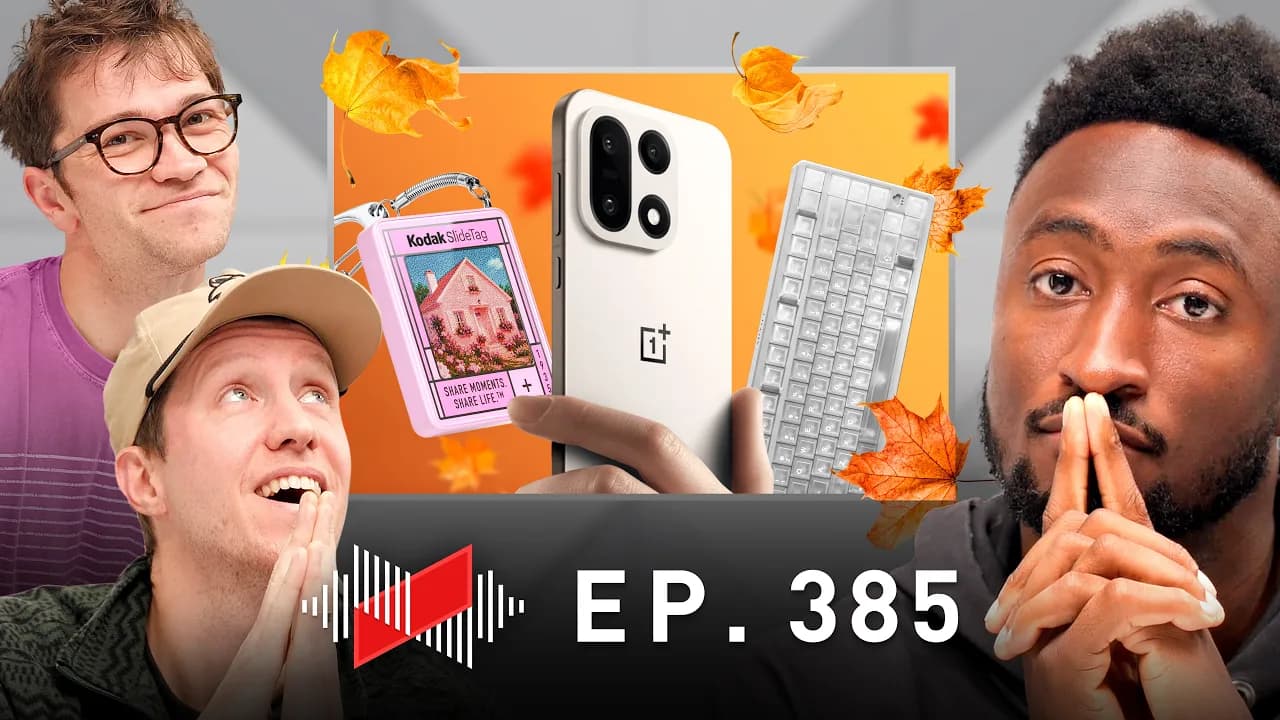
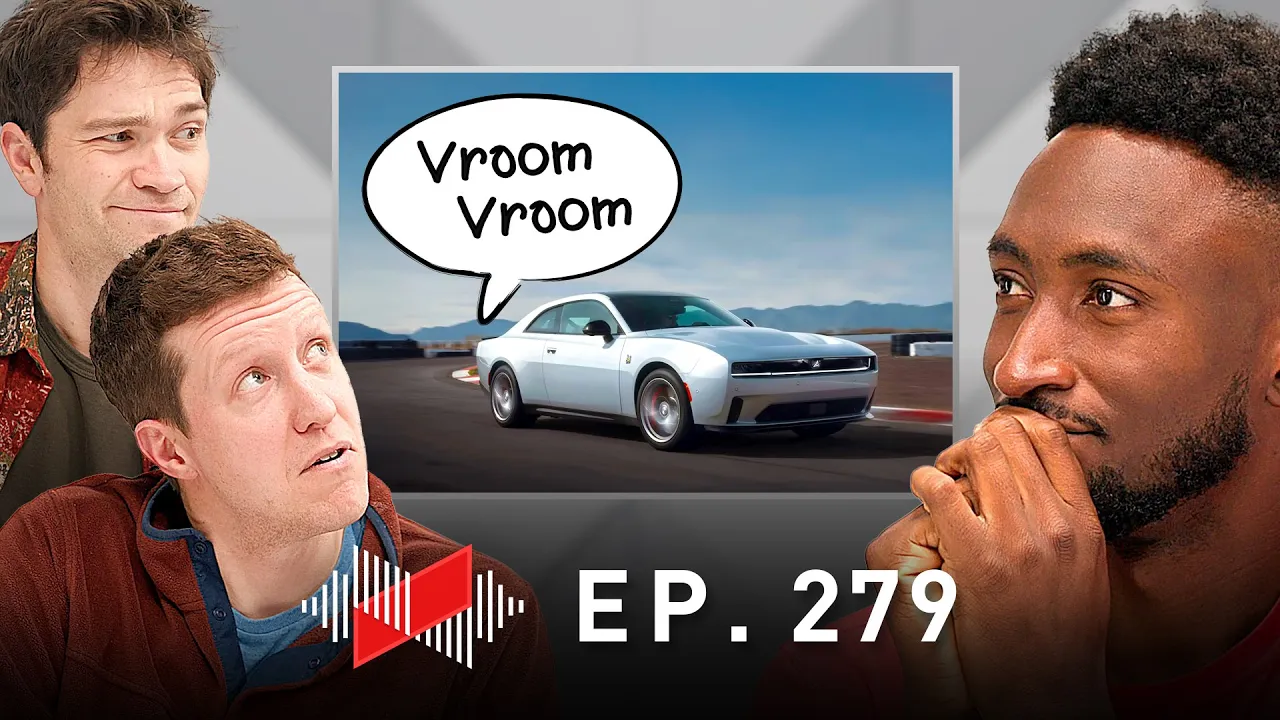
This week Marques, Andrew, and David talked about the rumored Apple software redesign, Pixel 10 leaks, and the Charger EV that Marques just reviewed on Autofocus. To close it out they played a game called "Who Said That!?" where the hosts try to guess which brand posted engagement bait to Threads. Of course, we wrap it all up with trivia. Enjoy! Chapters 00:00 Intro 02:05 Quick update on Apple Intelligence 03:11 RIP OnePlus alert slider 06:35 Chrome fixes Honey? 08:08 Dodge Charger EV 29:08 Kinsta (Sponsored) 30:19 Apple software redesign rumors 42:13 Pixel 10 leaks 50:24 Ad break 50:26 Who Said That!? 01:00:53 Trivia answers Links: Google - Chrome extension statement: developer.chrome.com Autofocus - Dodge Charger Daytona review: youtu.be Android Headlines - Pixel 10 Leaks: androidheadlines.com Bloomberg - Apple redesign: bloomberg.com MKBHD - MacBook Air review: youtu.be Music provided by Epidemic Sound Shop the merch: shop.mkbhd.com Socials: Waveform: @waveformpodcast Marques: @mkbhd Andrew: @andrew_manganelli David Imel: @davidimel Adam: @parmesanpapi17 Ellis: twitter.com TikTok: @waveformpodcast Join the Discord: discord.gg Music by 20syl: bit.ly Waveform is part of the Vox Media Podcast Network.
Aperçu IA
The hosts open with a quick update on Apple Intelligence: Apple has removed a Siri-focused commercial and added website disclaimers saying several promised features are still in development. They then discuss rumors that OnePlus may replace its alert slider with a customizable button, weighing the flexibility of an action button against the slider’s tactile, easy-to-use positions. The conversation turns to Google Chrome’s updated extension rules, which prohibit inserting affiliate links without a related user action and a clear benefit. The hosts connect the policy to criticism of Honey’s affiliate-link practices and note that other browsers would need comparable rules to have a broader effect. Marques describes his week with the electric Dodge Charger Daytona and argues that its strengths are hard to pin down. The tested version costs about $86,000, makes more than 600 horsepower, and is quoted as reaching 60 mph in 3.3 seconds, but the hosts say other EVs offer stronger straight-line performance for the money. They also discuss its roughly 240-mile range, 183 kW charging rate, 6,000-pound weight, and the limits those specs place on road trips and track driving. Its loud, simulated engine sound reaches a stated 126 dB, but Marques says its repetitive drone sounds artificial and can be turned off. The hosts consider who might buy the Charger, since it combines the styling and sound of a muscle car with an electric powertrain and a high price. Marques says it is comfortable and spacious, with hatchback cargo space and a small front trunk, but points out that the electric and gas versions share a design that leaves unused space in the EV. They compare the car with the Mustang Mach-E and discuss the limited overlap between traditional muscle-car buyers and people looking for an EV. The group concludes that even a more convincing simulated engine sound would not resolve their concerns about the Charger’s range, weight, and performance trade-offs. The discussion broadens into how electric cars should communicate through sound. One view is that EVs should develop distinctive sounds rather than imitate combustion engines, with examples including Tesla’s backup sound and sounds designed for a BMW hybrid. The hosts suggest that sound could give drivers useful feedback about traction, regeneration, and the car’s behavior, instead of serving only as a fake engine note. They also imagine the contrast of a high-speed EV becoming quiet, arguing that electric cars can build their own emotional driving experience around what makes them different. Before the break, the hosts compare the sensory feedback of driving with interacting through a touchscreen and revisit how EVs can communicate what the tires and motors are doing. They then ask a trivia question about Xiaomi’s AI assistant, with the answer saved for the end of the episode. A Kinsta ad follows, describing managed website hosting, support from real people around the clock, and a first month free offer through the stated URL. After the break, the conversation moves to rumors of a major Apple software redesign. The hosts discuss reports that iOS, iPadOS, and macOS could get a visual overhaul influenced by visionOS, including more glass-like and translucent interface elements. They consider whether a consistent design could help users move between Apple devices, while questioning whether the interface of a less widely used headset platform should shape everyday devices. They also discuss how Apple could preserve differences between operating systems even if their visual language becomes more similar. The redesign remains a rumor in their discussion, and the hosts are unsure how far the reported changes will go. The design conversation continues with examples of existing transparency in macOS and a debate about whether glass-like interface elements suit devices people already use through glass screens. The hosts joke about older, more literal icon designs and compare the rumored aesthetic with customizable Linux desktops. Marques also talks about his M4 MacBook Air review, describing the chip upgrade, lower price, a new webcam, and a new light blue finish. He adds that the review unit arrived with a blood-like stain on its packaging, and says Apple offered to send a replacement. The podcast then turns to Pixel 10 leaks, including CAD renderings that appear to show a third camera, possibly a periscope camera, on a base model. The hosts are unsure whether the images show a Pixel 10 or a phone closer to a Pixel Pro model, and discuss how an additional camera could affect the product lineup. They are more clearly interested in the rumored Tensor G5 chip and hope it will bring better performance. They also mention the possibility of a larger battery, while acknowledging that the leak does not settle the phone’s final specifications. The hosts continue trying to identify which Pixel model the leak depicts, pointing out that the images and reporting leave the distinction between base and Pro models unclear. They joke about the confusing timing of future Pixel rumors while the Pixel 9a has not yet arrived. During trivia, they explain the Daytona name’s connection to the Florida city and NASCAR, and mention the striking late-1960s Dodge Daytona. Another trivia question asks which product line includes several named flavors, with the answer postponed until later. After a break, the hosts play “Who Said That!?” by guessing which brands posted engagement-seeking messages on Threads. The examples include a question about what song to play at midnight on New Year’s Eve, a status-style prompt, and affectionate marketing copy about design tools. The hosts make guesses for brands such as Spotify, Discord, and Photoshop, often getting the answers wrong. Their reactions frame many of the posts as formulaic corporate social media bait. The game continues with posts about fries and photography, leading to guesses involving Wendy’s, camera brands, and Threads itself. The hosts correctly recognize one generic New Year’s post as coming from the Threads account, then discuss a flossing reminder and a joke about texting with fingers instead of thumbs. They identify Google Pixel and Live Nation among the accounts behind later posts. The segment highlights how difficult it can be to distinguish brands when their engagement-focused posts use similar styles. The final game example is a SpaghettiOs post asking people to remember Pearl Harbor, which the hosts describe as an especially inappropriate post that prompted an apology. They reflect on why brand-heavy social feeds can feel tiresome and compare Threads’ timeline with an account they once made to avoid following brands. The episode then returns to the delayed trivia answers. The hosts reveal Xiaomi’s assistant is Xiao AI, and the flavor question’s answer is Mountain Dew. The hosts finish by joking about trivia scores and a personal question, then thank viewers and listeners. They point the audience to the South by Southwest episode and ask them to subscribe. The closing credits identify the show as part of the Vox Media Podcast Network. A brief post-credit exchange ends the recording.
Sujets · podcast · technology · ev · apple · android · google
Questions traitées
- Why does Marques criticize the electric Dodge Charger Daytona?
- He argues that its high price, limited range, heavy weight, and performance trade-offs make it difficult to recommend for road trips, track driving, or straight-line speed. He also finds its simulated engine sound repetitive and artificial.
- What range and charging rate are cited for the Dodge Charger Daytona?
- The discussed figures are about 240 miles of range and a maximum charging rate of 183 kW.
- Why do the hosts think electric cars should develop their own sounds?
- They argue that imitating combustion engines can sound unconvincing, while distinctive EV sounds could communicate useful feedback about traction, regeneration, and vehicle behavior.
- What changes are rumored for Apple's operating systems?
- A reported redesign could bring more glass-like, translucent visual elements influenced by visionOS to iOS, iPadOS, and macOS.
- What does the Pixel 10 leak appear to show?
- CAD renderings appear to show a third camera, possibly a periscope camera, though the hosts are unsure whether the device is a base Pixel 10 or a Pro model.
- What new feature is OnePlus rumored to bring to the alert slider?
- OnePlus may replace the alert slider with a customizable button that can retain its alert-control function and perform other actions.
- What is Xiaomi's AI assistant called?
- Xiaomi's AI assistant is called Xiao AI.