Votre note
Réactions
Chaînes et réseaux sociaux
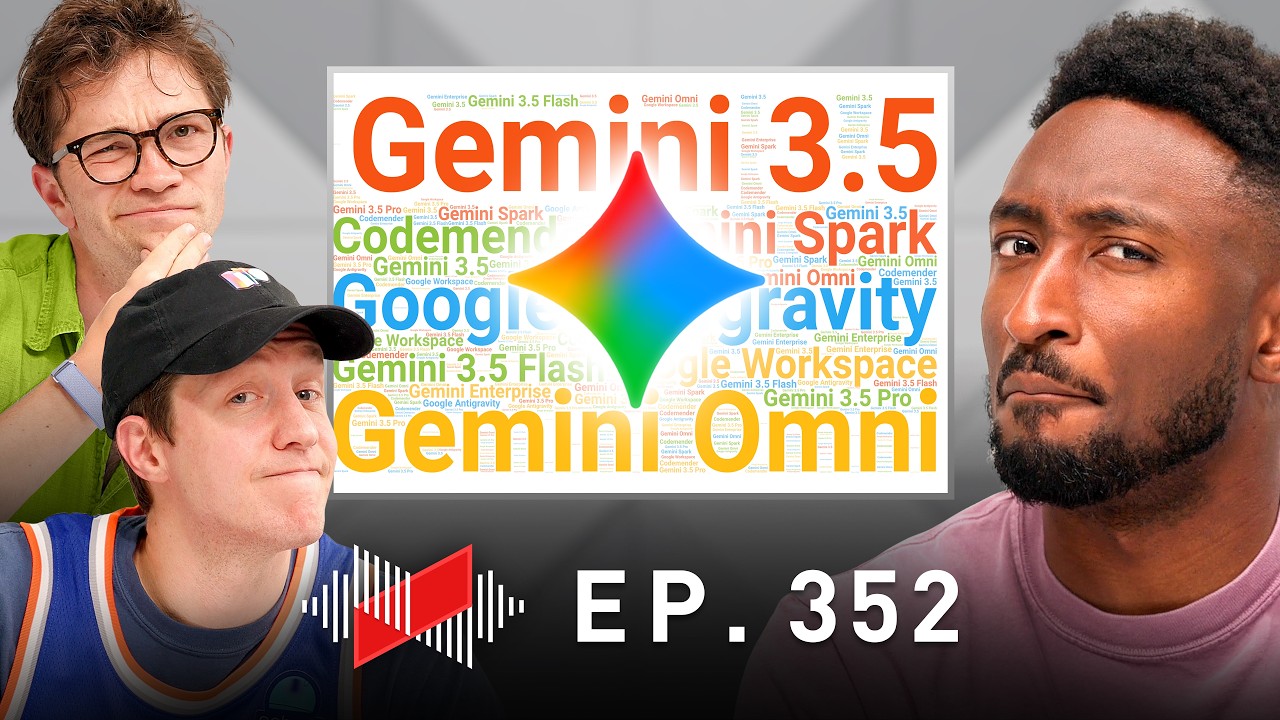
The gang is all back together! We start things off with a generational rant from David about the state of smartphone photography before going deep into everything announced at Google I/O. Spoiler alert: it's AI. Then we wrap it all up with a new camera, marble racing, and of course trivia. Enjoy! Chapters 00:00:00 - Intro 00:02:16 - Did they even test this? 00:04:58 - David crashes out about HDR 00:36:42 - ChefIQ (Sponsored) 00:38:20 - Google I/O recap 01:42:25 - Framer (Sponsored) 01:43:25 - Wear OS7 01:46:26 - Panasonic Lumix camera 01:47:43 - Marble run 01:52:43 - Trivia Scores Links: Sony tweet: x.com Verge - Gemini is in danger of going full Copilot: theverge.com Petapixel - Panasonic camera: petapixel.com Jelle's Marble Run 2026: youtu.be This episode brought to you by: ChefIQ: chefiq.com Framer: framer.com Follow us on socials: Marques: twitter.com Andrew: @andrew_manganelli David: @davidimel Adam: @parmesanpapi17 Ellis: twitter.com Waveform Twitter: twitter.com Waveform Threads: @waveformpodcast Waveform Instagram: @waveformpodcast Waveform TikTok: @waveformpodcast Join the Discord: discord.gg Intro/Outro music by 20syl: bit.ly Waveform is part of the Vox Media Podcast Network.
Aperçu IA
The Waveform Podcast opens with a joke about a claim that New York City has one rat for every four people, then shares a Google Messages Magic Q experience that surfaced two Google Photos pictures of a camera crane mounted on Marques’s Tesla. The hosts next criticize AI photo-editing demonstrations from Sony and Google, arguing that the examples often made usable images brighter, flatter, and more washed out. They particularly disliked the sandwich and landscape edits in Sony’s Xperia 1 Mark 8 post, which drew 13 million views before Sony clarified that its feature suggests four creative settings rather than automatically editing photos. The discussion connects those examples to common smartphone processing choices, such as lifting shadows, crushing highlights, and sharpening images to make them broadly legible at the expense of contrast and depth. The hosts acknowledge that some people may prefer brighter photos because they reveal more information, but question presenting a basic auto-style adjustment as a major AI advance.
Sujets · science & technology · google · android · podcast · artificial intelligence · consumer technology
Questions traitées
- What did Sony clarify about the Xperia 1 Mark 8 photo-editing feature?
- Sony said the feature suggests four creative settings rather than automatically editing photos.
- What did Google announce about Gemini Omni?
- Gemini Omni was presented as a multimodal model for generating realistic, editable video from text, audio, images, and video.
- What is Google Gemini Spark designed to do?
- Gemini Spark is a proposed cloud agent that can run continuously and handle tasks such as monitoring prices and compiling daily digests. Google planned to roll it out first to trusted testers and users on the $100 AI Ultra plan.
- How is Google’s Universal Cart intended to work?
- The Universal Cart is intended to span Search, Gemini, YouTube, and Gmail, integrate with Google Wallet, and potentially recommend payment cards.
- What is Google’s AP2 protocol intended to enable?
- AP2 is intended to let agents make purchases within set limits.
- What capabilities were announced for Google’s audio glasses?
- The glasses, made with Warby Parker and Gentle Monster, include cameras, speakers, and microphones, and can use a phone-connected agent for tasks such as giving directions, recalling places from past visits, and placing a DoorDash order.
- What features are included in Wear OS 7?
- Wear OS 7 adds dynamic widgets, live updates, voice-driven app functions and task automation, standardized workout tracking, per-app media controls, an audio-output switcher, and an updated watch-face format.