Commencer ici : Marques Brownlee
Classées selon les vues par rapport à une vidéo typique de cette chaîne. Seules les vidéos de plus de 60 jours comptent, pour que les nouveautés ne faussent pas le classement.
Vidéos
- 01 · Marques Brownlee
Retro Tech: Game Boy dives into the birthplace of modern portable gaming through Marques Brownlee’s signature lens of curiosity and rigorous curiosity. The video opens with a playful blindfold reveal, setting the tone for a tactile, hands-on exploration of the Game Boy’s unboxing experience and its cultural footprint. Marques notes the console’s launch in 1989, marking the 30th anniversary, and outlines the core thesis that the Game Boy reshaped how people spent their free time and what a handheld device could be. He then shifts to interviews and commentary from enthusiasts and industry veterans to illuminate the design philosophy of Gunpei Yokoi and Nintendo, highlighting how the device balanced simplicity with enduring appeal. Throughout, the emphasis stays on real-world impact: how the Game Boy became a social artifact in schools, homes, and even media, rather than just a novelty gadget. The segment also traces the evolution from Game & Watch to the Game Boy, underscoring Nintendo’s ethos of lateral innovation and pragmatic hardware choices over flashier competing devices. By weaving together anecdotes about durability, the iconic Tetris bundle, and the broader gaming ecosystem of the era, the video argues that the Game Boy’s legacy extends beyond games to influence mobile computing and minimalist design. It closes with a reflection on how the Game Boy catalyzed a generation of gamers and seeded a lasting culture of pocket-friendly tech, while teasing upcoming Retro Tech episodes that promise more deep dives into vintage hardware.
- 02 · Marques Brownlee
This video is a deep, hands on breakdown of using Apple Vision Pro, starting from the hardware fundamentals and moving through the software, interaction models, and real world use cases. The host emphasizes that Vision Pro is a premium, high end device that fuses a VR headset with spatial computing, bringing together eye tracking, hand controls, and a new operating system called VisionOS. He notes the device is substantial in weight and front heavy due to the battery placement, and explains why Apple chose to separate the battery from the headset itself. The calibration process on first use is described in detail, including eye-tracking calibration and hand positioning to teach the device how you interact with the interface. The hardware also features multiple sensors around the frame, infrared tracking, lidar, and an M2 chip paired with an R1 processor to manage passthrough and compute tasks. The Vision Pro’s passthrough is highlighted as the best the author has seen, with near real time rendering that makes the external world feel seamless while the device is worn. The author walks through VisionOS as a spatial extension of apps, where windows float in the room and can be resized, moved, and interacted with by looking at items and pinching to select. The app ecosystem is analyzed, showing two app types: native Vision Pro apps that take advantage of the 3D space and traditional iPhone/iPad apps that run in a glassy, floating window. While there are several strong native apps for media, notes, and productivity, the author notes that there is not yet a killer app that justifies the price for everyone, though the ecosystem and Mac integration shine as major value propositions. The video explains how you can connect to a Mac to turn it into a 4K virtual display inside the headset, enabling seamless multi-app workflows with a real keyboard and trackpad while the Vision Pro remains in a blended environment. The Persona feature, which creates a digital representation of the user’s face with eyes visible to others in passthrough or on video calls, is explored in detail, including the process to register a Persona and the current limitations of hair rendering and realism. The reviewer also covers the social and communication aspects, notably how FaceTime calls look through Vision Pro and how spatial audio enhances the sense of presence. In conclusion, the video frames Vision Pro as a bold, market-shaping device with extraordinary immersion and potential, but with notable downsides such as weight, battery life, app selection, and the high price. A longer, follow-up review is teased to dive into use cases, pricing philosophy, and a broader evaluation of the product category. The author encourages viewers to subscribe for the forthcoming full review and shares balanced upsides and downsides to help viewers weigh whether this new category is right for them.
- 03 · Marques Brownlee
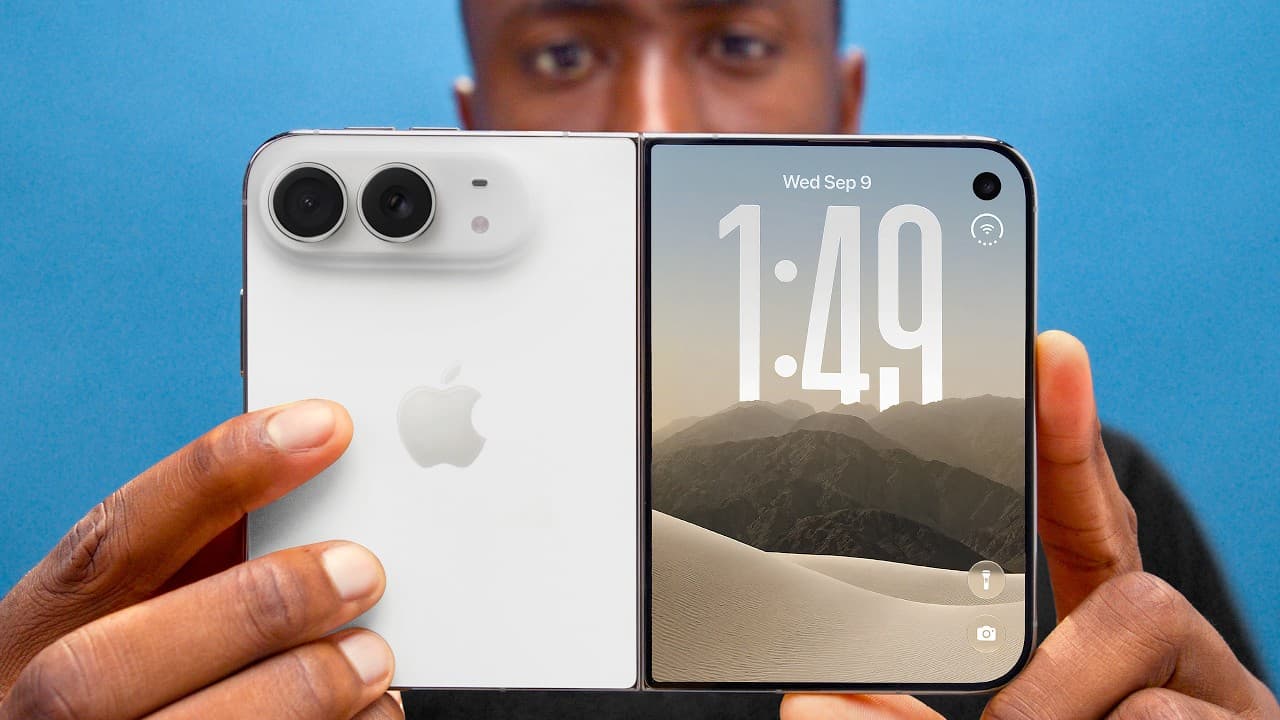
Apple’s fall event introduced the iPhone 18 Pro and Pro Max, as well as the folding iPhone Duo, while the base iPhone and other expected models were left for a later launch cycle. The 18 Pro models keep the familiar design, but add an A20 Pro chip, a smaller Dynamic Island, new colors, and a main camera with a manually adjustable variable aperture. Apple claims improved battery life, though the video notes that real-world performance and efficiency still need testing. The Pro and Pro Max start at $1,199 and $1,299, respectively, both $100 more than last year’s starting prices. The iPhone Duo is a book-style foldable with a 5.4-inch outer screen and a 7.6-inch inner display, designed to work like an iPhone when closed and an iPad mini when open. Its titanium frame, Touch ID power button, side-positioned dock, and smoothly animated transition between displays are highlighted, along with a low-reflection coating that helps make the screen crease less noticeable. The phone also has MagSafe, an A20 Pro chip, a C2 modem, and two rear cameras, including a 48-megapixel main camera and an ultrawide camera shared with the 18 Pro. Its software supports iPad-like app layouts and side-by-side multitasking, although the hands-on session leaves fuller software and camera testing for a later review. Comparing the Duo with Samsung’s Galaxy Z Fold 8, Marques says the phones are functionally similar but finds the Duo’s animations, finish, and small usability details especially polished. He praises its fast screen transitions, glare reduction, stereo speaker placement, IP68 rating, and ability to remain partly open for supported apps or a standby clock. The video also points out drawbacks: the cover screen is asymmetrical, the interface favors right-handed use, the dock is limited to four items, and the under-display selfie camera produces poor-quality video. Other omissions include a zoom camera, silicon-carbon battery, and ultrafast charging. The Duo costs $2,000 to start and is expected in October, a price the host says is lower than he anticipated, while noting that Samsung’s Fold 8 starts at $1,800. He sees the Duo as a potentially appealing first foldable for people already committed to iPhone, while stressing that it is not perfect and that a full review is still needed. The closing segment mentions AirPods 5 and Apple Watch Series 12 before moving into a Ridge sponsorship featuring its Power Bank, Tracker Card, and MagSafe Wallet. The sponsor segment directs viewers to ridge.com/mkbhd and does not give a discount code.
- 04 · Marques Brownlee
The Samsung Galaxy Fold unboxing presents an over-the-top packaging experience that mirrors the phone’s premium positioning. The video opens with a box that slides out to reveal a box within a box, highlighting the careful drama Samsung used in presenting the device as a luxury item. Inside, the presenter counts the accessories: a two-piece Kevlar case with an adhesive lining, a SIM ejector tool, and a set of Samsung Galaxy Buds tucked away in an AKG sleeve. Also included are a fast charger, a USB-C to USB-A dongle, and extra tips for the Galaxy Buds, plus the standard USB-C cable, all arranged to emphasize value. The phone itself ships in a slim white box, folded so the device lies flat, reportedly to minimize crease risk or to add to the spectacle of the unboxing. Setup mirrors typical Samsung practice, requiring a Google and Samsung account, and the onboarding ends with the Fold settled on the familiar stock wallpaper that signals the transition from unboxing to first use. The host notes the initial impression of the case, describing it as a two-piece Kevlar design that protects the hinge and remains easy to install or remove, adding a practical angle to the high-end presentation. Overall, the video frames the Galaxy Fold as a luxury product with a meticulous packaging and accessory strategy, while the setup emphasizes a user experience akin to other high-end Samsung devices. By the end of the segment, the unboxing becomes a demonstration of how Samsung wants buyers to feel about spending almost $2,000 on this foldable phone.
- 05 · Marques Brownlee
OnePlus 6 is evaluated as a strong value proposition in a flagship-dominated market. The reviewer emphasizes that the phone hits a balance between cost and capability, starting at 529 dollars and offering a near-flagship performance package. Build quality and materials are highlighted, with a preference for the midnight black variant and a wedge-shaped chassis that feels sturdy in hand. The camera system is described as solid but not class-leading, with a 16 MP primary camera featuring optical image stabilization and a secondary depth sensor that aids portrait mode, yet not at the level of the top-tier flagship devices. Battery life is praised thanks to a 3300 mAh cell, an efficient 1080p OLED display, and Dash Charge fast charging that remains a standout feature. On the software side, Oxygen OS provides a fast, near-stock experience with useful features like a shelf and gaming mode, while not overloading the user with bloat. The notch is acknowledged as a design compromise, but OnePlus offers display options to hide it or work with full screen mode, keeping real estate intact for most apps. Overall, the OnePlus 6 is presented as the most polished OnePlus phone to date, delivering excellent value for money, with a few notable omissions like wireless charging and IP certification that are weighed against the price. The reviewer concludes that the phone represents a well-balanced, budget flagship, delivering performance that often rivals more expensive devices while staying accessible to a broad audience.
- 06 · Marques Brownlee
Driving Tesla Cybertruck: Everything You Need to Know! is a comprehensive, hands-on exploration of Tesla's polarizing new pickup. The video begins by setting the frame: this is a near-final Cybertruck used for testing, not yet a delivery unit, with production-ready nuances still being validated. The host promises a thorough tour across specs, build quality, the bed and tonneau, doors, the nose, and interior controls, punctuated by live demonstrations and real-time observations. Early on, the run-through of official numbers establishes three configurations and highlights extreme performance figures for the triple-motor Beast mode, including a claimed 2.7 second 0-60 mph time and 845 horsepower, with the dual-motor and single-motor variants following behind. The price landscape is clarified, with the triple motor starting near $100,000, the dual motor around $75,000 to $85,000, and the single motor later, signaling a market-positioning that mixes capability with cost. The range is pegged at about 340 miles for the most efficient iterations, while bed and payload specs are presented to give a sense of practical utility, including a 2,500-pound bed capacity and a chassis sizing note that places the Cybertruck alongside an F-150 Lightning in overall footprint. The truck bed is revealed to have a damped tailgate, a motorized tonneau cover, a lined bed, a sub-trunk, and integrated power throughout the tail including 120V outlets and a 240V option, opening up potential for portable power use and even home charging scenarios in the right conditions. The speaker’s hands-on narration dives into material and build details, emphasizing the stainless steel exterior, the precision of panel gaps, and the distinctive, angular aesthetics that define the Cybertruck while acknowledging real-world variances between individual units. As the discussion moves to the doors, the video covers the keyless, button-activated doors, their 90-degree opening, and the challenges of entry with ice, weather, or fingerprints, while noting the absence of traditional door handles and the potential fingerprints on the exposed stainless steel. The front end is highlighted for its aggressive design, including dual tow hooks, a front camera, the low-positioned headlights, and the front trunk with automatic opening, which the host demonstrates as a shallow but usable storage space. The interior section emphasizes the expansive glass canopy delivering a strong sense of visibility, the large 18.5-inch central touchscreen, a revamped steering wheel rather than a yolk, and the new cyber UI software that blends familiar Tesla ergonomics with a Cybertruck aesthetic. Controls are reorganized with hovering dock elements, ride height options, and a broad range of suspension travel, including an off-road mode that adds a remarkable amount of clearance. The rear seating is discussed in detail, highlighting the 9.5-inch rear display, heated rear seats, rear seat storage, and a clever folding mechanism that creates additional cargo space. The driving experience centers on the unique steering system, which uses steer-by-wire with rear-axle steering that sharpens turns at low speeds and maintains stability at higher speeds, making a vehicle of this size feel nimble and surprisingly maneuverable. Road tests show the Cybertruck negotiating a highway merge and handling a mix of all-terrain tires with a quiet cabin experience, tempered by note of increased road noise from the specialized tires. The video closes with a discussion of the 800V architecture enabling faster charging, a fourfold increase in the 12V system to a 48V baseline, and the intriguing option of an add-on battery that grants roughly 120 miles of extra range, pushing the truck toward a more realistic long-haul capability for work use. Throughout, the host balances praise with caveats, pointing to questions about practicality, price competitiveness against rivals like the F-150 Lightning and Rivian R1T, and the ongoing need to live with a vehicle that deliberately challenges norms. The overall takeaway is that the Cybertruck signals a bold, capability-forward direction for Tesla, with extraordinary performance and innovative design ideas, paired with real-world usability questions that will only be answered as more units reach customers and long-term testing proceeds. Substantive takeaways cover practical bed and trunk versatility, an innovative cabin and software experience, a distinctive yet controversial design language, and a new steering architecture that redefines how a big pickup should feel when maneuvering in tight spaces. The video ends by inviting viewers to subscribe for a deeper, later-stage review that will cover towing, daily usability, and long-term ownership impressions.
- 07 · Marques Brownlee
The video provides the first hands-on unboxing experience of the iPhone X, highlighting the packaging contents which remain consistent with previous iPhone releases,earbuds, adapters, and stickers,despite the box’s premium presentation. The host notes the silver and space gray color options, and emphasizes that the major novelty lies in the front display, a 5.8 inch OLED with a notch, which reshapes how apps and gestures are used. He walks through the initial setup, pointing out the shift from Touch ID to Face ID during first boot, and demonstrates the new home gesture system that replaces the physical home button. The unboxing then segues into early impressions about the display quality, color accuracy, brightness, and contrast, while also touching on the new interaction paradigms such as capturing screenshots with a power and volume-up combo and powering off via a long-press plus volume-up. He also previews the broader changes you’ll encounter without the home button, including the various multitasking gestures and the necessity to memorize new ways to operate the device. The video closes with reminders about software features like Face ID, the improved front-facing camera, and the new Animoji capabilities, while inviting viewer feedback for the full review and upcoming tests focused on battery life, camera quality, and app performance.
- 08 · Marques Brownlee
The video presents a comprehensive retrospective that tracks the iPhone from its original 2007 debut to the iPhone 13 lineup, framing how each generation contributed to the smartphone landscape. The host begins by establishing the original iPhone as a legendary inflection point, highlighting its multitouch interface, web-based OS, and the way it unified phone, internet, and iPod functionalities. He notes the absence of an App Store at launch and the early limitations, such as a basic wallpaper and limited storage, while emphasizing how its design language and interface set the template for future devices. The narrative then progresses generation by generation, underscoring how each model refined hardware and software, from the iPhone 3G’s App Store introduction to the iPhone 4’s design and antenna considerations, and later the 4S with Siri and faster internals. With each step, the video highlights pivotal shifts like the introduction of Retina display on the iPhone 4, Touch ID on the 5S, and the transition to larger screens and metal bodies with the iPhone 6 family, culminating in the controversial but transformative iPhone 7 notch removal era and the iPhone X redesign. The host also reflects on mid-cycle strategy with models like the SE and the more affordable options (5C, 12 mini) that broaden accessibility, and on the shift toward multiple devices within a single generation (Pro, Pro Max, Plus, Max, Mini) as the lineup expanded. Through this journey, the video ties design language to market forces, noting how Apple’s choices around screen size, materials, port changes, and camera capabilities influenced the broader smartphone ecosystem. The visual graph segments at the end crystallize the data: storage capacities grow from a few gigabytes to over a terabyte, RAM scales up while staying within practical limits, and megapixel counts climb from 2 MP to 12 MP with continuing ambition for higher resolution video formats. The discussion also captures pricing evolution, mentioning the leap to $999 as a psychological threshold and the impact of pricing on consumer perception and competition. Finally, the host projects a future-oriented note, acknowledging ongoing questions about the next iPhone after 13 and the broader evolution of the iPhone ecosystem, while reflecting on the momentum generated by the iPhone’s design language, camera capabilities, and propulsion of the smartphone market forward. The overall takeaway is that the iPhone’s evolution mirrors broader tech trends: bigger displays, faster processors, improved cameras, new interaction paradigms, and a willingness to experiment with premium pricing, all of which have shaped both consumer expectations and competitive strategies in mobile devices.
- 09 · Marques Brownlee
Apple Vision Pro Impressions dives into a hands-on experience with Apple’s first generation spatial computing headset. The video begins with a clear recap of what the device is: a standalone AR/VR headset with an M2 CPU, a dedicated R1 chip for sensor processing, and a price tag of $3,500. The creator emphasizes that this is not a phone-tethered accessory but a self-contained computer with 4K per-eye micro-OLED displays and a sophisticated sensor array. Eye tracking, hand tracking, and voice input power the interface, which eliminates traditional controllers entirely. Setup includes facial scanning for a custom face cutout and optional ZEISS lenses for glasses wearers. The presenter underscores the novelty of eye tracking, describing it as almost telepathic as the UI responds to where you look and click is achieved by a finger pinch gesture. The battery is external, attached via a cable, and the headset itself is built with metal and glass, giving a premium, heavy feel. In terms of form, the glass-like outer view includes a two-way passthrough that displays real-time color video to the outside world through an OLED, making eyes visible in passthrough mode while still delivering immersive experiences when content is active. The overall verdict from this first hands-on is that Vision Pro is highly impressive technically, but not yet a mass-market product due to the price, weight, and battery life constraints. The video closes by positioning Vision Pro as a platform in its infancy, with developers and content creators likely to define its future direction, much like the early days of other major Apple launches. Finally, the narrator teases a broader WWDC context and invites viewers to stay tuned for more coverage and related podcast content.
- 10 · Marques Brownlee
The video opens with an exploration of Xiaomi's Mi Mix Alpha, a prototype that pushes the idea of a wraparound display to the extreme. MKBHD notes that this is not a commercially released phone, but a functional prototype meant to showcase a bold concept: bend the display all the way around the device so that the screen covers the front, sides, and back. He explains that the wraparound concept was inspired by curved edge displays and highlights the design implications, including the titanium frame, sapphire camera covers, and a ceramic camera strip on the back. The display specs are impressive, featuring a 2088 by 2250 OLED panel with ultra-thin bezels that meet the camera strip, while the internal hardware packs a Snapdragon 855 Plus, 512 GB of UFS 3.0 storage, 12 GB of RAM, and a 4050 mAh battery with 40 W fast charging. He also points out software optimizations in MIUI Alpha, such as side-placed battery and notification indicators to keep the front display clean and uncluttered. The overall takeaway is that the Mi Mix Alpha is a fascinating yet imperfect concept that prioritizes form and wow factor over practical usability or mass market readiness.
- 11 · Marques Brownlee
The video provides a detailed, year-long deep dive into Marques Brownlee’s experience with the Tesla Solar Roof paired with Powerwalls, framed around the question: was it worth it? It begins with a primer on how solar systems work, including the role of the grid, net metering, and the difference between grid-tied solar and off-grid storage. Marques emphasizes the importance of batteries in achieving real energy independence and explains why he chose a fully integrated Tesla solution for simplicity, compatibility, and monitoring through the Tesla app. He walks through the decision to use solar tiles rather than conventional panels, highlighting aesthetics, roof preservation, and maximum roof coverage as the main drivers, even though it carried a premium price. The installation process is described in stages, from initial estimates and satellite roof assessments to measurements, quotations, and the on-site installation, noting that the actual process spanned about eight months from purchase to activation. He then shifts to the numbers, unpacking a 29.313 kW solar array with three Powerwall 3s totaling 40.5 kWh, and shows how the Tesla app visualizes real-time production, consumption, and battery state. The video dives into seasonal performance, illustrating how the system behaves in summer with high solar production and heavy air conditioning load, in fall with strong excess generation, and in winter where cloudiness and heating demand pressure the system, and how the Powerwalls buffer the day’s needs. Marques also discusses how snow, weather, and climate affect performance, including special cases like snow melt on the solar tiles and backup power during outages, and he shares practical notes about maintenance, outages, and storm readiness. Finally, he analyzes the economics, declaring an all-in cost around $120,948 before tax credits and about $93,000 after a 30 percent New Jersey solar investment tax credit, with a payback period near 9.6 to 10 years based on his yearly consumption and avoided electricity costs. He also explores the potential for shorter payback with a cheaper array, the value of full roof coverage, and the possibility of future tech like bi-directional charging from Tesla or vehicle-to-home use, while acknowledging the current bleeding-edge status and evolving economics of this system. In closing, Marques reflects on the broader implications for sustainable energy, the dream of energy independence, and the peace of mind that comes from reliable backup power, while inviting viewers to share experiences and questions in the comments.
- 12 · Marques Brownlee
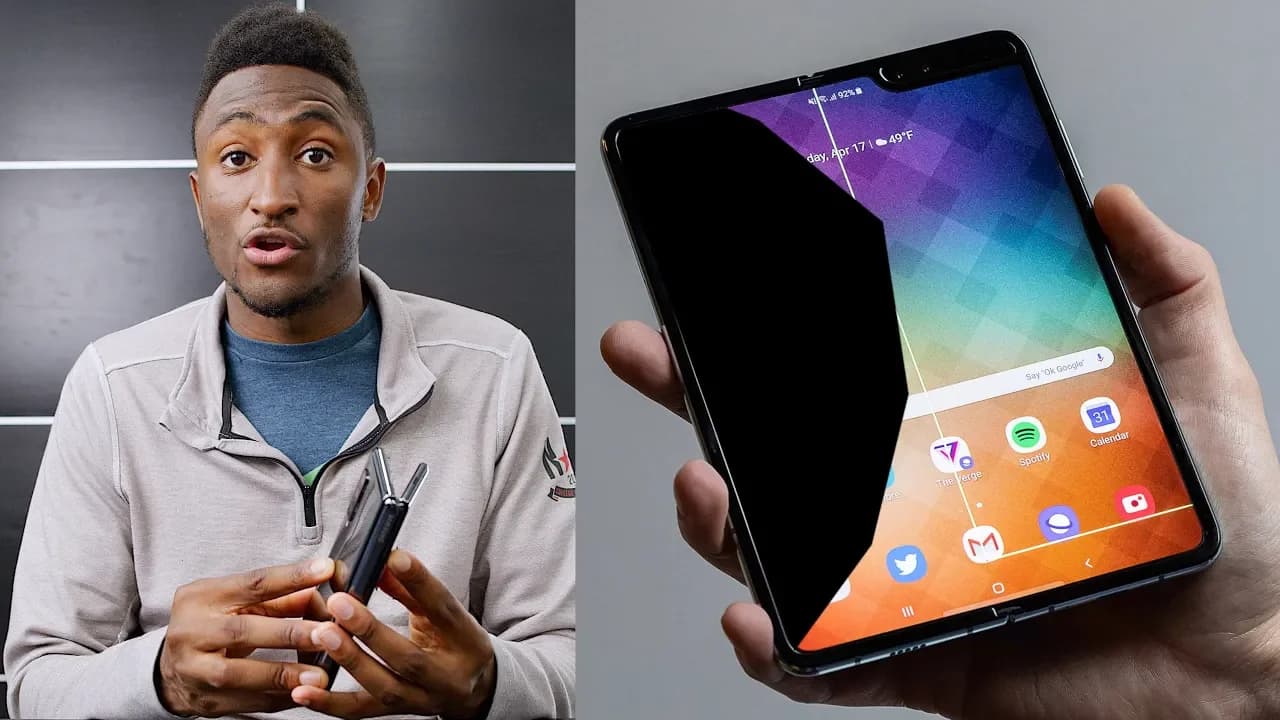
The video opens with MKBHD recounting the rapid failure of several Galaxy Fold units among early reviewers, explaining that the issues surfaced very soon after unboxing. He describes noticing a pre-installed screen protector with a lip around the display, and, upon peeling it back, the screen immediately blacks out and shows a flickering edge. This initial damage is framed as a key clue to the broader problem, which he later aligns with multiple other reviewers who experienced similar display failures after mild handling. The host then breaks down four observed failure modes across the first wave of folds: in two cases the screen died after peeling the protective film or its adhesive, while in the other two cases the top protective layer or its underlying film appeared to be damaged through regular use or misinterpretation of a protective layer as a removable film. He emphasizes that removing the film is risky and may void the screen’s integrity, highlighting that some reviewers did not have warnings on their unit packaging, implying a miscommunication in the supply chain. Moving into Samsung’s response, the video summarizes the company’s statement that a few units showed main display issues and that Samsung would inspect the devices to determine the causes, distinguishing between peeling damage and issues arising from the protective layer itself. MKBHD notes that foldable displays rely on a soft plastic layer rather than glass, which makes them more susceptible to damage from scratches or peeling, and he argues that this fundamental material choice is at the heart of the problem. He discusses broader implications for folding phones, acknowledging the excitement around the technology while acknowledging the hurdles of durability, reliability, and real-world use. He closes with a balanced view: folding phones are promising but currently present a high-risk, first-generation experience, and future generations could improve if the lessons learned from this early batch are applied. The video ends with a call for viewer feedback on whether to continue using the Galaxy Fold and a tease of a deeper future review, underscoring the ongoing evolution of this new form factor.