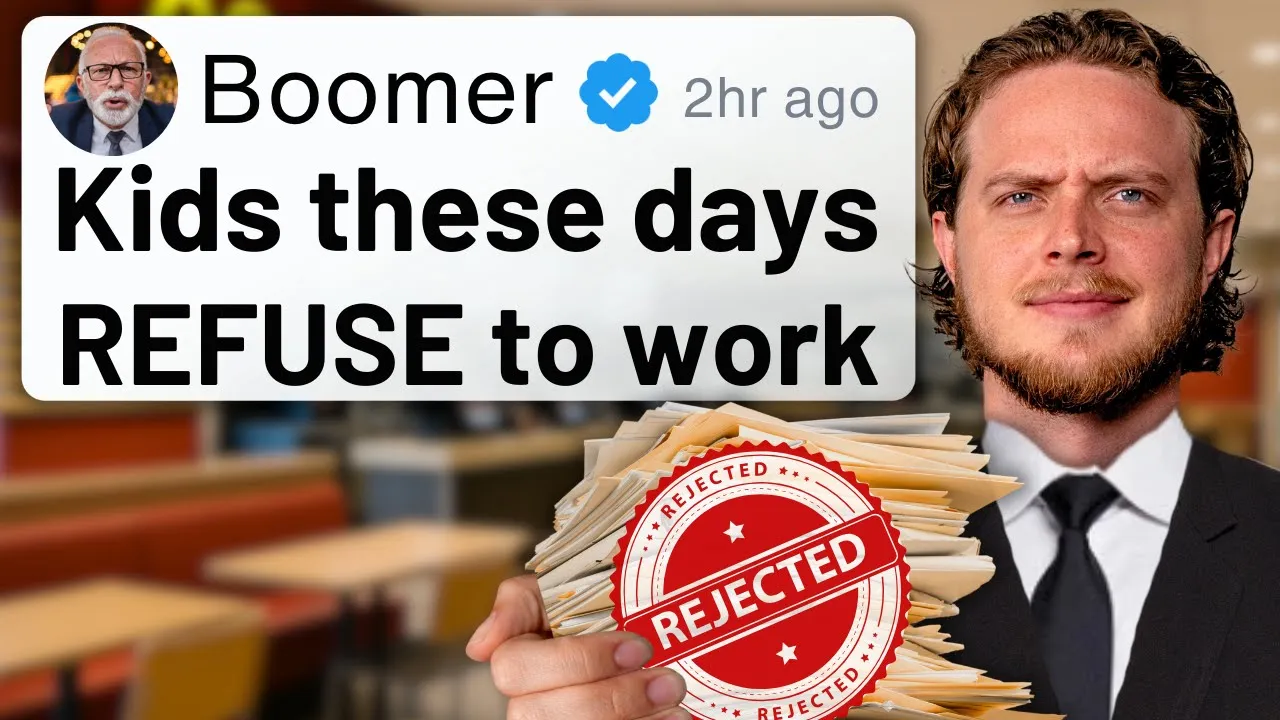
How Boomers Destroyed The Job Market
Este vídeo también tiene audio en español (doblaje automático). En el reproductor, abre Configuración → Pista de audio y elige español.
Tu valoración
Reacciones
AudioInglés (original)Doblaje automático: Español, Francés, Hindi, Indonesio, Polaco, Portugués
Descripción
Download the FREE Upside App at upside.app.link to get an extra 25 cents back for every gallon on your first tank of gas. The job market once defined by stable career paths, strong unions, and accessible entry level jobs, has undergone a seismic shift over the past several decades, with many of the structural changes tracing back to policies, economic conditions, and corporate practices that took root during the Baby Boomer era. Today’s job hunting landscape is dominated by mass layoffs, hiring freezes, and a growing prevalence of ghost jobs—positions that are posted online but never actually filled. For millions of workers, especially younger generations, the pathway to building a career has become increasingly narrow as competition intensifies, wages stagnate, and the cost of living soars. While technology and globalization have played their part, the transformation of the job market has deep roots in decades of deregulation, outsourcing, and political decisions that prioritized short-term profits over long-term job security. Baby Boomer leadership in both corporate and political spheres coincided with a period of significant economic restructuring, where manufacturing jobs—the backbone of mid-20th-century American work—were steadily outsourced to cheaper labor markets abroad. These shifts eroded union power, weakened collective bargaining, and left workers in service-based industries with fewer protections. As companies embraced shareholder-first strategies, layoffs became a common tool for boosting stock prices, and job creation shifted toward temporary or contract work. For those entering the job market today, it’s common to encounter postings that demand years of experience for roles labeled as entry level, creating a barrier that didn’t exist in the same way for previous generations. The cumulative effect has been a widening wealth gap, diminished upward mobility, and a persistent sense that the traditional career ladder is broken. At the same time, the rise of corporate consolidation and automation has concentrated hiring power in fewer hands, giving large employers disproportionate influence over wages, benefits, and working conditions. Ghost jobs and misleading postings waste applicants’ time and distort employment data, while mass layoffs—often in highly profitable companies—underscore the fragility of modern work. These challenges are compounded by the expectation that workers must constantly upskill just to remain competitive, shouldering the costs of training and education that employers once provided. The result is a job hunting environment that is more expensive, more competitive, and less rewarding than it was for earlier generations. For many younger workers, this new reality is not just about finding a job but about navigating a career landscape that feels intentionally stacked against them. While Baby Boomers came of age in an era of expanding opportunity, affordable education, and abundant jobs, subsequent generations have inherited an economy defined by precarious work and shrinking benefits. The story of how the job market evolved from stable to volatile is not simply one of economic change—it is one of deliberate choices, shifting values, and systemic priorities that continue to shape the future of work for everyone. This history is essential for understanding why job hunting today feels harder than ever, and why fixing the system will require more than just creating jobs—it will require rethinking how work, wages, and opportunity are distributed in the modern economy. #financialeducation #financialfreedom #history 0:00 Intro 0:22 Why Baby Boomers Inherited The GREATEST Job Market In History 1:36 Why Some Baby Boomers Abandoned A Strong Job Market 2:44 Why Baby Boomers Developed The "Just Work Hard" Mentality 3:31 Why Working Class Baby Boomers NEVER Experienced Job Market Prosperity 4:20 A GREAT Clip To Understand Some Of The Baby Boomer Mentality 5:15 How I Am Combating The Growing Costs Of Living 6:25 How The Hippie Movement Fundamentally Eroded American Labor Values 7:36 How Baby Boomers Became Greedy With Labor Unions 8:44 How Baby Boomers (Yuppies) Fundamentally Sold Out The Job Market 9:55 Perfect Example Of Baby Boomer Corporate Greed Mentality MUST WATCH 10:45 Why Baby Boomers Got TRICKED Into Voting For A Collapsing Job Market 11:34 Yes It's Because Of Ronald Reagan... Crucial To Understand This 12:58 Why Young Baby Boomers Only Focused On Their Own Careers 13:38 The Political And Corporate Ideology That Destroyed The Job Market 14:04 How We Passively Sat By While The Job Market Collapsed 14:55 The Job Market Is Now Designed For Wealth Inequality 17:17 The Generational "Laziness" Comments Have To Stop 18:58 We Cannot Just "Fix" The Job Market But We Can Try To Rebuild It Titles for the Algo! How Boomers RUINED The Job Market How Boomers BROKE The Job Market How Boomers DESTROYED The Job Market
Resumen de IA
The video traces today’s strained job market to postwar economic changes and choices made across the Baby Boomer generation. It says the post-World War II economy brought low unemployment, rising wages, and benefits such as pensions and health insurance, while the GI Bill helped many veterans access college and home loans. However, those opportunities were unevenly distributed, with Black veterans and many working-class veterans facing discrimination or barriers to education and housing. The video describes how some early Boomers challenged traditional work culture, while others pursued long hours and corporate advancement. It argues that these different experiences and cultural shifts weakened solidarity around organized labor.
Temas · baby boomers · unemployment · career · economy · labor unions · economic history
Preguntas respondidas
- What factors made the postwar job market more secure for many American workers?
- The postwar economy combined low unemployment and rising wages with employer benefits such as pensions and health insurance. The GI Bill also helped many returning veterans pay for college and housing, though access was unequal.
- How does the video connect Baby Boomer-era corporate practices to the decline of American labor?
- It links shareholder-focused management, acquisitions, layoffs, union-avoidance strategies, and the outsourcing of manufacturing to reduced union power and less secure work.
- What does the video say about Reagan-era appeals to blue-collar workers?
- It describes political outreach that emphasized jobs, job creation, and public recognition of workers, while arguing that the policies associated with those appeals could still contribute to outsourcing and declining union power.
- Why does the video argue that Gen Z faces a more difficult job market?
- It points to wage stagnation, rising living costs, competition for work, and reduced job security. It also cites entry-level roles demanding experience and describes layoffs and ghost job postings as barriers for applicants.
- What response does the video recommend instead of blaming generations for being lazy?
- It calls for more careful, constructive conversations, personal accountability, community support, and efforts to leave stronger workplace protections and opportunities for future generations.


