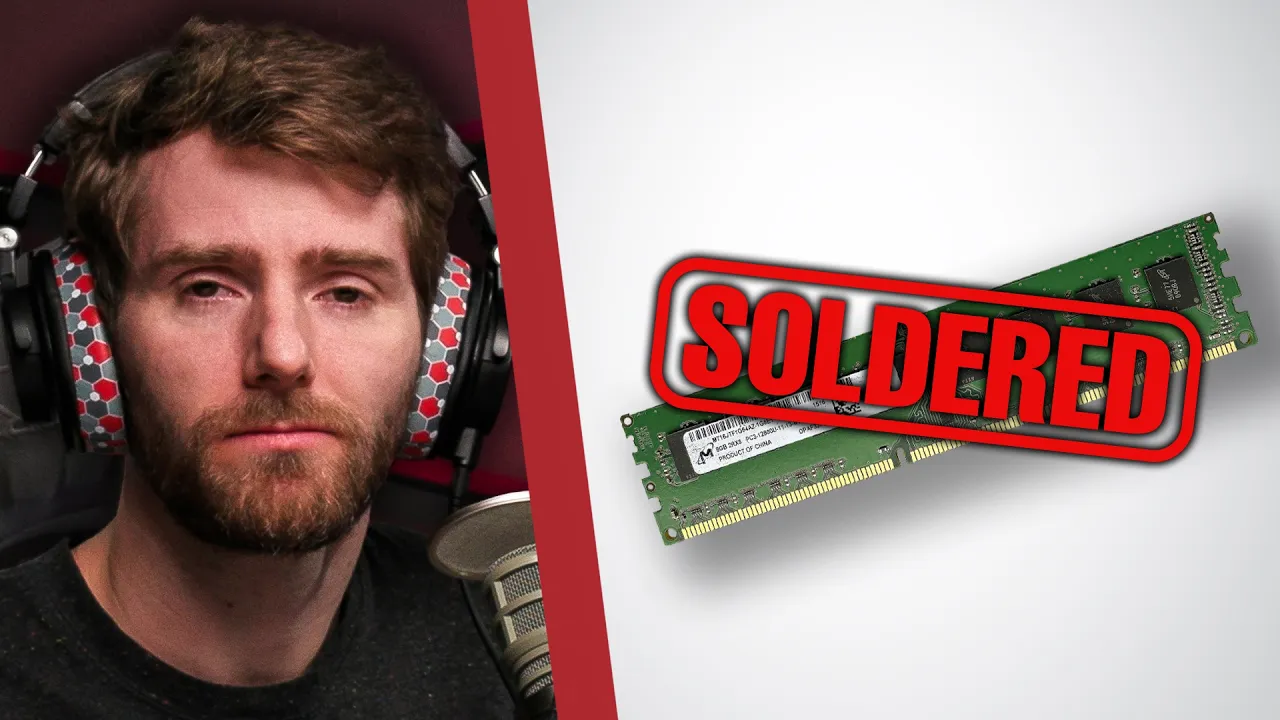
Repairability Isn't Always The Right Choice
Tu valoración
Reacciones
Descripción
Thanks to our WAN clips sponsors Dell, dbrand and Razer. You can check them out at the links below: dbrand: dbrand.com
Canales y redes sociales
Check out the sleek, powerful new Dell XPS 14: del.ly Game or work in comfort on a Razer Iskur V2: lmg.gg Linus argues that easy repairability isn’t always the best choice, and he uses the Framework Desktop’s soldered memory as his example. Linus and Luke discuss why memory keeps moving closer to the processor and what that means for upgradeable PCs. Watch the full WAN Show: youtube.com ► SHOP OUR PRODUCTS: lttstore.com ► GET EXCLUSIVE CONTENT ON FLOATPLANE: lmg.gg ► SPONSORS, AFFILIATES, AND PARTNERS: lmg.gg
Resumen de IA
Linus argues that easy repairability is not always the right choice, while Luke says he generally values it but recognizes that many buyers may not accept the trade-offs. They discuss criticism of the Framework Desktop for having non-removable memory, then explain that Strix Halo uses memory shared by the CPU and GPU, which needs to be close to the processor for performance and cannot use a socketed module in this design. The discussion places this example in a longer trend of computer components moving onto motherboards and chips, from co-processors and GPUs to memory controllers and NPUs. Their conclusion is that repairability and modularity can give way when integration is needed to meet a product's performance goals.
Temas · clip · hardware · opinion · podcast · science & technology
Preguntas respondidas
- Why might a computer prioritize performance over easy repairability?
- Some designs need components close to the processor to achieve their performance goals, making removable or socketed parts impractical.
- Why does the Framework Desktop use non-removable memory with Strix Halo?
- Strix Halo shares memory between the CPU and a high-performance GPU, and the memory needs to be close to the processor for signal speed and low latency.
- Why have computer components increasingly been integrated onto chips?
- Integrating components such as cache, co-processors, GPUs, memory controllers, and NPUs is part of a long-term trend toward consolidating more functions onto the processor or system on a chip.


