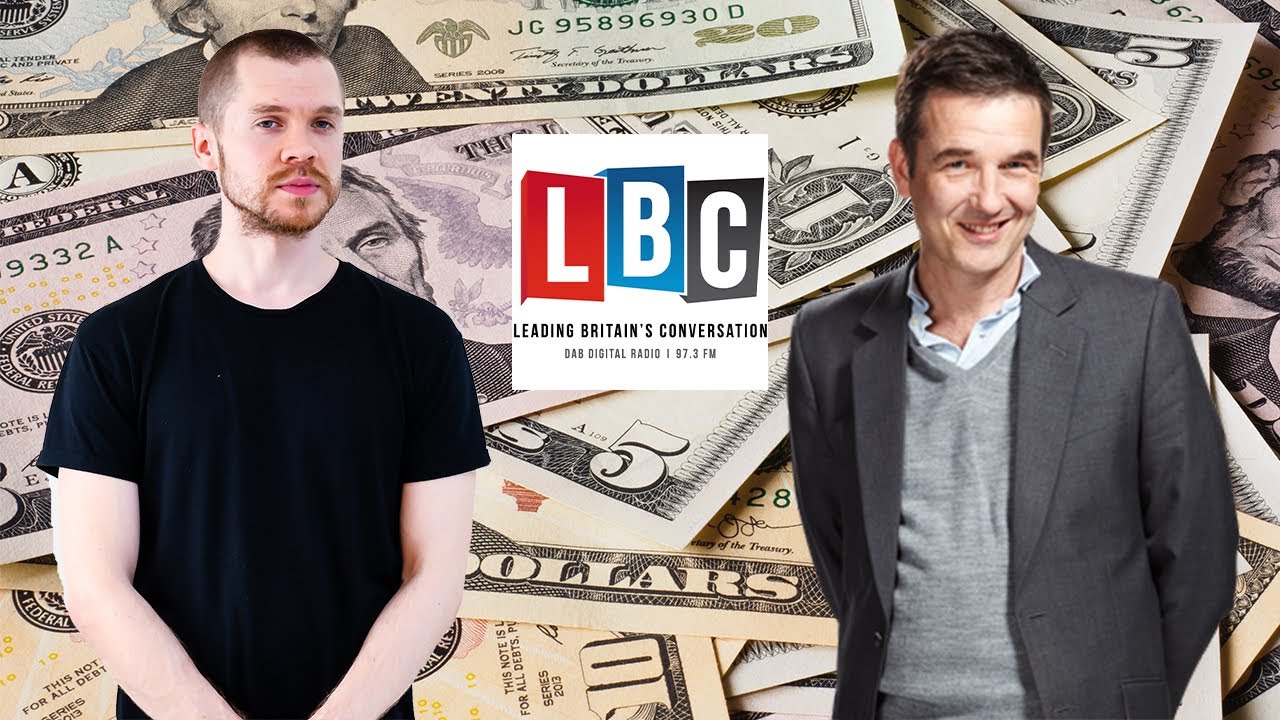
Millionaires For Humanity - Gary on LBC with Ian Payne
Tu valoración
Reacciones
Canales y redes sociales
Interview with Ian Payne from LBC. Talking about Millionaires for Humanity & Tax Reform. Broadcast on LBC @ 00.02 on 13/07/2020 Published with permission from LBC SOCIAL MEDIA: WEBSITE - wealtheconomics.org TWITTER - @garyseconomics FACEBOOK - garyseconomics INSTAGRAM - garyseconomics GARY'S ARTICLES: www-express-co-uk.cdn.ampproject.org https://www.theguardian.com/commentis... https://www.cityam.com/debate-is-ther... https://www.opendemocracy.net/en/oure... https://www.opendemocracy.net/en/oure... nationalobserver.com AUDIO FEATURING GARY: https://anchor.fm/zuzana4/episodes/Pu... MORE VIDEOS: youtu.be - COVID-19 & MONEY youtu.be - RADIO 4 INTERVIEW PHOTO FROM: lbc.com pixabay.com Backdrop - Skyscraper by Free-Photos on Pixabay Spoken by Gary Stevenson GARY'S ECONOMICS Edited by Simran Mohan MOHAN MEDIA 2020
Resumen de IA
In the opening segment, Gary Stevenson is introduced as part of a broader discussion sparked by a letter from Millionaires for Humanity calling on governments to increase taxes on the ultra-wealthy to fund responses to the COVID-19 crisis. Ian Payne sets the stage by noting the international makeup of the signatories and Gary’s background as an economist who built wealth in the city before retiring young. Gary explains how he became involved through Tax Justice UK and describes the core idea: wealth taxes to boost demand, support recovery, and counteract rising inequality that threatens the economy. He argues that low interest rates and heavy money printing have disproportionately benefited the richest, while ordinary workers face stagnating wages and reduced spending power, which could dampen demand and delay recovery. The conversation then turns to the mechanics of wealth taxation, with Gary outlining his view that tax policy should shift from income to accumulated wealth to capture non-work income that currently escapes heavy taxation. He reflects on historical tax rates and emphasizes that the design of a wealth tax should balance fairness with practical enforcement, noting his preference for targeting the very wealthy rather than broad groups such as doctors or lawyers. In the closing portion of the interview, Gary discusses his personal journey from investor to public advocate, his ongoing projects to explain wealth inequality through new videos, and his belief that addressing inequality is essential for long-term economic health. Payne asks about the potential political feasibility and public support for wealth taxes, while Gary reiterates the need for a structural reform to ensure a sustainable recovery and to prevent a future where a small elite disproportionately drives economic outcomes. Overall, the interview frames wealth taxation as a practical tool to restore demand, reduce inequality, and secure a more stable macroeconomic environment in the wake of the pandemic. The dialogue balances Gary’s economic analysis with his personal narrative, illustrating how individual experience informs advocacy for policy change while acknowledging the political complexities involved. As the segment closes, Gary reaffirms his commitment to producing accessible content through Gary's Economics to educate the public on wealth inequality and its impact on the economy.
Temas · economics · politics · media
Preguntas respondidas
- What is the central policy proposal discussed in the interview?
- The central proposal is to implement a wealth tax that targets accumulated wealth rather than income to fund pandemic relief and stimulate demand.
- Why does Gary believe wealth taxes are necessary for economic recovery?
- He argues that persistent inequality and money flowing to the wealthy under current policies reduces consumption by ordinary workers, hindering demand and prolonging the crisis.
- How does Gary situate his view within historical tax policy?
- He references higher tax rates in the 1970s and discusses learning from past experiences to design a wealth tax that captures non-work income while remaining enforceable.


