If Buying Isn't Owning, Piracy Isn't Stealing
Este vídeo también tiene audio en español (doblaje automático). En el reproductor, abre Configuración → Pista de audio y elige español.
Tu valoración
Reacciones
AudioInglés (original)Doblaje automático: Español, Alemán, Francés, Hindi, Indonesio, Italiano, Portugués
Promociones
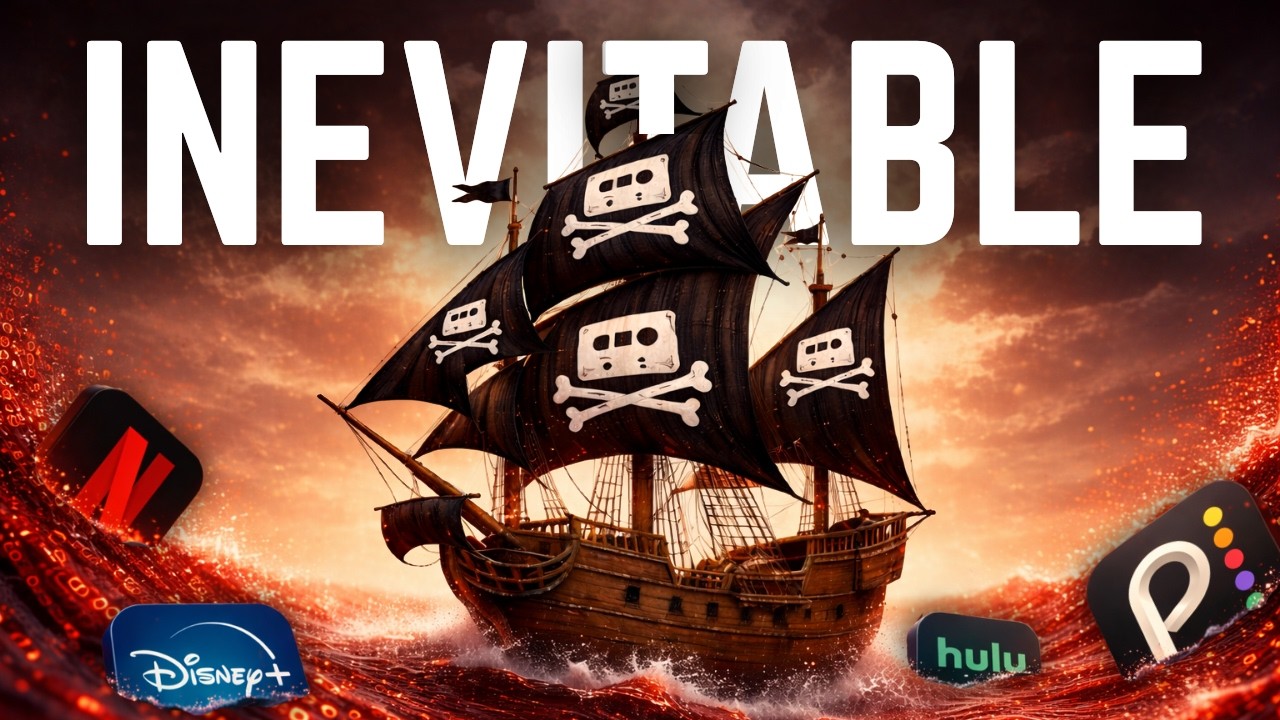
If Buying Is Not Owning Piracy Is Not Stealing Get 20% off DeleteMe by going to joindeleteme.com and use code Damon to protect your privacy! Piracy has returned to the center of cultural conversation as the cost of living crisis collides with a subscription economy that demands more money for less access. Across entertainment, music, film, and television, consumers are navigating a system where ownership has quietly disappeared, replaced by licenses, restrictions, and recurring fees. As prices rise and platforms fragment, piracy is increasingly viewed not as rebellion, but as a rational response to a system that no longer aligns with how people live, earn, or consume media. From the early days of Napster to the modern pirating comeback, piracy has always followed moments of consolidation and economic pressure. When access narrows and costs increase, pirates emerge not out of novelty, but necessity. Streaming platforms like Netflix, Paramount, HBO Max, and Peacock have reshaped entertainment into an endless series of subscriptions, each claiming exclusivity while offering shrinking catalogs and rising prices. The subscription economy thrives on dependence, not ownership, creating a growing disconnect between what people pay for and what they actually control. The phrase if buying isn’t owning then piracy isn’t stealing has become a defining sentiment of the digital age. Digital purchases no longer guarantee permanence, access, or control, and content can disappear without warning. In that environment, piracy reframes itself from theft into preservation, access, and resistance to systems designed around extraction rather than value. Pirating is no longer confined to underground forums; it reflects broader dissatisfaction with how culture is packaged and sold. The modern pirate is not driven by ideology alone, but by economics. As the cost of living crisis continues to squeeze households, discretionary spending on entertainment becomes harder to justify. A single household juggling multiple subscriptions faces a system that assumes infinite tolerance for price hikes, ads, and fragmented access. Piracy fills the gap left behind by a market that prioritizes growth over fairness and convenience over accountability. Piracy discussions increasingly intersect with debates about control, consent, and digital rights. The resurgence of pirating mirrors a wider pushback against platforms that redefine ownership while maintaining full authority over access. As companies tighten restrictions, piracy loosens them, offering an alternative that reflects how people actually engage with media. The pirate archetype has evolved into a symbol of consumer frustration with monopolized distribution and artificial scarcity. Napster once exposed how quickly centralized control could be disrupted, and today’s pirating resurgence echoes that same pressure point. The cycle repeats as platforms consolidate power, raise prices, and fracture access across competing ecosystems. Piracy thrives not because rules are ignored, but because systems fail to adapt to reality. In an era dominated by subscriptions, rising costs, and disappearing ownership, piracy represents a mirror held up to the modern media economy. The ongoing piracy comeback highlights unresolved tensions between access and control, value and price, legality and legitimacy. As long as entertainment remains locked behind escalating paywalls and diminishing returns, piracy will continue to exist not as an anomaly, but as an inevitable outcome of the system itself. #financialeducation #financialfreedom #history 0:00 Intro 0:21 Why Piracy Is Making An EPIC Comeback 0:40 Why Piracy NEVER Emerges During Fair Markets 1:16 How Napster Created The Online Piracy Movement 1:57 Does Piracy Actually Hurt Creators? 2:50 Why Streaming Was Originally Destroying Piracy 3:25 Why Pirating Is Bad... But Acceptable For Companies 4:14 The HIDDEN Way Companies Steal Your Data For Advertising 5:47 How I Protect My Personal Data 7:07 Why AI Companies Are Pirating IMMENSE Amounts Of Data 8:18 Pirating Content Is Illegal... Unless Your An AI Company 8:58 Why Streaming Lost And Piracy Won 10:00 Why Piracy Is Justified 10:43 Why The Laws DON'T Apply To Those In Power 11:47 I End Piracy In 16 Seconds 12:04 I End The Population Collapse In 9 Seconds 12:50 Why Piracy Is Morally Acceptable 13:50 They Think You Are Just A Filthy Consumer 16:16 Why Piracy Is A Digital Revolution To Corruption 17:53 STOP Using Streaming Services Titles for the Algo! Why Piracy Is Making An EPIC Comeback Why Piracy Is GREAT Again Piracy Is The ONLY Logical Solution Streaming Lost. Piracy Won. Why Streaming Lost And Piracy Won
Resumen de IA
The video argues that piracy tends to rise when entertainment becomes expensive, fragmented, or difficult to access, rather than when markets offer consumers good value. It traces this argument back to the late-1990s music industry, describing major-label control, CD price-fixing penalties, and Napster’s rapid growth as an alternative for sharing music. The host contrasts the penalties faced by Napster with smaller fines for industry practices, and notes that some independent artists credited Napster with helping them find audiences. The video says streaming initially competed with piracy by offering broad catalogs at affordable prices, but that consolidation, rising fees, advertising, and shrinking catalogs have weakened that appeal. It also criticizes streaming companies’ collection of viewing and device data, including automatic content recognition on smart TVs. The central claim is that when digital purchases provide limited control and access is increasingly costly, piracy can seem to consumers like a response to unfair systems, even though it remains illegal.
Temas · education · digital piracy · streaming services · digital rights · data privacy · consumer rights
Preguntas respondidas
- Why does the video argue that online piracy is making a comeback?
- It argues that rising subscription prices, advertising, fragmented catalogs, and reduced access make legal entertainment less attractive to consumers.
- How does the video connect Napster to modern piracy?
- It describes Napster as a peer-to-peer music-sharing platform that grew quickly amid high CD prices and record-label control, and compares that period with current dissatisfaction toward streaming services.
- What privacy concern does the video raise about smart TVs?
- It says automatic content recognition can identify audio and video appearing on a television, including content from different sources, and that viewing data can be used to create advertising profiles.
- What examples does the video give of AI companies using pirated or copyrighted material?
- It discusses reports that Nvidia sought access to books from Anna's Archive and that Meta employees torrented material for AI training, while noting that the legal cases were ongoing.
- What does the video say would reduce piracy?
- It argues that companies could reduce piracy by offering more value, affordable prices, and reasonable access to entertainment.