The AI Bubble's BIGGEST Loser
Dieses Video gibt es auch mit Audio auf Deutsch (automatisch synchronisiert). Öffne im Player Einstellungen → Audiotrack und wähle Deutsch.
Deine Bewertung
Reaktionen
AudioEnglisch (Original)Automatisch synchronisiert: Deutsch, Französisch, Niederländisch, Spanisch, Arabisch, Bengalisch, Hebräisch, Hindi, Indonesisch, Italienisch+9 weitere
Werbung
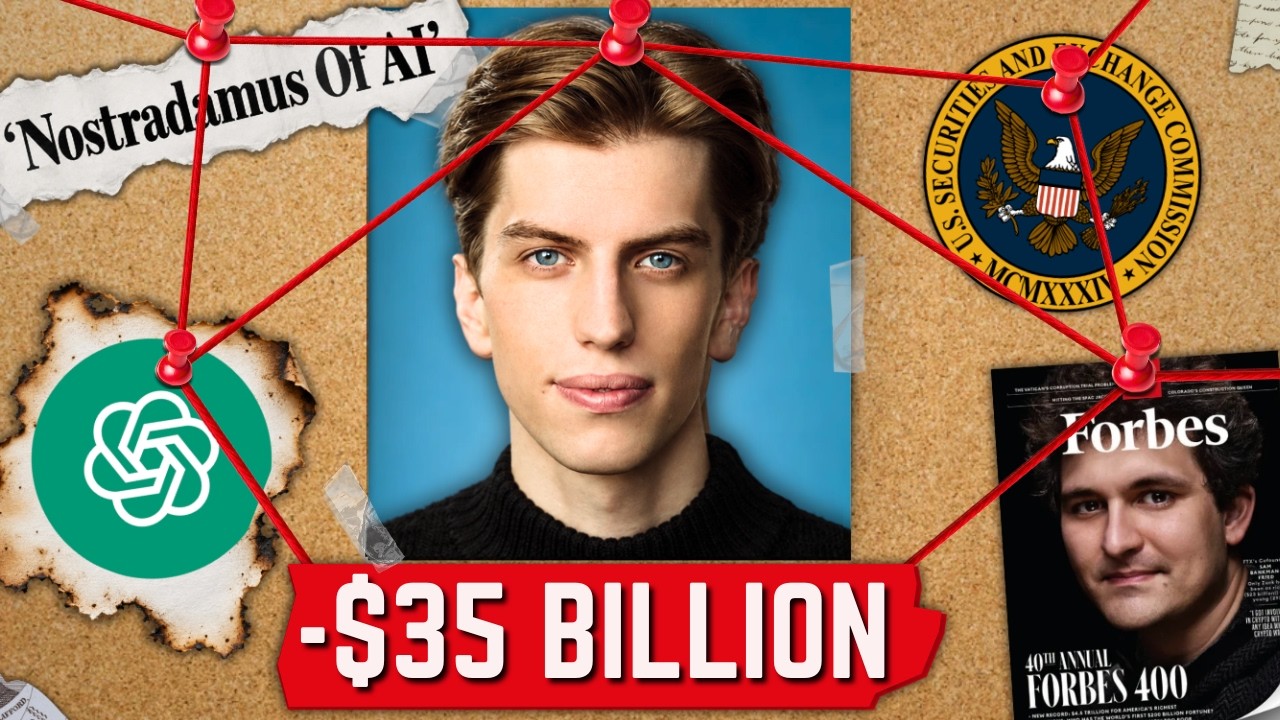
Thanks to Monarch for partnering with me! Start your free trial and get 50% off your first year of total money clarity using my link monarchmoney.yt.link or code damon50 for 50% Off Monarch Core tier. The artificial intelligence boom has created one of the most aggressive investment cycles in modern technology, as Silicon Valley, Wall Street, and the broader financial industry attempt to position themselves for an AI revolution that could reshape the global economy. At the center of this AI bubble is Leopold Aschenbrenner, whose Situational Awareness thesis became closely associated with predictions of rapidly advancing AI, automation, and a technological transformation unlike anything experienced before. As expectations surrounding artificial intelligence continue to grow, enormous amounts of money are being wagered on the assumption that AI will fundamentally change how the economy operates. Leopold Aschenbrenner represents a generation of Silicon Valley thinkers who believe artificial intelligence and the ai industry could advance far faster than society expects. After spending time at OpenAI, the company responsible for ChatGPT, Aschenbrenner became widely associated with the future of AI through Situational Awareness, his sweeping argument about where artificial intelligence could be heading. The ideas surrounding AI development, automation, AGI, computing infrastructure, semiconductors, and the broader AI revolution quickly became more than predictions about technology. They became an investment thesis built around identifying which companies could benefit most if the future unfolded as expected. The AI bubble transformed that confidence into an opportunity to make enormous financial bets. As OpenAI, ChatGPT, Anthropic, Nvidia, AI data centers, semiconductor companies, and other businesses connected to the ai industry attracted extraordinary attention, Aschenbrenner’s predictions placed him directly within a financial race surrounding the future of technology. But when an investment strategy becomes dependent on a specific vision of the AI revolution actually happening, the difference between identifying the future and simply betting on continued AI hype can become increasingly difficult to distinguish. Leverage makes that distinction even more important especially in an AI bubble. Borrowing money can dramatically increase the potential returns from a successful investment while making losses significantly more destructive when markets move in the opposite direction. Combining leverage with concentrated bets surrounding AI stocks and the AI industry creates a strategy heavily dependent on artificial intelligence continuing to meet extraordinary expectations. When that confidence breaks down, an AI crash can quickly turn aggressive investment into margin calls, forced selling, and enormous financial losses. The story of Leopold Aschenbrenner and Situational Awareness therefore extends far beyond one massive financial loss. It represents the AI bubble and the extraordinary confidence surrounding AI, OpenAI, ChatGPT, automation, Silicon Valley, Wall Street, AI stocks, leverage, hedge funds, and the artificial intelligence revolution. As investors continue betting billions on a future dominated by AI, the larger question is what happens when enormous amounts of money depend not on what artificial intelligence can accomplish today, but on predictions about what it might eventually become. #financialeducation #financialfreedom #history 0:00 Intro 0:22 Who Is Leopold Aschenbrenner 1:08 Leopold Aschenbrenner’s Connection With Sam Bankman- Fried 2:05 Leopold Somehow Starts Working At OpenAI… And Gets Fired 3:08 How Leopold Became “The Nostradamus Of AI” 3:51 You Will Never Hear A Glazing Like This Again 4:18 I Tortured Myself And Actually Read “Situational Awareness” 5:03 Proof We Are In An AI Bubble 5:34 How Leopold Aschenbrenner Became “ The Next Warren Buffett” 6:27 Turns Out Leopold Aschenbrenner Forgot To Hedge…. 7:48 How I Am Saving For A 6 Month Road Trip Throughout America 9:03 How To Lose $35 Billion... So MORE Investors Come!!! 10:04 Why Leopold Aschenbrenner Is Failing Forwards 11:41 How This Plays Into The AI Bubble 12:23 Even Blackstone Turned Leopold Down 12:54 Looks Like The AI Bubble Is The "Bubble Of All Bubbles" 14:04 Why Is There Such Limited Information On Leopold?? 16:37 I Mean WTF Is Going On?? 18:18 The Super Tinfoil Hat Perspective On Leopold Aschenbrenner Titles for the Algo! How Leopold Aschenbrenner Lost $35 Billion Betting On AI How To BLOW $35 Billion On AI The 24 Year Old Who Gambled Away $35 Billion Dollars How To Lack Situational Awarness
KI-Überblick
Der Erzähler beleuchtet Leopold Aschenbrenners Aufstieg vom Absolventen der Columbia University in Wirtschaftswissenschaften und Mathematik zum KI-Investor, einschließlich seiner Zeit beim FTX Future Fund und bei OpenAI. Dem Video zufolge verließ er das FTX-Team, nachdem Sam Bankman-Frieds Unternehmen zusammengebrochen war, schloss sich anschließend OpenAIs Superalignment-Team an und wurde später wegen angeblicher Leaks entlassen, was Aschenbrenner bestritt. Nach der Veröffentlichung des Essays „Situational Awareness: The Decade Ahead“ erregte Aschenbrenner mit Prognosen Aufmerksamkeit, wonach sich die Fähigkeiten von KI rasch weiterentwickeln und Technologie sowie Geopolitik verändern könnten. Der Erzähler argumentiert, der Essay habe zwar Lob erhalten, für Leser, die sich bereits mit KI auskannten, aber wenig neue Erkenntnisse geboten. Anschließend gründete Aschenbrenner einen Hedgefonds mit rund $225 Millionen und investierte in KI-bezogene Chips, Energie und Infrastruktur. Der Erzähler stellt den Aufstieg des Fonds und die später gemeldeten Verluste als warnendes Beispiel für die Risiken konzentrierter, gehebelter Wetten dar.
Themen · KI · künstliche Intelligenz · Finanzen · Aktienmarkt · Bildung
Beantwortete Fragen
- Wer ist Leopold Aschenbrenner, und warum wird er mit KI-Investitionen in Verbindung gebracht?
- Leopold Aschenbrenner ist ein ehemaliger OpenAI-Mitarbeiter, der den KI-bezogenen Essay „Situational Awareness: The Decade Ahead“ veröffentlichte und später einen Hedgefonds gründete, der in KI-bezogene Unternehmen und Infrastruktur investierte.
- Was sagte Leopold Aschenbrenner in „Situational Awareness: The Decade Ahead“ voraus?
- Er argumentierte, dass KI innerhalb weniger Jahre in einigen Bereichen menschliche Fähigkeiten erreichen oder übertreffen könnte. Dadurch könnten sich der technologische Fortschritt beschleunigen und ein wirtschaftlicher sowie militärischer Wettlauf entstehen.
- Wie trug der Einsatz von Hebelwirkung zu den gemeldeten Verlusten von Aschenbrenners Hedgefonds bei?
- Das Marktrisiko des Fonds soll Berichten zufolge etwa das Vierfache seines Kapitals betragen haben. Als KI-bezogene Aktien fielen, führten die Verluste zu Nachschussforderungen und erzwungenen Verkäufen, wodurch sich die Verluste verschärften.
- Wie viel soll Aschenbrenners Fonds dem Video zufolge während des Kurssturzes verloren haben?
- Der Erzähler nannte einen geschätzten Verlust von $35 Milliarden innerhalb weniger Wochen und bezeichnete ihn als den größten Hedgefondsverlust der Geschichte.
- Warum kritisierte der Erzähler die Begeisterung für den KI-Investitionsboom?
- Der Erzähler argumentierte, dass hohe Bewertungen und umfangreiche Investitionen von optimistischen Prognosen über die Zukunft der KI abhingen, während Investoren möglicherweise keine glaubwürdigen Pläne dafür hätten, was passiert, wenn diese Prognosen nicht eintreffen.


