Dieses Video gibt es auch mit Audio auf Deutsch (automatisch synchronisiert). Öffne im Player Einstellungen → Audiotrack und wähle Deutsch.
Deine Bewertung
Reaktionen
AudioEnglisch (Original)Automatisch synchronisiert: Deutsch, Französisch, Niederländisch, Spanisch, Arabisch, Bengalisch, Hebräisch, Hindi, Indonesisch, Italienisch+10 weitere
Werbung
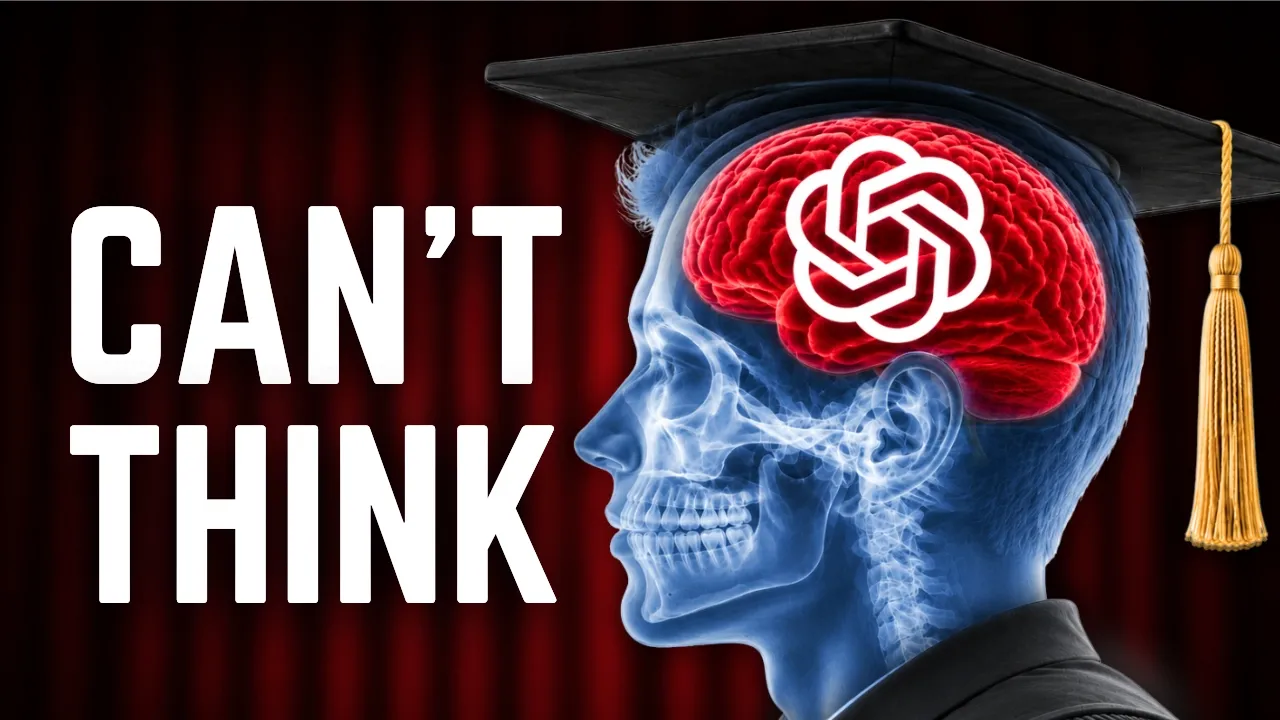
ChatGPT Has REMOVED Gen Z’s Ability To Think. Get 20% off DeleteMe by going to joindeleteme.com and use code DAMON to protect your privacy! Artificial intelligence is rapidly reshaping education, work, and everyday life. As AI tools like ChatGPT become increasingly integrated into classrooms, schools, colleges, and workplaces, growing concerns are emerging around critical thinking, reading comprehension, attention span, memory retention, and long term cognitive development. At the same time, the literacy crisis continues to gain attention as educators, parents, and employers raise questions about how younger generations are learning in an era increasingly defined by AI, automation, and instant access to information. Gen Alpha is the first generation to grow up fully immersed in artificial intelligence, social media, smartphones, and digital learning environments. Often referred to as the iPad Generation, Gen Alpha is experiencing a fundamentally different educational landscape than previous generations. As AI in education becomes more common, discussions surrounding reading skills, writing ability, comprehension, problem solving, and independent thinking have become increasingly difficult to ignore. The rise of ChatGPT, Grok, Claude, and other AI powered learning tools is changing not only how students complete assignments, but how information is processed, understood, and retained. As concerns surrounding Gen Alpha can't read continue to spread online, broader conversations about literacy, education, and artificial intelligence are becoming impossible to avoid. At the same time, Gen Z students and recent college graduates have become the first generation to experience the widespread adoption of AI throughout schools, colleges, and universities. As ChatGPT, OpenAI, artificial intelligence, generative AI, and AI in education become increasingly common, concerns surrounding critical thinking, reading comprehension, and long term learning outcomes continue to gain traction. Discussions surrounding Gen Z graduates can't read have become increasingly tied to broader concerns about how AI is influencing the way students learn, process information, and develop foundational skills. At the same time, Gen Z is entering a difficult job market where concerns surrounding entry level jobs continue to dominate conversations about higher education. As artificial intelligence expands throughout both education and employment, questions surrounding AI, ChatGPT, workforce readiness, and the long term impact of artificial intelligence on learning continue to grow. The growing conversation around teachers quitting highlights another major piece of this broader educational transformation. Teachers are facing increasing pressure as expectations continue to rise while wages and support remain limited. As AI becomes more common throughout schools and universities, teachers are being asked to adapt to rapidly changing technology while also addressing declining literacy rates, classroom engagement challenges, and shifting student expectations. This shift is contributing to larger discussions about education reform, academic performance, student outcomes, and the long term sustainability of the education system itself. #financialeducation #financialfreedom #history Join My Growing Community On Patreon: patreon.com 0:00 Intro 0:24 40% Of Gen Alpha Can’t Read… AI Is Making It Worse 0:44 AI Is Taking Over Gen Z’s Education 1:43 AI Is EXPOSING How Bad Our Education System Is 2:31 English Professor Explains Why Gen Z Can’t Read And Uses “Chat” For Everything 3:53 MIT Study Proves ChatGPT Severely Harms Critical Thinking 4:39 Colleges Are Now FORCING AI Use In Classrooms 5:06 If NO ONE Is Learning Why Are We Shocked Gen Z Isn’t? 5:24 AI Made The Assignment, ChatGPT Did The Assignment, AI Graded The Assignment 6:05 English Professor Explains How School Is Failing Teachers And Gen Z Students 7:06 AI Destroyed Gen Z’s Education… And Entry Level Jobs 7:42 LinkedIN Is Nothing More Than AI Scams 8:08 How I Combat AI Data Theft 9:22 Companies REFUSE To Hire Graduates With AI Experience 10:31 Why Everyone Sounds Like ChatGPT 11:10 Could AI Actually Make School Better? 11:58 The K Shaped Economy Is Making The AI Education Crisis Worse 12:13 Real Life ChaGPT In Education Horror Stories 13:00 Is ChatGPT To Blame For A Generation That Can’t Think? 15:17 My Teacher Exposed How Bad Our Education System Is 18:00 What Happens When Teachers And Students Use AI For Everything 19:59 Parents Need To STOP Giving Gen Alpha Devices Titles for the Algo! AI Is Destroying Education AI Has RUINED Education For Everyone Why ChatGPT Has DESTROYED Education ChatGPT Has Removed Gen Z's Ability To Think
KI-Überblick
Das Video argumentiert, dass KI Probleme im Bildungswesen verschärft, die bereits durch schwache Lese- und Schreibfähigkeiten, das Unterrichten für Tests und Anreize verursacht wurden, bei denen es eher darum geht, Abschlüsse zu erwerben als zu lernen. Der Erzähler nennt Zahlen zu den Lesefähigkeiten der Gen Alpha und zur KI-Nutzung durch Schüler und berichtet von einem Interview mit einem ehemaligen Englischprofessor, der sagt, dass es Schülern zunehmend schwerfällt, Anweisungen zu verstehen, und dass sie offen sagen, sie würden ChatGPT bitten, Aufgaben zu erledigen. Das Video berichtet außerdem von einer MIT-Studie, in der Schüler, die mit ChatGPT schrieben, eine schwächere neuronale Vernetzung zeigten und sich schlechter an ihre Arbeit erinnern konnten. Es beschreibt, wie Schulen und Hochschulen den Einsatz von KI fördern oder vorschreiben, während manche Lehrkräfte KI auch für die Unterrichtsplanung und Benotung nutzen. Der Erzähler sagt, dadurch könne ein Kreislauf entstehen, in dem KI Aufgaben erstellt, Schüler KI nutzen, um sie zu bearbeiten, und KI-Tools bei der Bewertung helfen. Er bringt diese Bedenken mit unterfinanzierten Schulen und erschöpften Lehrkräften in Verbindung und verweist auf den Bericht einer Lehrkraft aus Texas über weniger Planungszeit und ein großes Haushaltsdefizit eines Schulbezirks.
Themen · Bildung · KI · künstliche Intelligenz · Arbeitsmarkt · Einstiegsjobs
Beantwortete Fragen
- Wie kann ChatGPT laut dem Video das Lernen von Schülern beeinflussen?
- Das Video sagt, dass das Auslagern von Schreibaufgaben und anderen schulischen Aufgaben an ChatGPT das geistige Engagement der Schüler, ihre Erinnerung an die eigene Arbeit und ihre Übung im kritischen Denken beeinträchtigen kann.
- Welche Bedenken äußert der Englischprofessor in Bezug auf Schüler?
- Der Professor sagt, dass Schüler Schwierigkeiten haben, Texte und Anweisungen für Projekte zu verstehen, und manche offen sagen, sie würden ChatGPT bitten, ihre Aufgaben zu erledigen.
- Warum sagt der Erzähler, dass KI nicht die einzige Ursache für Probleme im Bildungswesen ist?
- Er argumentiert, dass die Bildung bereits durch das Unterrichten für Tests und eine Ausrichtung auf Abschlüsse und Berufe statt auf das Lernen geschwächt war, während KI es erleichtert, diese bestehenden Anreize auszunutzen.
- Was sagt das Video über KI und die Berufsaussichten von Hochschulabsolventen?
- Das Video beschreibt einen schwierigen Arbeitsmarkt für Einstiegsjobs und sagt, manche Arbeitgeber befürchteten, dass Absolventen mit KI-Erfahrung oberflächlich denken oder schwächere Kommunikationsfähigkeiten haben könnten.
- Kann KI als Lernwerkzeug nützlich sein?
- Das Video sagt, KI könne individuelles Nachhilfeangebot unterstützen und Quizfragen oder Karteikarten erstellen, argumentiert aber, dass ihr Nutzen davon abhänge, ob sie das Lernen unterstützt, statt das Denken der Schüler zu ersetzen.


